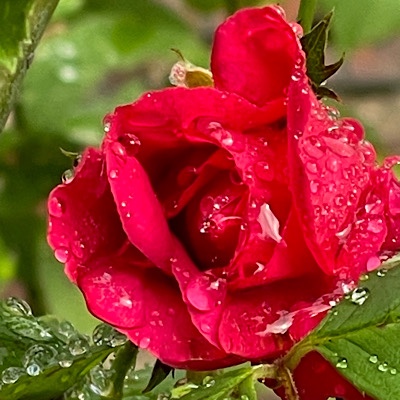
On the Way to and From Work (Noticing the Details and the Expanse)
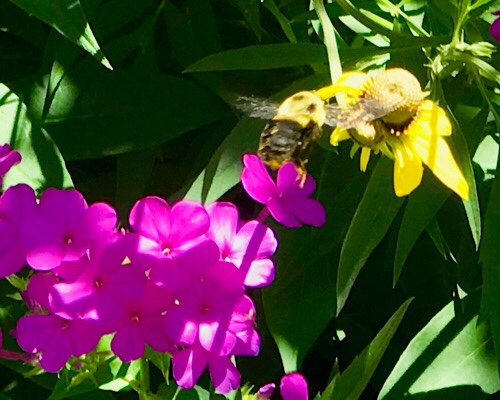
This spring I decided to for the second time growing a fig in a container. It has about five figs, all of which I intend to eat before the squirrels can get them (I’ve beaten them and the birds to the three blue berries that have ripened so far; I have high hopes for the figs). I don’t think my fig in its container is suitable for sharing as “Neighborhood Fruit.” Do you have a fruit tree that has too much fruit for you? Let people know.
My gardening friends have been commiserating and worrying about the abnormally dry weather. For the past couple of days, we have all been concerned that this storm has brought so little needed rain, although we are grateful to get whatever rain comes. Other acquaintances were complaining yesterday that it still wasn’t sunny. When I mentioned drought conditions, they had not noticed. If they noticed once it was pointed out, they suggested reasons why for them personally, it would still be a better thing for it to be a sunny day. Part of the reason I garden is to keep me connected with the rhythms of the seasons and the weather. If we do not grow our own food and depend on the fruits of our labors, nor are taught the relationship between the weather and our survival, there is no reason to know it. We become disconnected from nature and from the earth.
For me, connection to the earth deepens my connection to myself and to spirit. How can we know ourselves if we do not know how the earth nourishes us and how we relate to the earth? How can we recognize the light within ourselves, if we are disconnected from nature? At the same time, the practice of yoga, with its inward questing (antar-vimarsha — the quest to touch or reveal the true Self), by revealing to us the subtle energies and knowledge of the relationship of body and mind, can lead us back to yearning for a deeper understanding of the world around us and for a healthier relationship between the give and take between us and the earth. We can thus reach spirit both by being more aware of the outside and seeing where we are disconnected in our practice off the mat and by reaching inward using our spiritual practice (the Anusara principles are designed to be a pulsation of reaching outward and inward for an ever growing expansion and understanding of mind and spirit) and then knowing the outside is not aligned and needs to be shifted. All this is the process of vimarsha, like a little more rain in the drought to nourish and encourage the unfolding of spring.
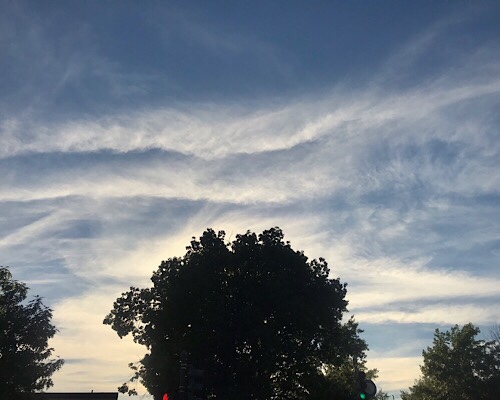
The moon was incredibly full and bright in a clear sky tonight. When I was walking home from work, I saw a tourist taking pictures of the Capitol. “You’ll want to photograph the moon,” I said, after having just taken a few pictures myself. “Yes, I did,” he replied with a big grin.
As bright as was the moon, the street lights would not have needed to be on so fully as when the moon is just a sliver of a crescent. As I gazed in awe at the luminous beauty of the moon, I thought also about the wondrousness of electric street lights. How is it that we so often take for granted electricity, but marvel at the moon? Is not light in all its forms a source of wonder when we stop to remember? Why resent the street lights for dimming the beauty of the moon when we can instead see their own beauty?