State of the Garden

I have long contemplated whether one could consider being simultaneously being engaged in day to day affairs and also in blissful meditation to be the ideal sense of bi-location–is that being in two places at once.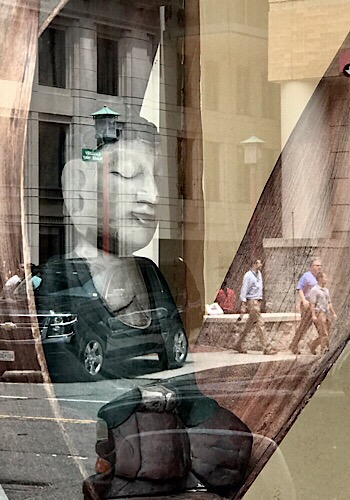
After eating homemade popsicles. This week’s variation: lemon, lime, with white nectarine. The liquid was an chilled tisane with herbs from the garden; the sweetener, local honey. The farmers at the market were packing to go home. Tomatoes and peaches only $1 a pound. Tonight–cucumber and tomato salad with the second cucumber of the year from my own garden. The salad to accompany whole wheat pasta tossed with garden greens, herb pesto (basil, parsley, arugula; garlic in the pesto from a friend’s garden), and white beans. Later in the week when it gets cooler, slow-cooked tomato sauce and white peaches poached in wine (perhaps turned into popsicles).
Dear Friends,
When I was in Florida last week for a wonderful, heart-opening Anusara celebration of spirit led by John Friend, I asked several different people whether they had heard any news about the status of the budget talks and the odds of a government shutdown. Although the substance of the talks would most certainly impact the communities of every person with whom I spoke–from schools or roads or museums in their own communities, to funding for greening their homes, to the ability to listen to National Public Radio or watch their favorite programs on public broadcasting, to the quality and availability of health care and emergency services–not one knew that there were budget talks where all federal domestic programs were subject to having their budgets slashed, nor that the talks have not included more than the most muted whisper about cutting even a penny from the defense budget.
These discussions called to mind a memory of when I was in Costa Rica several years ago for an Inner Harmony Retreat with John Friend when he suggested that we all should broaden our outlook by reading the part of the news that was not what we usually read. In that regard, he listed the financial and business pages and international relations as news we should be reading. As I regularly read those pages, I took his exhortation to heart and have made sure that I read some news about sports and television, though I am not much of a sports fan and do not have a tv. The point of inviting us to expand our knowledge was, I think, multi-purposed. First, as those who are choosing a tantric path and live fully in the world instead of renouncing it, we take on a responsibility for our living relationship with others and the planet and that takes knowledge, and not just sensitivity and cheerfulness. It is also an acknowledgement that there are lots of ways that the play of spirit manifests; being broadminded and expansive helps us appreciate the very wildness and extraordinariness of life. Opening our minds can also help us open our hearts and deepen our relationships with others and with the planet.
I may not know any more about college basketball than I read in the New York Times (though I once came in second when I was compelled to participate in a law firm pool and selected my teams by (1) picking the favorite; and (2) tossing a coin when the seeds were only one apart), but there’s definitely a March Madness aura to this month’s yoga line-up:
1. Regular classes. I’ve only gotten positive feedback from the experimental shift to a group practice style with the Tuesday night class at William Penn House. With group practice style we all face each other (instead of having everyone face the front of the room) when we practice and invite each student share a particular pose, alignment focus, or challenge or embodiment that they want to work on for the class (ok not to share if feeling shy). By sharing in this way and experiencing what poses and focuses bring an immediate shift, the practice is both more individual and more collective and also helps each student understand the elements of building a home practice for every mood and physical state. The more students who come on Tuesday nights, the more support for the work of William Penn House, so please invite your friends.
Wednesday house classes continue to be 100% for environmental causes. Please contact me directly if you want to attend. Practice is comparable to John Friend intermediate/advanced weekend workshops.
Saturday noon Gentle/Therapeutic class at Willow Street, Takoma Park, is, as always, a sweet and dedicated group, and always welcoming to drop-ins and new friends.
2. Workshops and Fundraisers with Elizabeth (me).
Join us for a repeat or the first time for just one more opportunity in the winter session and find out why your friends have been giving rave reviews for Relaxing into Optimal Alignment with Anusara Restoratives, Saturday, March 26, 2:30-4:30p, Willow Street Yoga Center, Takoma Park, $30. After a little gentle stretching and self-massage to bring awareness to the breath and body, we will enjoy the exquisite application of Anusara’s® Universal Principles of Alignment to restful and supported restorative postures to release old patterns and invite in the new to find greater ease of body and mind. A great workshop and practice for all levels.
Third year in a row and better every time: Yoga for Gardeners, Saturday, March19, 2-4:30p, Willow Street Yoga Center, Takoma Park, $35. Learn optimal alignment for digging in the dirt, while nurturing yourself and enjoying the community of your fellow yogi gardeners. For beginner and more experienced yogis and gardeners alike, find ways to optimize your experience in the garden and on the mat with therapeutic applications of the Anusara principles of alignment. Elizabeth will donate a portion of the profits to benefit the Youth Garden at the National Arboretum and will host a seed swap at the end of the workshop! Everybody welcome.
3. Incredible Out of Town Teachers Ross Rayburn (March 11-13) (for all levels) and Desiree Rumbaugh (March 18) (intermediate/advanced) will be at Willow Street’s Silver Spring Studios. I’ll be taking some of the sessions with Ross and the special class with Desiree. Hope to see you there. For more information and to register, visit Willow Street’s website.
4. Book Club at Willow Street. On March 20th, from 5pm-7pm, at the third meeting of the new Willow Street Yoga Center book club, we will be discussing Anodea Judith’s Awakening the Global Heart. Discussions at previous meetings have been engaged, lively, and thought-provoking.
5. But Wait, There’s More. Yoga classes all over town taught by my friends and colleagues, meditation every day, teleseminars as part of my meditation and philosophy course with Paul Muller-Ortega, the reverberations from my trip to Miami to be with John Friend and the wider Anusara community, and — not exactly yoga, but pretty delightful and yoga-enhancing — DC Contact Improv Jam every Sunday on Capitol Hill. Also check out the new “District Kula” web page hosted by my friends and colleagues to bring us all closer together and subscribe to get news about Anusara yoga events around town.
Gear up your own March Madness yoga line-up and email me with any questions or comments.
And as always, please check out and share the blog and Facebook to keep in touch and expand our community. I’ve also set up a new “Rose Garden Yoga” Facebook page. Please “like” it (from the page or from the home page of the website) to get the latest sweet yoga thoughts and info in your FB news feed.
Looking forward to seeing you soon around town.
Peace and light,
Elizabeth
With trees reflecting back.