Signs Around Town

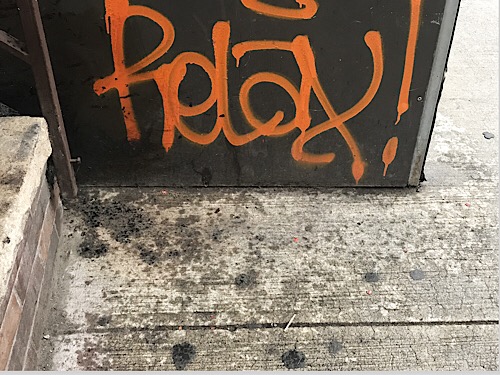
Last night at house practice, we were led to think about humility (in Sanskrit vinaya). Yoga, similar to religion, tends to privilege the idea of humility.
From a one perspective, it is easy to think of the benefit that those in charge–the priests and the moneyed and privileged classes that support religious institutions to get help staying in power–get from preaching the virtues of humility. If the relatively powerless are led to believe that they will benefit spiritually from practicing humility before humans and institutions that hold sway over them, that certainly helps perpetuate a patently unfair status quo.
We can recognize our own skills and talents and relative worthiness and actively seek justice and fairness, though, and still be humble. However much intrinsic power we have and extrinsic fairness in distribution of power we seek, we can still recognize that we are not ultimately in charge of exactly how our life will play out in the vast and complex web of being. Feeling humility in the face of all that we do not and cannot know is just living in awe at the wonder of life. This, I think, is true and sustainable humility.

Peace and light, E — Posted with WordPress for BlackBerry.
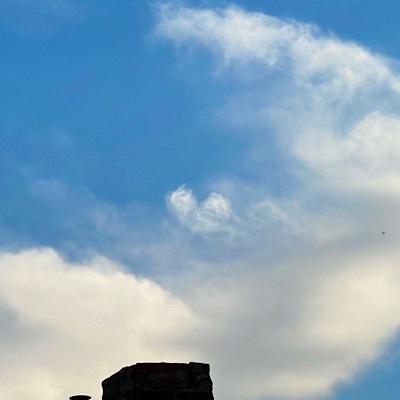
When I was out doing an errand at lunchtime, I bumped into a neighbor I haven’t seen in a long time. We did not spend much time talking; I needed to get back home to my work within the short allotted time, and she was meeting someone. “Did I just hear thunder,” she asked. The sky was thick and white with heat and “Code Orange” air. “You might have heard thunder, but there isn’t any rain with it” I replied. We talked about how much we need some good rain. The trees are really struggling. (Note: forget about cleaning any outside things with water. Forget non-edible annuals. Water established trees and perennials very deeply once a week instead of less watering more frequently. Shallow watering in drought conditions promotes growth of fungus and other pesky things.)
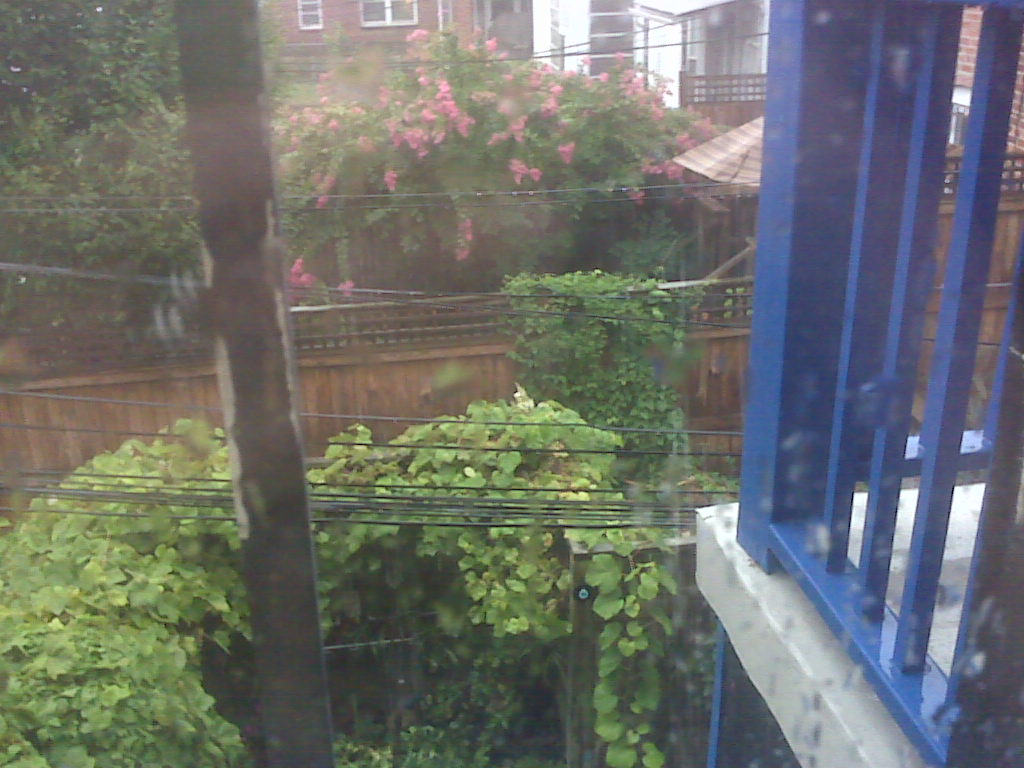
As gardeners, my neighbor and I notice how much rain we are getting in any given season and week. We think about whether the rainfall is what the farmers and the trees and birds and wild animals need, in addition to whether it will interfere with a child’s soccer game or a planned outing. We were at the point that we would far rather get caught out in a deluge than miss out on any chance of rain. On the other hand, those in flooded parts of the north are praying for a few warm (but not blazing hot) dry days in a row. Today’s storm is welcome and needed, though one storm does not end a drought. We need some more good ones for days on end.
I think the approach of various classes and intensity levels of asana practice can feel like a whether a thunderstorm is welcome weather. Sometimes an outrageously intense and fierce practice is what will bring me to my fullest possibility of growth and expansion. At other times, I need to step back and rest my body. Restorative and other gently therapeutic practices are what nurtures best. Sometimes, I have long, steady periods of moderate practice.
The more sensitive, aware, and knowledgeable I get about the weather outside and how it impacts life around me, the better able I am to take care of my garden. The more I am sensitive and open to the weather inside and the more knowledgeable both from study and experience of how my practice best aligns with inner and outer weather, the better able I am to live out the yoga principles I seek ever better to follow–the most important being to see the highest first and to be of service.
Peace and light, E — Posted with WordPress for BlackBerry.