Art and Culture | Community and Family | Food for the Mind (Yoga Philosophy, etc) | Meditation | Photos | Quaker
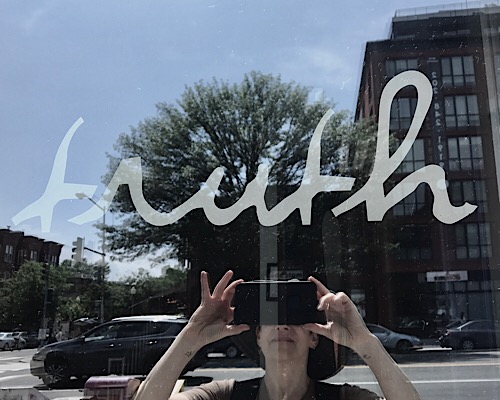
Signs Around Town
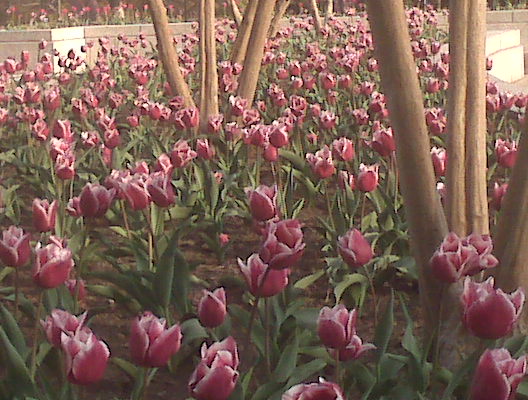
Whenever I see extensive plantings of tulips, it brings to mind the tulip mania of the 17th century Dutch. At the height of the mania, single bulbs could sell for several times the annual income of a skilled worker.
Now, the tulip is just another beautiful flower. How could it ever have been the focus of such outrageous extremes of lust, gambing, greed, and social mania?
It is a great contemplation to examine what leads us to desire and seek and value particular things–either individually or collectively. Do the desires bring us to a place of greater good and true fulfillment or is the desire just fueling the unhappy dance of craving and loss?
The tantric philosophers point out that desire itself is not bad. After all, it is what gets us out of bed in the morning and can turn us to the good. But if it is driven by external opinion and emptiness of self, then it yields suffering–the suffering from which yoga seeks to free us.
Peace and light, E — Posted with WordPress for BlackBerry.
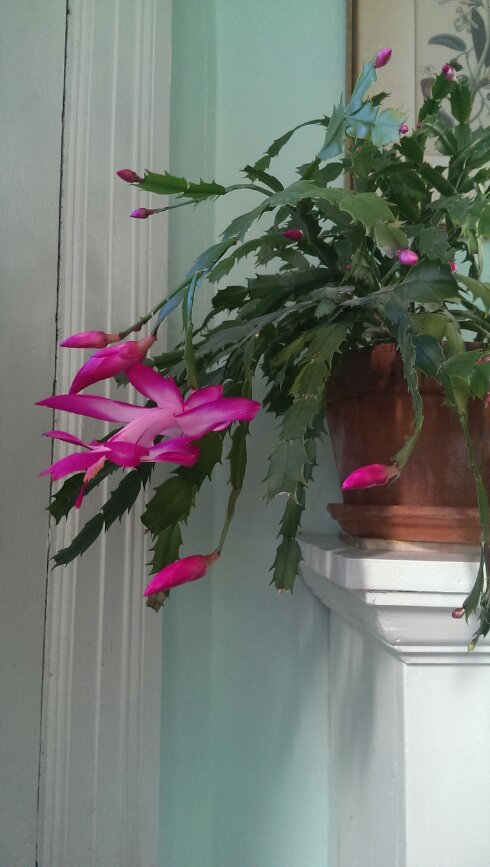
Well over a decade ago, I bought this and another “Christmas” cactus at a yard sale, the two for a dollar.
The woman selling them complained that they had stopped blooming. She still didn’t want to keep them even after I explained that they only bloom once a year.
I brought them home and tended them. They have bloomed faithfully every Thanksgiving or a little closer to the solstice, getting more luxuriant.
This evening I went for the first time into the Anderson House of the Society for the Cincinnati. I was attending an event for supporters of Casey Trees, one of my favorite local charities, which is devoted to protecting and expanding DC’s tree canopy.
I give because I believe it is an important part of a living practice (dana–charitable giving is a companion to seva–volunteer service). Getting to discover this garden was an unexpected delight, but not the goal.