When Was the Last Time You Practiced Savasana?
Dear Friends ,
As I went through the airport in each direction last week on my way to and from San Francisco to play and to visit with friends, I thought about how much our experience even of something as relatively ordinary as a trip through the airport can change by the difference of 15 minutes. On the way there, we got to the gate just as the flight was boarding. Had we been earlier, we would have sat in a crowded area, perhaps wondering whether the flight would actually leave on time or whether we could leave from home a little later next time. If we had been 15 minutes later, we would have been among those frustrated and harried late boarders whose bags end up over some seat 15 rows farther back.
We each have our own tolerance for sitting and waiting or being at the last minute, respectively. We go through life more easily if we pay sufficient attention to what makes us feel challenged and what makes us feel secure and grounded with regard to how we navigate time and space and figure out how to act in ways that are most supportive (without dulling awareness or denying how we could benefit from change and growth).
An important aspect of meditation and asana practice is how they can deepen our understanding both of how we tend to relate to things in our time-space continuum and how to optimize those relationships. For example, part of learning to sequence a practice is learning how the parts of our body fit together and how to change the order of movements to expand our strength and flexibility beyond what might otherwise have been possible in a safe and joyous way. In all my classes, I emphasize how to structure and sequence your own practice because I think it makes such a difference on and off the mat.
What triggered all this thinking about what a difference 15 minutes can make was that students have been asking for a later time for the Friday night gentle/therapeutics class at Willow Street Takoma Park. Starting this Friday, September 14th, class will begin at 5:45pm and end at 7:15pm–15 minutes later than it has been in previous sessions. The extra 15 minutes later start time can make all the difference in being able to get to class without feeling pressed. Ending only 15 minutes later still leaves open much of the evening. The class is a lovely way to transition from week to weekend–a Friday yoga happy hour and a half that is designed to heal and nourish. Although it is best to sign up for a class to get all the benefits of the progressive teaching method at Willow Street Yoga, drop-ins are always welcome. Do feel free to invite friends or family to join you.
New students of all experience levels are always welcome at the Tuesday night, William Penn House practice. Come by some time and join a wonderful, welcoming group of yogis. For more information, please check the classes page of the website.
Hope to see or speak to many of you soon in person or in the ether. And remember: spending even 15 minutes a day in meditation or yoga practice can make quite a difference in your relationship to life in time and space.
Peace and light,
Elizabeth
My favorite sutra in Patanjali’s Yoga Sutra’s is, II.16, “heyam dukham anagatam.” This translates roughly as “the pain that is yet to come can be avoided.” What does this have to do with a forecast of a hard freeze?
My chard, beets, and turnip greens are still flourishing. They can manage with a night or two in a row in the high 20sF, and that is all we have had so far. The forecast for later in the week, though, is for the first true cold snap since 1994 (you may remember that as the year when lots of people’s pipes froze). My winter garden (which does not have a cold frame due to lack of space — maybe I’ll get more creative next year, and I’ll try an experiement with plastic bags on Thursday night) cannot survive lows in the low teens highs in the twenties.
I could suffer today by bemoaning the coming cold, worrying about the garden, and remembering that I don’t like cold. That would be present suffering in anticipation of potential future suffering. I certainly can avoid that. I can also do what I did yesterday, which was harvest lots of the chard and most of the beets, put the beets into cold storage (vegetable bin in the refrigerator) and make pasta with sauteed garlic and chard. Between now and Wednesday night, I’ll harvest most of the remaining greens. I’ll make a big vegetable soup with the beets and the chard, maybe make chard pie or calzones (truly delicious), and eat the rest over the following days. I’ll feel grateful that in the bitter cold, I can be eating fresh garden greens. I’ll be even more grateful that I can just shop at the grocery store or the farmers’ market and don’t need to rely on my garden feeding me year round. I’ll also be happy for the hard frost. Part of the reason the aphids and the mosquitoes have been so bad is the absence of a hard frost in winter.
Some bitter cold in winter in a temperate zone is inevitable, as are sickness and death. We can avoid suffering by not just getting anxious and unhappy and suffering in the present, but not taking action to alleviate potential suffering. With preparation and practice, we can avoid some suffering. Just has preparing for winter in the garden can allow it to be productive for greater parts of the year, so too, with a steady practice of asana, pranayama, and meditation we can avoid some physical and emotional pain and suffering. Most important, with steady preparation (preparing for the potential for difficulties in the future is not the same as being anxious about it), when the inevitable comes, we will likely suffer less, at least in our hearts, if not in our bodies.
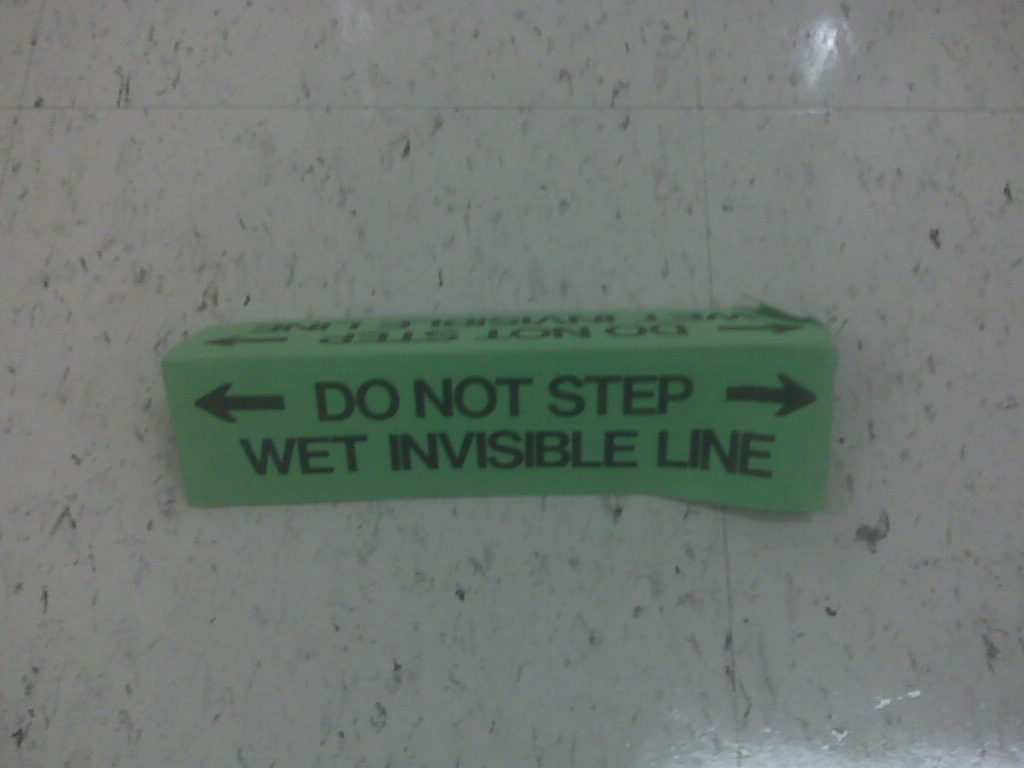
Is this to protect the line or the person who might step on or over the line? When do boundaries and rules protect and enhance life and when do they arbitrarily, inequitably, or rigidly curtail it?
Peace and light, E — Posted with WordPress for BlackBerry.
Last night I went to see the National Theater UK’s simulcast (tape-delayed) of Helen Mirren performing in Ted Hughes’ translation of Racine’s Phedre at the Shakespeare Theater. The tragedy of Phedre is misinformation, misguided helpers, and passion that has gone beyond sweet engagement to maddened attachment.
A stage production is intimate and designed for the small audience of those present in the theater. When it is merely filmed (instead of being turned into a movie), it sometimes feels forced because it is watching a film of a stage production, instead of being invited in as one is when one is either at the stage production or the filming is done as a movie, which is designed to include the viewer in a manner for the film.
What was hard about watching the filming of the stage production, was being forced to have the camera’s and director’s perspective; there was no ability to turn my head and shift which part of the stage to give my attention. At the same time, I felt appreciative of the miraculous offerings of technology: the filming made something that is usually limited to those who can afford theater of that extraordinary quality and who are able to be in a certain place at a certain time available to tens of thousands around the globe, including me and my friend. In that way, the filming both took away the intimacy of being physically present, but simultaneously created a unifying experience for a much bigger group of people.
I was inspired to think about the limitations and differences among the perceptions of the characters, of the critics (talking about the play and the film), of the smaller, elite audience (the actual theater goers’ — I’ve been at that theater in London), of the technologically broadened audience, and of mine in response to the essence of the tragedy, the story and substance of the play, the delivery of the play, and my own life as informed by the play.
It seems an interesting lesson on many levels on how we can choose to live with our passions, how we can react to limits and changes in our ability to perceive our own selves and the world around us, and on how and what we invite in through the doors of our perception.