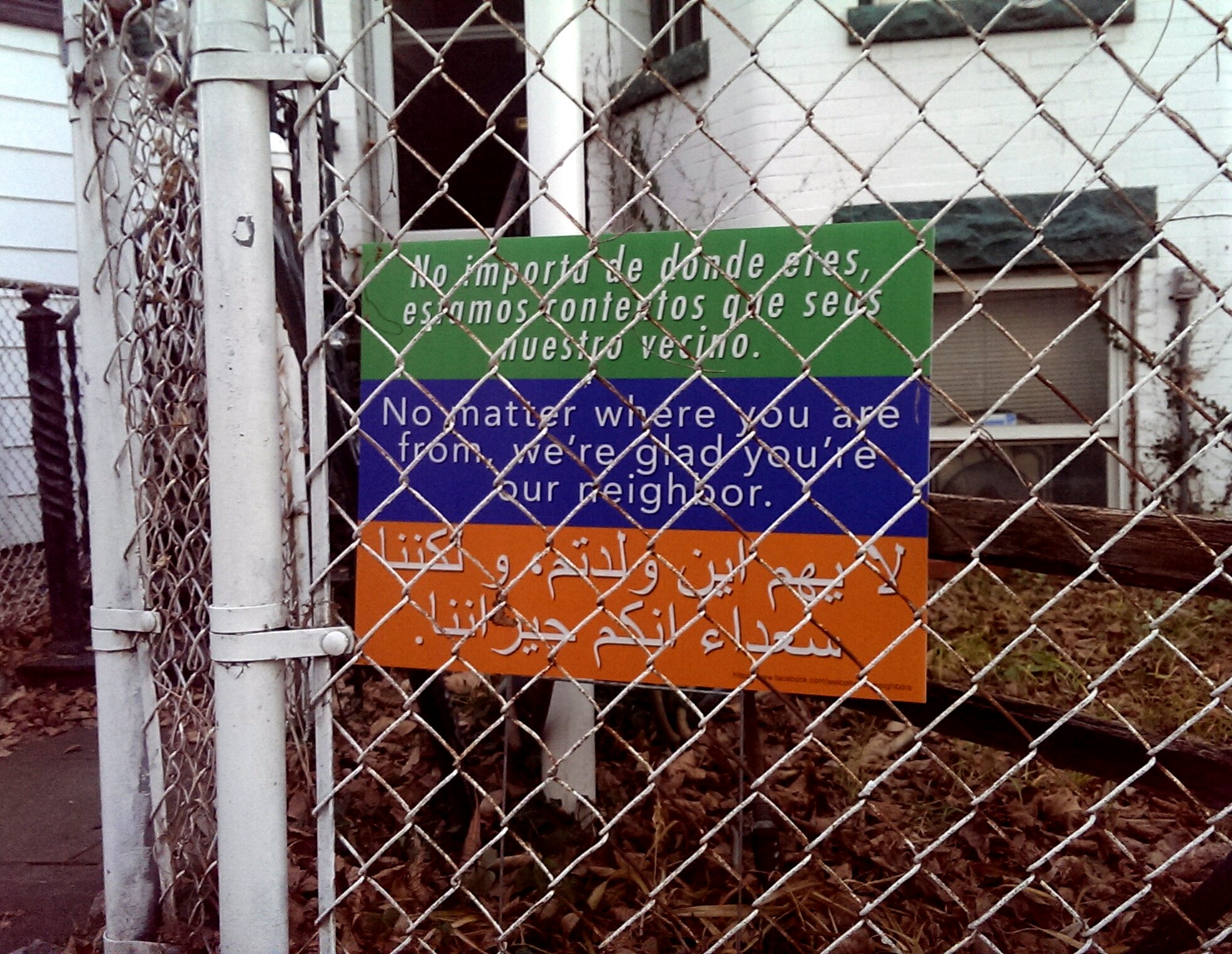
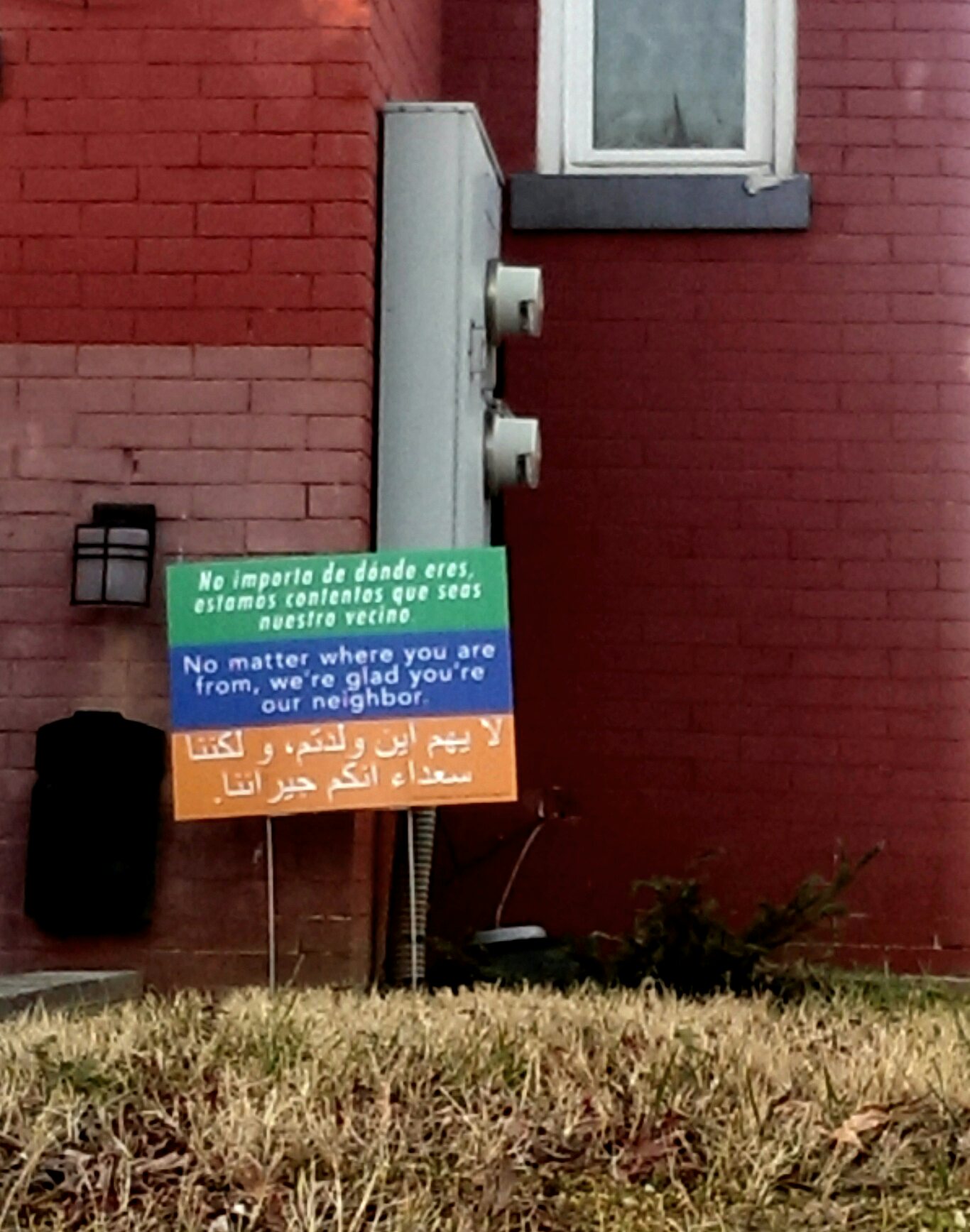
Yard Signs Around Town

Dear Friends,
Brrr. It’s cold out there. And if it is seeming colder than usual, you are right. There have only been five winters on record with fewer days above 50F in Washington, DC. Perhaps, like me, you have noticed that you are feeling just a tad sensitive or edgy or maybe a little blue. I recognize the symptoms; in my distant past, a therapist suggested that I might have “seasonal affective disorder.” My prescription for myself when winter has me feeling down? Do more yoga, keeping a focused intention on cultivating the light of inner awareness.
The form of meditation I practice is intended to allow the practitioner to rest in the light of inner awareness. One of the aspects of the Anusara principle of “opening to grace” for me is to open to the light in myself and others. On a more physical level, backbends will open up your heart and make room for the light; core work will warm you up by stoking the agni, the inner fire; forward bends will help you go deep inside to find your own light. There is a light-filled practice for every day of the week, every time of day, and every mood you are in.
Avoid the temptation to huddle inside, eating too many carbs and hiding away. When the sidewalks are passable, bundle up and take a long walk. When you come back inside, do a good therapeutic and restorative practice–it’s as good as hot chocolate (and no one said you couldn’t have the hot chocolate, too). Invite friends over for a potluck. Cook bean soups. Have hot cereal for breakfast and perhaps for dinner. Balance the warm food with the freshest of fresh food by growing sprouts on the kitchen counter.
Want to light up your yoga fire, sun, inner light with company? Join me and your friends and neighbors at William Penn House classes on Tuesdays at 6:30. Need a little R&R or found you have tweaked something shoveling or walking on the ice and snow? Drop ins are always welcome at the gentle and therapeutics class at Willow Street, Takoma Park, Saturdays at noon. Give yourself something to look forward to by signing up in advance for the second “Relaxing Into Optimal Alignment with Anusara Restoratives” workshop at Willow Street on Saturday, February 26th.
And plan for Spring with “Yoga for Gardeners,” the weekend of the Spring Equinox–yes, it is only weeks away. As has been my practice in previous years, my profits will go to support the Youth Garden at the National Arboretum.
Looking forward to sharing, expanding, and delighting in the light with you soon.
Peace and light,
Elizabeth
In the plant world, we recognize that some plants get along more beneficially than others and some are better kept apart. Hmmm.
Here is some good information that I just saw on one of the list serves I read on “companion planting.” I have been strategically planting marigolds, onions, and garlic for decades as natural pest control, but I hadn’t known that planting basil and tomatoes together improves flavor.
Friday, when I was traveling through New York City on my way home from a business trip, I detoured to the Metropolitan to see the Walker Evans’ postcards and the Bonnard, Late Interiors. The curator chose this quote to inform the viewing of the paintings: “Material concerns and worries about the future are troubling me a lot, and I’m afraid that painting may abandon me because of a lack of mental freedom.” Pierre Bonnard to Henri Matisse, September 1940.
The quote made me think of the yoga principles of ardha, kama, dharma, moksha. In classical yoga, in order to reach liberation (moksha), we need to have our material life — how we eat, consume, dwell, etc. (ardha), our love and relationships (kama), and our work/life path (dharma), in right order. From a tantric perspective, when ardha, kama, and dharma are aligned so that mind, body, and spirit are united in our day to day being, then we are living liberated — jivan mukti (moksha).
In 1940, the Nazis were growing in power and World War II was impending. Bonnard had lost his love, Marthe, was ill and aging, and was in some financial difficulty. He was afraid of losing his vision, his creativity (dare I interpret “painting may abandon me” as “loss of connection to spirit”) because ardha and kama were out of alignment. The late paintings carry a sense of yearning of spirit — perhaps because of the consciousness that struggling physically and emotionally challenges our ability to truly see, to feel connected to spirit. The paintings are lovely with color and light. The subject matter makes them accessible at a surface level. Shadowy figures and ambiguities, though, give a sense of longing and seeking. Although there is a certain basic prettiness because of the color and the subject matter, they are not comfort paintings. They invite one to think about whether color is enough, whether home is enough, what we need to be in a place where we can rest at one with ourselves.
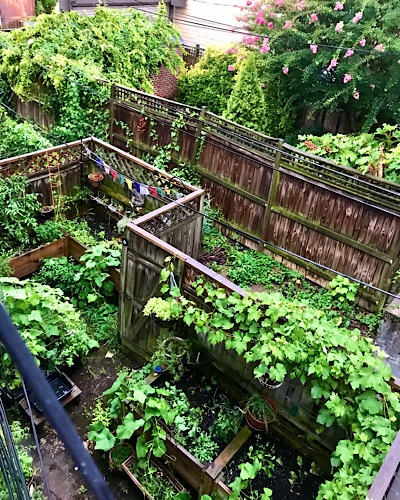
Here’s the garden after the thunderstorm. Please take some healing, grounding breaths and then take action about increasing federal military presence in cities with peaceful protests.