| |

After Work Easy Dinner

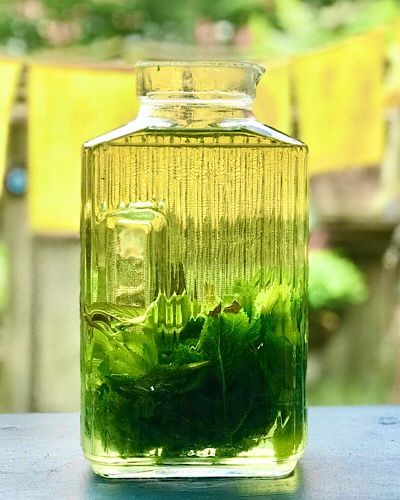
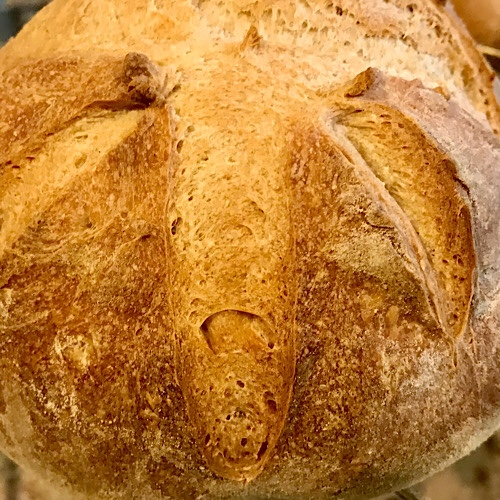
Leftover kuku sabzi (with herbs and greens from the garden), just-picked radishes with black charcoal salt, homemade sourdough discard rye crackers made earlier in the week. And cool infusion of mint and lemon balm.

I have settled into an at home almost all the time routine that is pretty healthy and for that, I daily give supreme gratitude. I think working from home for the remainder of my career would probably suit me.

Similar Posts

  • |

    Robert’s Dendrobium

    roberts-dendrobium2A number of years ago, when he was moving from Capitol Hill to Denver, my friend and former neighbor Robert gave me this dendrobium orchid, which bloomed this year for me for the first time.  The dendrobium was just an extra.  If you know orchids, you can see that it is planted with a vanda.  These orchids came from Robert’s mother’s garden in Florida.  When she had to give up her place in Florida, Robert brought home some of the orchids, including the vanda.  If I know Robert, he just saw a baby dendrobium in the garden and stuck it in with the vanda when he carried it back north to Capitol Hill.  When Robert moved to Colorado, he left the vanda with me because he did not expect it to tolerate the Colorado climate.  Even here, the vanda is not likely to bloom.  Not enough heat, light, or humidity in DC (really!!!).  But after five or six years of steady care, the dendrobium flourished and finally bloomed.  Robert inspired my affection for orchids; he had a greenhouse and knew each one of his tropical plants intimately.  We would go to an orchid show or nursery, and he would look with love on each and every plant, cherishing their individual traits, no matter how small or large.  At the botanical gardens, he had different plants he visited and enjoyed.  Now his yard has cactii and peppers.  He has a few of his most faithful orchids, which are flourishing and which were delightful to visit, and I have this lovely reminder of a time when Robert was one of my local gardening buddies.  This, I think is one of the extra joys of gardening, especially with houseplants that come from cuttings.  They have a history with our family and friends that is passed on, cherished, and shared.  I also have a night-blooming cereus that was a baby from a plant that started as a baby of one in his mother’s garden.  The night mine first bloomed (just a single night in the year), the parent plant with Robert in Denver also bloomed.

    Bonus love from this particular dendrobium; it is scented!

  • | | |

    Tatah Dvandavah Anabhighatah (and “winners and losers”)

    Patanjali’s Yoga Sutra II.48, tatah dvandaha anabhighataha is translated by B.K.S. Iyengar as “from then on [after the yogi through steady practice has absorbed him/herself in the practice of yoga), the sadhaka (practitioner) is undisturbed by dualities.”  This sutra follows the only two in all of Patanjali’s Yoga Sutras that specifically discuss asana, which Patanjali describes as a controlled and perfect ease and steadiness of mind and body.

    I was thinking about the freedom from the “pairs of opposites” — pleasure and pain, etc. — when I read an article in the Washington Post yesterday dividing everyone who was impacted by the blizzard as a winner or a loser.   Children off from school were winners, frustrated parents, travelers who were grounded from flying, and politicians sure to be blamed for not having planned in a Southern city to have the snow removal equipment, personnel, and budget of a city like Buffalo, NY, were losers.  I am fairly certain (based on the harangues on the blogs) that the author was not alone in seeing everything as winning or losing.  To me, though, it feels like one of the “afflictions” described by Patanjali.  I was a grounded flyer.  I was much looking forward to a trip to San Francisco to see a dear friend from college and then to attend the weekend workshop with John Friend.  It would have been great fun to be there.  I was disappointed.  But it never would have occurred to me to label myself a loser.  Do so so would just had me hold onto unhappiness.

    Yoga teaches us to look for the good, to accept what we cannot change, and to seek to respond in the highest.  In essence, we are changing what we can change, which is how we react.  If my only reaction to the storm was pain and sadness from having the pleasure of my planned trip taken away from me, then I would in fact be a loser.  If I just accept that no one can anticipate when record-breaking winter storms are going to arrive and then have the best day I can under the unavoidable circumstances, then I am a winner.  I am not a winner in a game where someone else is a loser.  I am not a winner in that I did not let Mother Nature win.  Rather, I have learned that the steady practice of yoga makes life more easeful and delightful even in challenges and disappointments.  I am motivated to practice more.  The lessons learned from being confined a blizzard when I was warm, well fed, and surrounded by friends are a hopeful prelude for how the yoga will serve when I really face a challenge.

  • |

    “Good Night Irene Good Night”

    When a hurricane that is predicted to be perhaps the worst in 50 years for the East Coast shares the same name as one’s mother, news of the impending destruction is bound to bring up childhood memories.

    I grew up with the song “Good Night Irene” as part of my childhood mythology.  My parents met in Greenwich Village in the late 50s, which was a time when folk music was the thing.  We all love songs about someone with our own name, so “Goodnight Irene” was one our mother taught us.  If memory serves, we had recordings in the house by Leadbelly and the Weavers to which my older sister and I danced around the living room.

    A search in You Tube reveals that it has been a popular song to cover for decades.  Which is your favorite?

  • | | |

    Fraying at the Seams (and Samskaras)

    I have spent most of the last three days working from home so that I could be on site while repairs ensuing from the earthquake and hurricane were done.  I’ve been luckier than most in the path.  The damages I sustained from these extreme forces of nature can all can be repaired with relative ease.  The leak in the living room was from gaps between the house and the windowsill and the porch roof and the house.  The leaks in the upstairs bathroom were from screws attaching the skylight to the roof having been shaken loose.  The 100-year old gutter pulled away from the house and sprang some leaks, but can get wait another year or so with just being patched instead of replaced.  The cracks in the brick and the mortar dislodged and completely washed away call for repointing before winter, but that was going to have to be done in the next five or six years anyway.  Several more things got loosened or lifted up or away from where they were supposed to be, but that is why god made caulk guns and foam sealant in spray cans.

    What I find interesting about looking at the damage is that the worst of it was at places that previously required repairs during my 21+ years in the house; some of these, based on the way the ceilings had already bulged or cracked when I moved in were evidently chronic trouble spots perhaps since the house was built.  Why those places?  It could be the soil on which the house sits, the direction it faces, the activities of neighbors, the presence and absence of trees around the house, the minor, but daily tremor caused by the D6  bus.  If something was going to come apart at the seams in the house, it is not surprising it came apart where it is inclined to come apart and even less surprising that Hurricane Irene created more damage because the house was already fraying at the seams because of the earthquake (and the continuing aftershocks).  The places that came apart under stress were the places where the old repairs did not reintegrate fully into the integrity of the design and function of the house.   Those are still are the vulnerable spots, the places most likely to come apart in a blizzard or a hurricane or an earthquake.  The better and more thoughtfully integrated into the rest of the structure of the house a repair, though, the more likely it is to cease to be a spot for future repairs.  Some old repairs that were done mindfully have ceased even to be remembered as places where a repair was required.

    The same sort of pulling apart at the edges, at the weak spots, at the less than optimal repairs of old injuries, as happened with the house in the past few weeks, happens to me when challenges and opportunities for personal growth pile on, as they have been doing for me for the past several weeks, starting with things wholly unrelated to the weather.  Although I am taking things in stride and with ever more flexibility and openness the more I practice, I can feel my familiar default setting–anxiety and sadness–emerging at the stress points.  None of the personal things that had come up before the earthquake and hurricane, nor the impact of both and the preparation for the latter, alone would have been enough to shake me up much.  As they become a basketful, though, I can feel my old tendencies closer to the surface with each thing that gets added into the experience.

    Just like the places where the house tends to come apart, my tendency to get anxious and the triggers for the anxiety are familiar spots.  They have been there for decades.  Perhaps they came from another life.  For the house, the original spots may have started with the materials–the character of the trees and stones and mud and ore out of which the house was built.  Some of my stress points I recognize in my parents and my grandparents whether or not they come from previous lives of my own, some are related to my physical make-up, some from the exact place and time of my birth.

    These tendencies of ours are samskaras — the ingrained patterns that are the results from our actions, impressions — some deeper than others — in the very fabric of our being that shape how we behave and respond to what comes, thus creating more samskaras.  The more we respond in our habitual way, the more imbedded become the samskaras and the more they keep us from being conscious of and aligned with the fullness of being.  One of the key benefits of practicing (meditation and other practices) is to lessen how impressionable we are, that is, to make it so that new stresses do not deepen old patterns or create additional patterns that take us out of alignment with the flow of being.

    As I feel old stuff getting churned up, I seek to dissolve and benignly release it through my practices, while  steadily, and as mindfully as I can, doing what needs to be done to get on with this fully-engaged householder life at this wild time.  It is one of my intentions to practice sufficiently so that I will be able to be in the flow and respond in the highest no matter what comes.  There will likely be more and greater challenges than what I have already in this lifetime experienced.


  • Nasturtium dilemma (seeds v. seedlings)

    It has been too cold for the nasturtium seeds I sowed a few weeks ago to germinate.  By the time they germinate and grow, it will be too hot for the plants to thrive.  (As a landscaper neighbor and friend of mine said of this dilemma this morning:  “welcome to spring in Washington”).  Nasturtiums love cool weather and really only do well in my garden until June.

    The solution:  I bought a few seedlings.  I planted the seedlings where I sowed the seeds.  By the time the seedlings have long since flowered and are starting to get leggy, the seeds will have germinated, and I’ll get nasturtiums for an extra few weeks at the end when it starts to get hot.

    This combination of sowing seeds and planting seedlings also works well for me with annual herbs such as basil, dill,  and parsley.  The seedlings give me a few weeks head start; the seeds give me plentiful, inexpensive new plants when the plants that started in my garden as seedlings are starting to bolt.

    I do only seeds for greens — kale, chard, mache, arugula, spinach, cilantro and beets.  I can sow them in March and by now they are starting to feed me.  I do only seedlings for tomatoes and peppers (I don’t have the facilities to get strong seedlings and starting with seedlings extends my growing season up 6-8 weeks).

    It would be wonderful to garden entirely from seeds (swapped or harvested from last year), but the reality is that I am not a full-time gardener, but want to have a garden full-time.

Leave a Reply

Your email address will not be published. Required fields are marked *

This site uses Akismet to reduce spam. Learn how your comment data is processed.