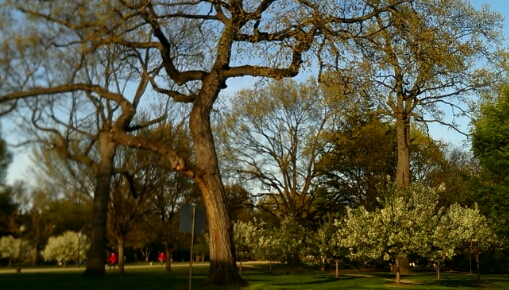
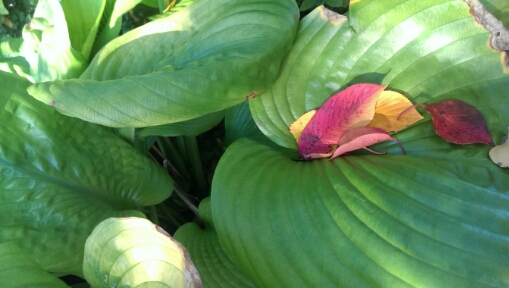
Morning Walk to Work
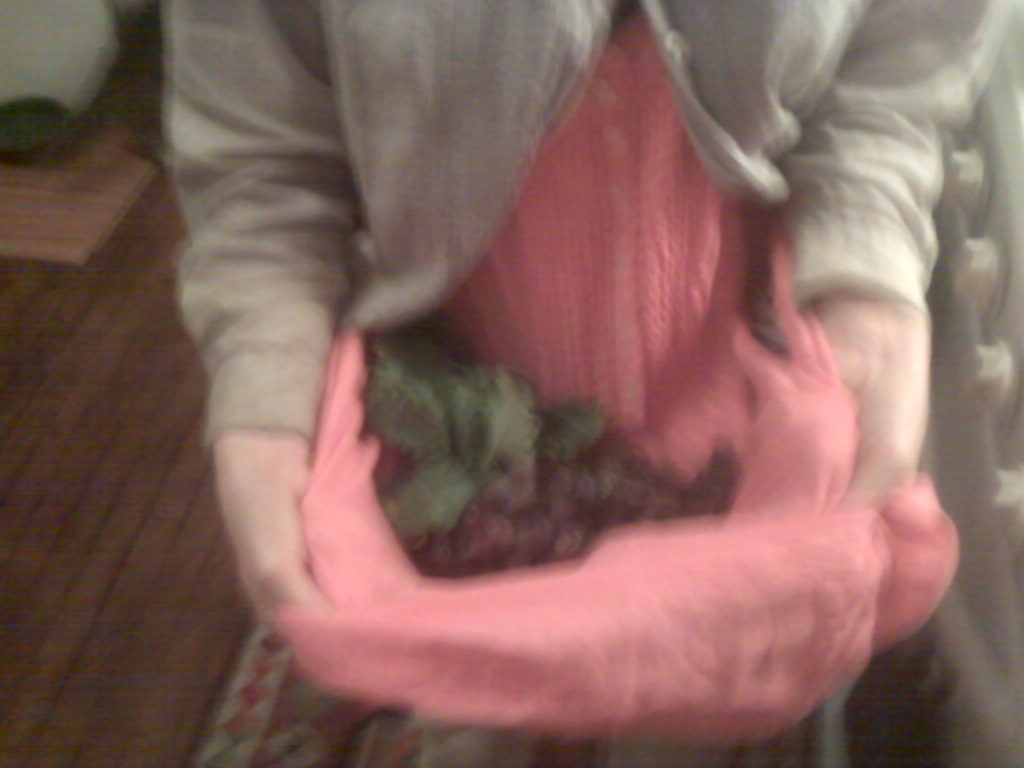
Grapes, kale, thai basil, and, hidden under the grapes, a few grape tomatoes.
Peace and light, E — Posted with WordPress for BlackBerry.
As I think about whether I will be able to get up to Willow Street to teach my last classes of the session, how much shoveling I will need to do , whether the next forecast storm (middle of next week) might create challenges for my planned trip to NY, etc, etc, my favorite (well, in the top 10) sutra of Patanjali, sprang to mind: heyam dukham anagatam, 2.16, which means roughly: the pain that has yet to come can be avoided.
I have several translations/commentaries of the Patanjali’s Yoga Sutras in my library. All have a different spin on what this means in practice. What I know is that it is at least partly about being in the present and taking things as they come. One should still practice and plan. By practicing and planning, we are better prepared for inevitable pains and challenges. (For those of you who are giddy with excitement with the thought of a “white Christmas,” this Sutra still helps. Part of the pain that can be avoided is disappointment when expectations are not realized the way we hoped they would be realized.) Once we have prepared in a healthy way, though, there is no point in agonizing about what might come, in being in pain in the present because of the possibility (or even inevitability) of a future pain.
The snow seems inevitable. I am charging my camera battery. I’m picking what is probably the last of the chard and the baby leeks from the garden, and I am getting ready for Serenity Saturday restoratives. As long as I can walk to the studio — eight inches is just plain fun, not impassable — I’ll be there with a warm and full offering. In the meantime, I am enjoying my day instead of worrying about the potential barriers to enjoyment.
What might I be able to do more to serve to make a more just society?
One of the primary themes at the Anusara certified teachers’ gathering this week with John Friend has been how discipline and technique serve our yoga. In keeping with the elemental Anusara principles of “attitude, alignment, and action” (iccha, jnana, kriya), the point has not been to emphasize rules for the sake of rules, form over substance, or technique for its own sake. Mastering technique, by itself, will not bring us to the ultimate intentions of yoga: living liberated (jivamukti), experiencing the very wonder, bliss, and dance of being.
But just playing or seeking freedom for its own sake, while we are embodied in human form, will not likely lead us to the most expansive and steady experience of ultimate freedom (svatantra). It is discipline and technique with the constant remembrance of the reaon for being disciplined about how we practice and live that will take us further on the path.
It can be nice, for example to go to a class where there is little emphasis on form, and the call is just to flow and feel. For me, though, because of my physical limitations (degeneration in my spine, old groin injury, etc–these do not define my being; they just inform how I practice), I feel far freer and more able to expand how much I can play the more attention I give to the physical alignment. In such a situation, the rigorous attention to detail is not for the sake of an external idea of what is right and what is wrong. Rather, it is the constant disciplined attention to alignment that frees me to play as free from injury, pain, and fear of injury as is possible in my body.
The discipline then becomes a way of self-affirmation. It is the limitations that lead me to have to focus more on technique than if I did not have the limitations. That attention then provides a ground for a more expansive practice and a deeper appreciation for the beauty of what the practice can offer.