Similar Posts

  • | | |

    Nightblooming Jasmine in Winter (and sadhana)

    I walked into the dining room yesterday and caught a hint of an exquisitely sweet fragrance.  I knew the paperwhite bulb I was forcing was only in bud.  What was it?  I went to look and saw that there was a single blossom on the nightblooming jasmine.  Inside, in winter, the single bloom emitted as much apparent fragrance as dozens outside.  I have had this plant for 12-13 years, since it was in a three inch growers’ pot.  The last time I repotted it was several years ago, but I faithfully bring it inside and out every winter/summer cycle, and feed and water it plentifully.  In response, it keeps getting fuller and offering blooms.  When it is outside, it can have dozens of blooms at once.  Sometimes I harvest the buds before they open and use them to scent green tea.  When I find open blossoms in the morning, I harvest them by the handful and put them on my alter or in the bedroom, where they will provide scent for a day or two.  Outside in the summer, while profuse, the blooms last only a single night.  Inside in winter (with an average 24-hour a day temperature of 61-62F), the blooms, though coming more occasionally and only a couple at a time, can last for three or four days.

    I think the blossoms of yoga and meditation sadhana (practice) are not dissimilar to the way this plant blooms.  With steady care, they will always bloom, though sometimes more than others, sometimes with a different character, and sometimes with just growing periods with no apparent blossoms.  Sometimes, there will be a wild profusion of vision and offering, but those tend to be fleeting.  The memory of the intoxicating perfume, though, keeps us tending the practice, knowing it will come again.  During the time between the wilder experiences, the nectar still comes, and though in less dramatic ways, perhaps all the sweeter for coming in a time wh

    en we are just practicing and tending and not expecting any great revelation.

    jasmine

  • | | | |

    Bare Bones of the Trees (and Pratyahara)

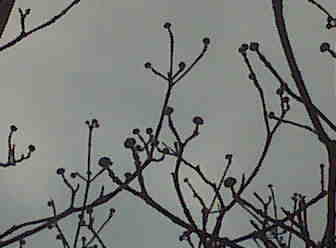
    One of the things that I appreciate most about winter is being able to see the bare articulation of the shape of the tree in the absence of its leaves. A dormant tree looks very different from a leafless, lifeless tree. The dormant tree still has a vibrancy to it.

    As I enjoyed the beauty of the trees in Stanton Park this morning on my walk to work, I thought about pratyahara (withdrawal of or from the senses), which is the fifth step of Patanjali”s eight-limbed path of yoga and the bridge between life and physical practice (the first four limbs consist of ethical observances and restraints, asana, and breathing practices) and meditation. I have been led to contemplate the practice and meaning of pratyahara since the last meditation retreat I attended.

    From a renunciate perspective, pratyahara entails withdrawing from that which stimulates our senses. A renunciate would simplify and restrict what he or she takes into his or her system to free the mind from stimulation and make it easier to go into a space of meditation.

    Being careful to eat lightly, avoiding the stimulation of electronic entertainment, finding a quiet place to sit, and shutting our eyes before we begin meditating is part of the practice of pratyahara that all of us who practice meditation do as a matter of course.

    From a tantric perspective, I think pratyahara fits into our practice a little differently than for someone seeking to be on a reunciate path. We may definitely choose to minimize undue or excessive stimulation because certain types or amounts of stimulation feel out of alignment with our practices. For me, more than a certain amount of sense stimulation and certain types of stimulation can numb my celebration of and experience the spirit. Refining what I take into my system so I feel better able to live fully and celebrate and see the play of consciousness is different than renouncing objects that stimulate the senses or sense impressions themselves, as being less real than spirit. It is not renouncing things as unreal; it is picking and refining what to experience to better recognize and remember spirit. For the great siddhas, withdrawal from stimulation would not be necessary because they do not lose sight of spirit by either the cravings of the senses or being overwhelmed by reactions to stimulation of the senses.

    The trees seemed to me this morning to help elucidate this principle. The trees aren’t acting out of ego or greed or yearning to find happiness from the outside because of an emptiness on the inside. They are always open to the light and the rain. In winter, when they are dormant, they are not reaching for the light and rain or hungering for spring. They are there in all of their beauty open to receive nourishment when it comes. In spring, when the leaves start to bud and open, it is because of the light and the rain, but the essence of being a tree does not change or get distorted by going inward and resting or by opening to burgeoning growth.

    When we can simply open to all that is around us as spirit (beyond my capacities except at the rarest of times), then we can be open to the fullness of what stimulates the senses and still be practicing pratyahara. As long as we are swayed from the recognition and delight of spirit by stimulation of the senses, then we need to practice withdrawing on a grosser level to help us find the space of still being where we can be in the world of the senses without being tangled up and bound by it as such.

  • | | |

    Found Exhortation

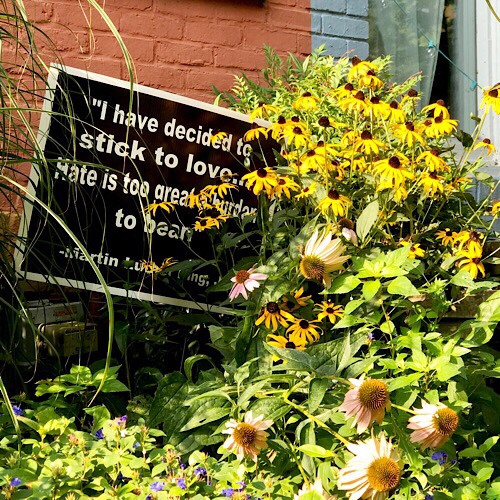
    The artist who penned this exhortation here was highly unlikely to have intended it to have anything to do with “udyamo bhairava“–roughly, the upsurging of capitol “C” Consciousness. Siva Sutras I.5.

    But if one were in the mood, one (not an academic, though), might suggest that the exhortation to rise up to one’s fullest potential, to refuse to be shackled by the oppressiveness of certain socioeconomic circumstances (I leave what those might be to your experience, knowledge, and education), as an example of one of the infinitude of ways Consciousness likes to upsurge itself towards itself.

    Peace and light, E — Posted with WordPress for BlackBerry.

  • | | |

    Podcast on Ayurveda for Yoga Students and Teachers

    Thanks to the generous Cate Stillman for this podcast.  What I like most about Cate’s perspective is her teaching that  truly practicing Ayurveda is paying attention at the deepest level, including paying attention to what in the classic teaching of Ayurveda work for you and what do not–being that they are imbued with cultural elements of the Indian subcontinent that do not necessarily support or resonate with our culture or individual constitutions.

    As I study more, I find that it turns out that I had been practicing Ayurveda already by keeping to a regular daily and weekly routine, eating seasonally and locally, eating with sensitivity to impact on my digestion and energy level, and by having a steady practice.  Not being interested in detox (more some other time on the dangers of detox)  or constitution types, or arcane herbal remedies (many of these, by the way, are becoming endangered species), it turns out, does not mean having rejected Ayurveda.  I do know that whether I call it Ayurveda or just plain common sense, the more I live in a balanced, sensitive, and steady way in terms of diet, sleep, entertainment, work, and consumption in general, the more I optimize my health and sense of well-being.

Leave a Reply

Your email address will not be published. Required fields are marked *

This site uses Akismet to reduce spam. Learn how your comment data is processed.