|

Found Exhortation (and Rasa Theory)

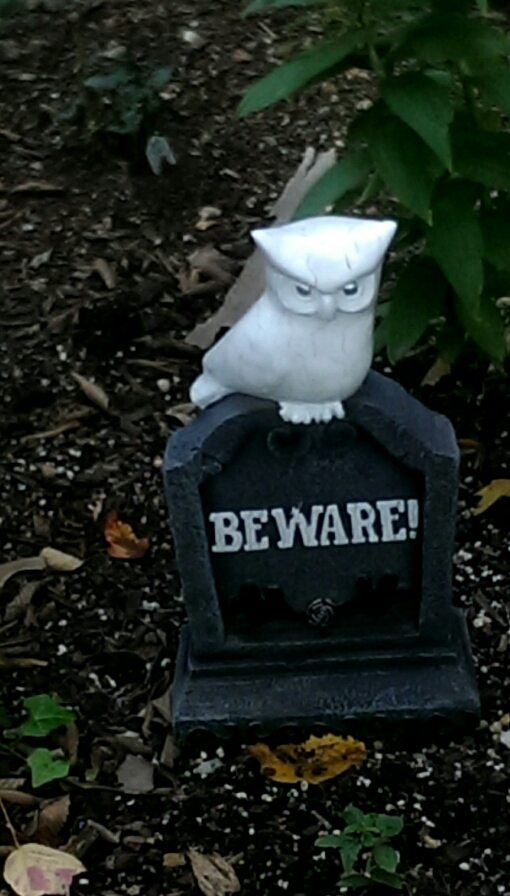
In the yoga theory of the rasas, very roughly, the same categories of emotions can either weigh us down or move us toward spirit, depending on intensity and the way we experience them.  For example, grief and compassion are on the same continuum.

With that in mind, I ask what is the exhortation to “beware,” if we are mindful and not trapped by unnecessary fears, but a reminder that we will navigate life with less trouble if we consistently are aware.

image

Similar Posts

  • | |

    Gardening When It’s Not Quite Time (and Sauca)

    The first of Patanjali’s niyamas (part of the ethical precepts that are precursors to the practice of asana, pranayama, and meditation) is sauca — purity or cleanliness.  The practice of sauca includes in it a literal exhortation to be physically clean.  I think it also carries with it a sense of order, a cleaning out of physical, mental, and emotional clutter, so that we have more clarity.  When we find more clarity, we can be more in the flow with the inexorable sequence of time and space.

    Experiencing how we fit into the pulsation of time and space is one of the exquisite joys of gardening.  This time of year, avid gardeners are eager to get int the garden, and it is tempting to get started to soon, to start new things without cleaning out the old.  When we are more experienced (and know better the optimal sequencing of starting the garden with the shifting of the seasons), we also know that we might have gotten a few days in the 50s F, but it is still winter.

    Emphasizing the practice of sauca now will serve the whole gardening season.  When it is still cold, but the heart yearns for the garden, is the time to be planning, reorganizing, and cleaning to get ready for the days when it will stay warm enough for growing outside a cold frame or protected area.  As I use a lot of containers, now is the time for me to see what containers need repairs, removal of perennials that did not make it through the winter, and new soil.  It is the time to prune what is better pruned now than in the fall.  This is not just trashing everything, but seeing what should be preserved, what should be repaired, what should be cleaned, and what should be discarded or given away.  It is cleaning out what gets in the way of an optimal flow of energy to experience the greatest effulgence of nature.  By practicing the cleaning and clearing out phase with intention and enthusiasm, I am present with the garden and also in sequence with the light and the temperature.  In this way, just as I am when I practice these principles on the mat, I get the bliss of yoga.
  • | | | |

    Thanksgiving Yoga (Web Version of E-Newsletter)

    Dear Friends,

    I am perhaps a little late in sending out this announcement.  The time when I usually would have sent it was smack in the middle of the enmeshed and engulfing energies of the election and Hurricane Sandy.  In contemplating what I should write in my invitation to the annual Thanksgiving Day Yoga Fundraiser for Oxfam, I had such an assortment of ideas about gratitude, about abundance, about service, about expressing and receiving thanks, especially when so many are experiencing conflict, hardship, pain, and loss, that I found myself as if I had nothing to say.  It occurred to me, among my many musings, that as long as I have something to give, it wouldn’t matter if I have nothing to say.

    One of the key reasons I meditate and practice asana is to spend defined periods of time being intentionally one-pointed (ekagrata) in my focus.  Out of the apparent maelstrom of experiences, sensations, emotions, and ideas to which we are exposed and in which we can be immersed or even submerged, a point of focus can arise for speaking or acting that frees us from being so caught up in the whirl that we cannot move.  Being intimate with and knowing how to get to the space of stillness and focus–and remembrance of what is most important to us, which I think is a critical element of true gratitude–can help us better take care of ourselves and the society and ecosystems with which we are intertwined.

    In a light of focused intention to make offering, I invite those of you who will be in town to join me for an all-levels class at Willow Street Yoga, Takoma Park, from 10:00-11:30am on Thanksgiving  to celebrate the day and to share our abundance and gratitude with those in need. A tradition for me and for Willow Street and a perfect way to expand the holiday. Friends and family of all levels welcome, including teens, tweens with yoga experience, seniors and everyone else in between. All proceeds go to Oxfam.

    To all of you, I wish you much spontaneous experience of gratitude.  I think of all of you and send my well wishes, especially those who are facing difficult challenges.

    Peace and light,

    Elizabeth

  • | |

    “Bob Dylan is a strange one,”

    says the man next to me with a slightly interrogative inflection, while we are both looking at a photo of Dylan taken by Alan Ginsberg at the show of Ginsberg’s photos at the Nat’l Gallery. He is a beefy guy with a crew cut, wearing chinos and a polo shirt. He looks like he’s maybe one of the thousands of police officers from around the country who are here for “Police Week.” Lots of police wives are taking a break from the demos and competitions to look at the impressionist and modern paintings from the Chester Dale Collection. Maybe he just got a little farther west than he had intended.

    I smile at him in a way that I hope seems welcoming and open, yet does not actually convey agreement with his statement. I wonder how he felt about the photos ofd the Orlovsky brothers. I am at the exhibit on my lunch hour for the first of what will likely be a number of visits.

    The Beats are an important part of my identity. My parents met in Greenwich Village in the late fifties — my mother dabbling as an artist, my father involved in peace activism, the places they frequented also frequented by the beats. My great Aunt H’s favorit book in those days allegedly was “On the Road.”

    As a teenager, I relished and romanticized this part of my history. In so doing I read widely not only the writings of the Beats, but also what they were reading, which included the great Hindu and Buddhist texts. To want to discover the illumination of the Beats was to explore Eastern philosophy and mysticism and to meditate and practice yoga.

    “No,” I thought to myself, “I’ve never connected the word ‘strange’ to Bob Dylan. Maybe when I get home I”ll play me some before I sit to meditate.”

Leave a Reply

Your email address will not be published. Required fields are marked *

This site uses Akismet to reduce spam. Learn how your comment data is processed.