| | |

Trishula

image

The trishula represents all the philosophical threesomes:
sat cit ananda (being, consciousness, bliss);
iccha, jnana, kriya (will, knowledge, action);
siva and shakti and the dance of relationship between the two.

The me and the you and the us–for where there are two ones there is also the third and all the play (lila) and pulsation (spanda) that is part of the dance cosmic and divine and personal.

Similar Posts

  • | | | | |

    “What Is It?”

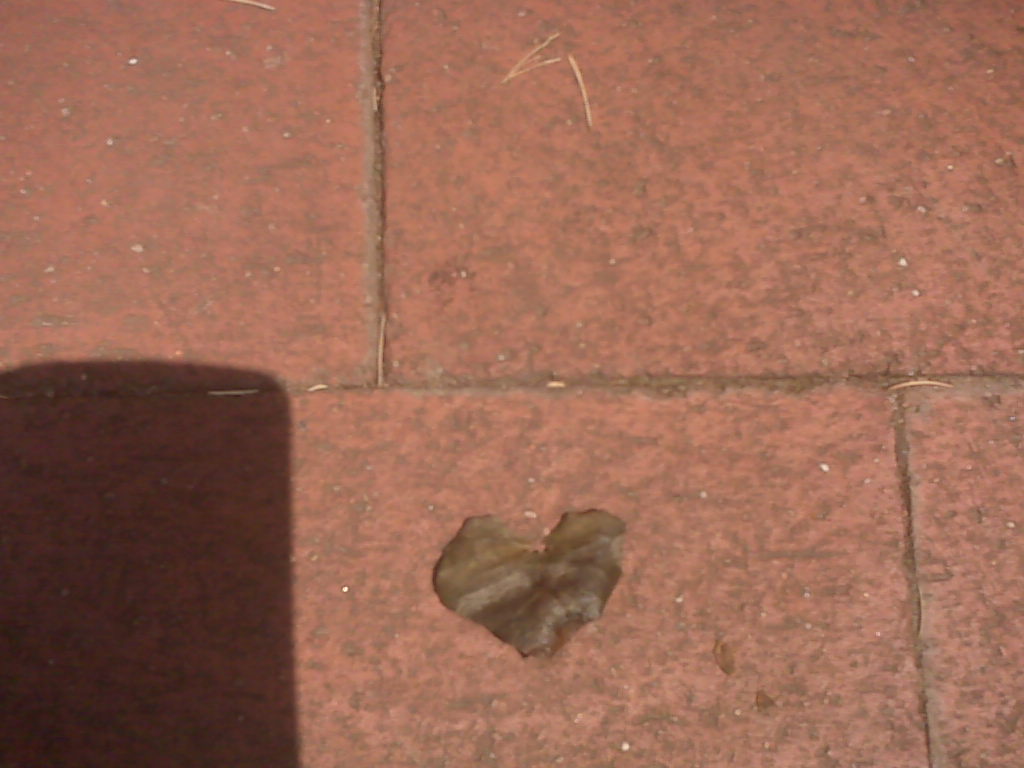
    As I squatted on the brick sidewalk to take this photo during my lunch time walk, a nice-looking older man stopped and asked “what is it?” He was quite tall and standing at an angle that would not have showed the shape as well as from where I was positioned.

    “Stand on this side; what do you see?” I asked. He looked from my perspective. “A leaf,” he said with a quizzical expression, wondering why a dessicated bit of English ivy would have captured my attention sufficiently for me to take a photograph.

    “Look again,” I suggested. “Can you see anything else?”

    “Ah,” he said with delighted recognition: “it’s a heart.”

    “Yes. I see them and other interesting shapes in all sorts of things–litter, blackened chewing gum, the pavement itself.”

    “Everything has more than one form,” he rejoined. “You are blessed.”

    And thus we went our separate ways, having brightened our day with this small connection. If he lives in the neighborhood, no doubt we will recognize each other enough from this encounter, at least to smile and say hello.
    Peace and light, E — Posted with WordPress for BlackBerry.
  • Savasana

    When I first started teaching, one of the things I found most inspiring was seeing my students in savasana.  It is such a rare and precious things to see a group of people deeply relaxed, especially for someone who came to yoga essentially restless and who inhabits a workplace that is, so to speak, rather caffeinated.  For me, the practice of savasana has been transforming.  After 10 years of steady practice, my sleep has deepened and become more consistently restful, which has enhanced my ability to come from a yogic place off the mat.

    Savasana is in some sense for me always the so-called “pinnacle pose” of practice.  The pinnacle pose is not necessarily the most physically challenging pose in terms of combined strength and flexibility, although it is an essential component of the sequencing of any good practice to have the poses gradually open all the parts of the body needed to do the most physically challenging pose.

    When thinking about any practice and determining whether a cooling or heating, expanding or inward-going, playful or serious practice would be most appropriate, I ask whether the practice will lead to a place where is will be possible to be completely free and relaxed for 10-15 minutes?  Will the practice enable the body feel open and released, strengthened and supported, integrated and aligned, so that lying on a hard floor will seem like being on the finest bedding?  Will the focus of the practice help simultaneously free the mind of thought and burden and yet keep it focused and alert so that body and mind can surrender to the full, blissful of conscious being in the moment?  Will the practice serve to align the koshas (or sheaths) so that the outer body is soft and relaxed, the energy body full and bright, and the mind and intuitive bodies one with the anandamaya kosha (the bliss body)?

    Some teachers have said that savasana is one of the most advanced of yoga poses.  I would agree.

Leave a Reply

Your email address will not be published. Required fields are marked *

This site uses Akismet to reduce spam. Learn how your comment data is processed.