Untitled
I am reminded
Again to look for beauty
Whatever happens.

Peace and light, E — Posted with WordPress for BlackBerry.
I am reminded
Again to look for beauty
Whatever happens.
Peace and light, E — Posted with WordPress for BlackBerry.
Today, when I was thinking about that for which I am most grateful and taking a lunchtime walk through the neighborhood, I decided that my persistent appreciation for beauty is worthy of the highest gratitude. The ability always to be entranced by beauty has gotten me through many a moment of potential suffering.
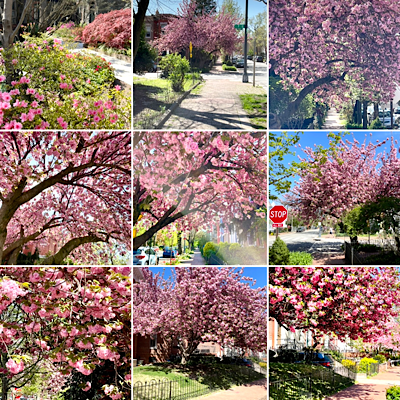
Though many of the trees have lost their leaves, the spectacular color show continues. Some of the trees are still sporting green leaves, so there is more to come. And then will come the time to enjoy the exquisite architecture and shape of the branches themselves against the winter sky–it’s own kind of beauty.


I read today a piece in the Washington Post about Hindus needing to “take back” yoga. I read the article and the comments with great interest because it has been a matter of much discussion with those in my meditation and philosophy course as to the extent to which the practices we are learning are “religious” practices and whether they can be practiced consistently with other religions. There is much difference of opinion and strongly heated and held positions.
What I think is missing from the article is the question of distinctions between “spiritual” and “religious” practices. It is a simple fact that practicing yoga with depth and sincerity entails learning practices that are observed by Hindus. Does that make one a Hindu? Does it mean that one is “dissing” Hinduism if one learns and benefits from the practices, but does not self-identify as a Hindu.
What about Jews who have trees at the Christmas holidays (a tradition co-opted from the pagans in any event)? Is it OK that I have a mezuzuh even though my parents (who were born Jews) raised me in the Religious Society of Friends (Quakers), and I continue to be a member of a Quaker meeting, and observe no other Jewish laws or practices.
Is it OK for me to chant “Hindu” chants if I do not identify myself as a Hindu or attend Hindu temple? If it is not OK, for whom is it not OK? Quakers? Hindus? Jews? Me? Who is to decide or judge?
It seems to me that “religion” (as specific sects, identities, and strict rules) tends to highlight difference and disunity, but sincere spiritual practice — whether or not done in a religious context and observance — should be unifying because all religions at their highest and most universal, call upon us to recognize the unity of spirit in ourselves and in all beings.
Yesterday I wrote to my DC elected officials and to the budget office to let them know how important it is to me that local municipalities fully fund public transportation, as the budget year comes to a close. Metro officials are threatening to close down many bus lines entirely, which will mean that far too many people will be unable to get to work, especially for low-paying jobs. Hundreds of workers are scheduled to be laid off, which means (as an icy cold budgetary matter — the budget after all being a moral document) that they will need services and no longer will be paying taxes. Disrepair, injuries, and accidents will become even more prevalent, and service will be slowed at already overtaxed and overcrowded times. Our air quality will go from yellow/orange to orange/red from the increase in gridlocked traffic. I discussed the issue and the urgency of making our voices heard with several co-workers today.
I left the office at 5:40 pm this evening to go to take Suzie Hurley’s 6:15pm class at Willow Street, Takoma, Park. I was standing on a metro train at 5:46pm. The ride is supposed to take 13 minutes from Judiciary Square metro. We reached Takoma Park at 6:27pm. I went over to the studio when I arrived. If the door was open, I would have looked in and caught Suzie’s eye and quietly seen whether I could slip in. The door was closed, and I could hear that the class had already started doing standing poses. Under circumstances where being late is clearly not my fault (and I try to avoid those by being willing to be early if it turns out the travel has been optimally sequenced), I will join the class just after centering and before the asanas begin. As much as I would have liked to have taken a yoga class after the slow metro ride, I felt that I shouldn’t risk disturbing the other students by coming so late. I instead will be doing a long, deep, slow, inward-moving practice when I am finished writing, corresponding, getting ready for practice and sleep, and doing some preparations for tomorrow’s work day.
In my growing acceptance that I would be arriving too late to Takoma to take class, I thought about the email I had received earlier in the day about the Friends Committee on National Legislation’s “Our Nation’s Checkbook” campaign. The email reminded me that a third of my tax dollars are being spent on war. “What about investing in green jobs, preventing more home foreclosures, and funding diplomacy to prevent wars?” I was asked. “What about public transportation,” I thought, as I sat on the stationary train between stations. “How many trains could be operated efficiently and safely for each fighter aircraft?”
How do I want to live? What are my priorities? When does short-sightedness or immediate personal satisfaction impact my long-term health and happiness and peaceful co-existence on a crowded planet? For what purposes do I practice? How would I like to invite others to live?
The ride home, of course, had nary a problem. A train arrived in under five minutes. The ride back to Union Station was exactly 11 minutes. Everyone had a seat, and the car was nearly full, so it was at perfect capacity. It was still light, and lots of people were out because of the balmy night and the beauteous blossoms, and I felt safe strolling home instead of taking the bus. What a beautiful night!
“Practical Sanskrit” just did a post on its Facebook page that discusses the nyaya (maxim) of watering the mango tree. When we water a tree with the intention to honor our ancestors and the earth for its gracious offering, we are simultaneously taking care of the tree and honoring our ancestors, the earth, and the tree. The post continues by inviting us to be more conscious of trees, especially in the city, and to be more engaged in caring for them.
Practical Sanskrit’s post reminded me of a comment on this blog a couple of weeks ago. A commenter on stated that most of the things that I write about doing to live more lightly on the planet require substantial financial means and education. That is true in certain cases–obviously, if I wasn’t blogging, I would not have any need to try and go “carbon neutral” with the blog (although it is no more expensive to have a carbon-neutral web host than one that is not). And as I explained yesterday when chatting with a cabinet-maker who was at the Amicus Green stand at the Green Festival yesterday, with the grant programs, tax credits, and loans available, we can now put solar on our houses with virtually no cash outlay in Maryland and the District (other states may not make it so easy). In that case, one still needs to be a homeowner, but can still do it without significant money to burn.
But most of the things I do to try and live more lightly, while still being comfortable, I learned in the years when I was truly poor (and I didn’t much like having always to worry about how I was going to pay the bills): not having a car; not having cable tv; turning off the water while I soap the dishes and brush my teeth; taking short showers and turning the water off while lathering; keeping the thermostat between 59-63 in the winter and dressing warmly; keeping the thermostat between 78-82 in the summer and dressing and eating lightly; shopping for clothes at the consignment shop; furnishing my house from flea markets, auctions, and neighborhood sales; doing my own sprouts on the kitchen counter; having much of my diet be dried grains and pulses bought in bulk; turning off all the lights in the house except for the one I am using at the moment; bringing my own lunch to work as a regular activity and saving eating out for special occasions; avoiding buying and wearing clothes that require regular dry cleaning.
What is nice about being financially comfortable is I now can do all those things with loving intention, rather than feeling constrained by my lack of material well-being. I am not forced to do them. Tantric yoga, with its emphasis on being in the world, invites us always to act with intention, to make all of living an offering and a recognition of spirit. It is easier to do when we are educated, aware, and yearning for spirit, than when we are forced to do something out of material poverty. It is also easier to do when we do it for love rather than a sense of guilt or obligation. Being able to live with intention, picking and choosing how we live and what we consume, can truly enhance grace in our lives. I am sure there are those who grumble about having to go out and water the mango tree to make sure it fruits when they would rather be watching tv. How much more life-enhancing to water with love for the tree.