Similar Posts

  • | | | | |

    Fine Weather for Walking

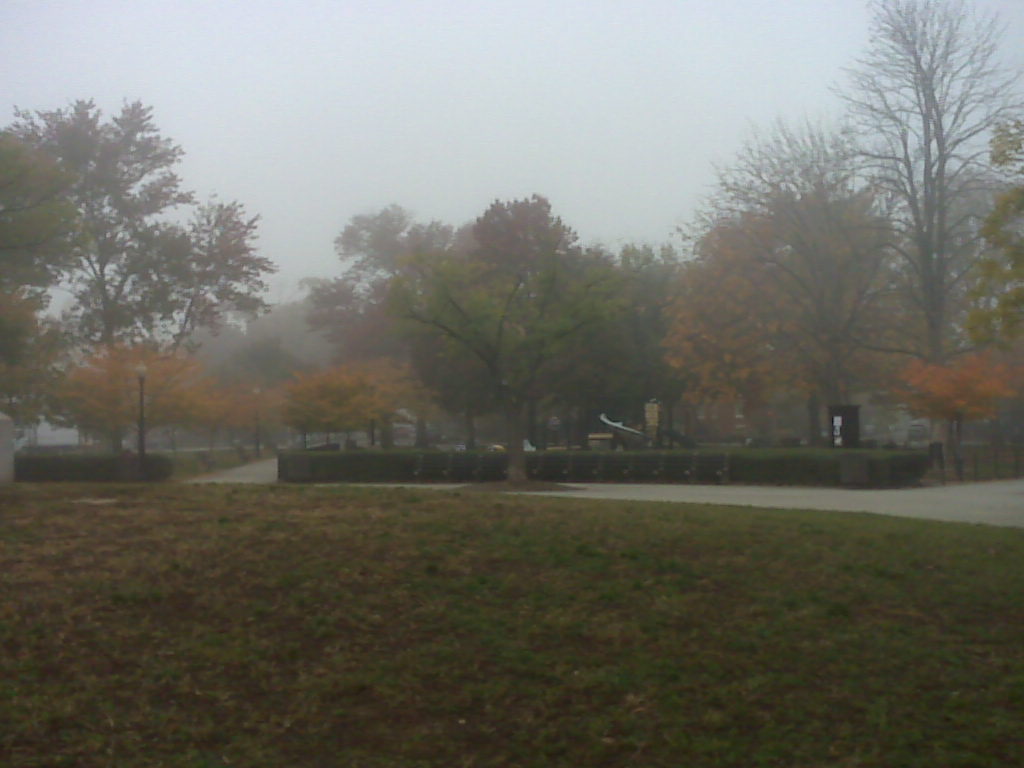
    The past several days in DC have been perfect for walking.  The mornings, for me, require a winter coat and gloves and a hat or scarf.  At the warmest part of the day, the air is refreshingly cool, and I can shed some layers.  In spring and fall, there is little I want to do more than take long walks.  And so I take to the sidewalks even more than the usual walk to work, to the Farmers’ market, to the metro, to visit with friends, to teach, to go to the nursery or the grocery store, to go to the bank and post office, to go get a massage.  I make no effort to be efficient and consolidate errands; every errand is an excuse to take a walk.  I add a block or seven onto an errand walk.  I walk and think and then my attention is seized by the beauty of the color and the light.  I have to pause and drink it in.

  • | | |

    Boy Leading a Horse

    Last weekend, I went with a friend to see The Steins Collect at the Metropolitan Museum.  I made a special effort to see the exhibit because of the incredible impact on art and culture that the Steins had by virtue of their collecting.  Many of the paintings in the exhibit were familiar; I’d seen them before either at the Met for those from its own collection, at other museums, or in books.  Some, which have ended up in other private collections or in the collections of museums that I have not visited, were completely new to me.

    Among the paintings in the exhibit is Picasso’s Boy Leading a Horse (which, as you can see from the link, the MOMA website currently indicates as “not on view”).  I’ve seen the painting many times before at MOMA.  The shift of location and context shook up my perceptions of the painting, and I indicated that to my friend.  Another woman who was looking at the painting too engaged in the conversation.  “It seems wrong here,” she said.  “It’s a different view,” I replied.  “It is disconcerting, but seeing it in different light, context, and company is enabling me to see new things in the painting and to find a more enhanced appreciation.”

    I have been thinking this week, and talking about it in my classes, how a change of context can bring us new vision.  How often, when things just keep going in a set pattern, do they collect dust and cobwebs (literally or figuratively)?  I asked my therapeutic students whether they had preconceived notions about various challenges of embodiment, especially the chonic ones.  Do you see them as part of your identity, something that causes you pain instead of giving you the joy of movement?  What if you embraced being ever more conscious of alignment instead of being conscious of pain and limitation (and learning better and sooner when you cannot get out of injury without outside help)?

    What of it?  What of the change of perspective?  After all, things get rearranged for us and the dissolution can be gradual or violent or something of both and be something of greater or lesser magnitude.   Times of flux and dissoluti9on are the perpect time for questioning, for new vision, for discovering new ways to experience what had become too familiar, for seeing how one might wish to shift one’s own perspective for the good, to know and take responsibility for one’s own place and piece of this relationship to whatever it is that is shifting, dispersing, or dissolving., to seek to become unbound from the habitual binds of whatever invisible clothing we might be wearing.

  • | |

    Samskara (and the awesome and the awful)

    Those of you who have been attending my classes for the past couple of weeks already know that my overall theme for the fall session is cultivating a sense of wonder (abhuta). Feeling wonder is one aspect of the Anusara principle of “opening to grace.” It is seeing who we are and what we are within space and time with a sense of amazement at the limitations and the foibles, as well as the strengths and delights.

    This week I was thinking about abhuta in the context of samskara — the markings or grooves or scars in our being from how we have lived our lives (and perhaps past lives, if those were also lived by us — personally not sure about that). I had a dialogue earlier this week that resulted from over 110 years of combined history that was not optimal. Reflecting on the precipitating factors, though, and marveling at the web of history, environment, education, and action that combined to give rise to the conversation led me to a sense of wonder indeed. It is by cultivating the ability to step back and appreciate the wondrousness of the dance that we learn from a steady practice that, I think, can help make it possible to shift in how we behave and react to things.

    From a physical perspective, most of our challenges and difficulties are based on what we have done with and in our bodies over the course of our lives. We use the yoga alignment principles to create new grooves and to shift from the old repetitive patterns, so that we can not only alleviate pain and misalignment, but to expand the possibility of discovering ever more joy and wonder in and through our bodies and senses. Both the physical and meditation practices help us shift similar patterns (dissolve and transform samscaras and their impact), so that instead of deepening old grooves, we erase or dissolve them and create new life-enhancing ones.

    It may seem odd to marvel at our stuff, especially when it does not appear to be serving us, but keep in mind that both the awesome and the awful, being both all about awe, can give rise to a recognition of the great and exquisite mysteries of being.

Leave a Reply

Your email address will not be published. Required fields are marked *

This site uses Akismet to reduce spam. Learn how your comment data is processed.