| | |

Untitled (and Jnanam Bandaha)

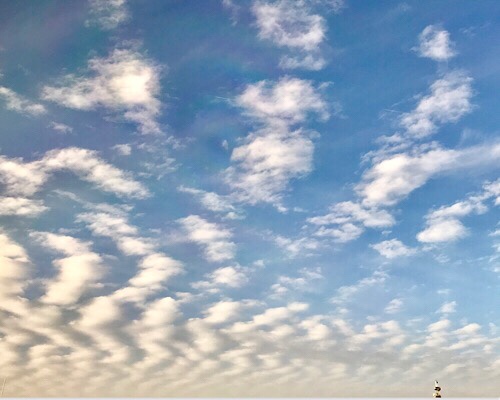
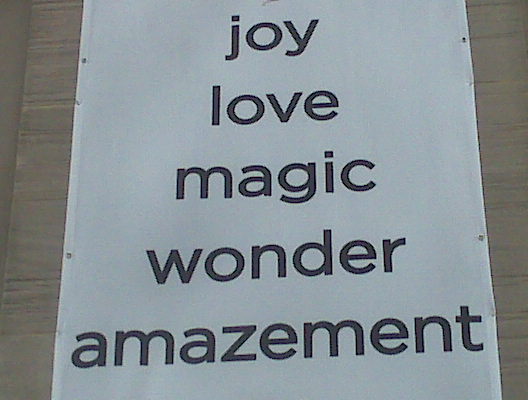
For me “untitled” as the “title” of a work of art means that the image speaks for itself and that to name it would be to bind the viewer from access to a “pure” and open response of his/her own.

In the yoga philosophy much is made of the fact that any attempt to describe mystical (for want of a better word) experience already veils or distorts the experience and that which has been experienced.

Sometimes, then, I show what I cannot say in words, recognizing that the camera, too, alters and separates the viewed and the viewer.

Jnanam bandaha, by the way, is the second sutra in the Siva Sutras and means roughly, knowledge is bondage. Later in the text, we are also told that knowledge alone liberates. It is a delicious paradox for contemplation.

Peace and light, E — Posted with WordPress for BlackBerry.
Similar Posts

  • | | |

    Kuan Yin (At Eastern Market)

    Last Sunday, when I was at Eastern Market to get apples and pears, I saw a small, painted wood statue of Kuan Yin.  I have been attracted to this one of the 330 million gods and goddesses for some time.  Her primary attribute is compassion. She is said to be a female Chinese metamorphosis of the Buddhist bodhisattva Avalotikeshvara, who, according to some, is an emanation of the Hindu deity Shiva.

    She had a price tag of $70 around her neck.  It was too much, especially since her hand and foot looked like they had just broken off in transit.

    Still, I was attracted to her.  The vendor, who is from Pakistan, came over to talk to me, asking me if I was interested.

    “Too high,” I said.

    “What would you pay?”

    Knowing it is holiday season, and the vendors really need to do well to survive the winter, I suggested $45, thinking it was really too much, but I very much liked the impeccably serene expression on her face.

    “You have bought things from me before,” he said.  I’d bought a couple of older rugs from him last Spring, at which time he had chatted with me for a while and showed me a picture of his chosen guru.  “You are a divine being; I will give her to you for free.”

    “I bet you say that to all your customers,” I replied.

    “Everyone is divine, yes,” he said, ” but you are different. You know it.”

    Somewhat overwhelmed by this, I thanked him for the honor and took out my wallet.  I had $42 and change.  “I will pay $40.”

    I paid him and walked her home unwrapped in my arms, thinking it will be hard to live up to his expectations.  Who better, though, to remind me to relate to others, always recognizing their inherent divinity (whatever that might mean to me or anyone else), than the goddess of compassion?

    Where the wood was raw from having been broken, I rubbed the edges with ash from Chidambaram temple (that I happened to have in the studio), so that the breaks would not visually distract, and one would only notice the sweet face.

    image

  • | |

    Glad to Have Friends Who Inspire Me to Think

    My friend K, whom I love and respect for her very self and for her sustained peace activism, had this attached to an email yesterday:

    Rev. Howard Thurman (1899-1981): “Don’t ask what the world needs. Rather ask — what makes you come alive? Then go and do it! Because what the world needs is people who have come alive.”

    So good I wanted to re-share everywhere.

  • | |

    Moksha

    I have a set of cards that I keep on my altar that are designed to be used for contemplation.  There are about fifty cards, each of which has a sanskrit word and its meaning.  Just as one gets a fortune cookie randomly or picks a tarot card from a deck, but the message often seems right on point, the word that arises from the card picked from the stack often seems uncannily timely.  Early Saturday morning, after not having used the cards in a few months, I picked a card from the middle of the stack to see if it would help guide my contemplation and meditations as I was getting ready to say good-bye to Becky. The word on the card I picked blind from the middle of the stack was “moksha” or liberation.  In classical yoga, moksha does carry with it the implication of being liberated by transcending body and mind.

    Later on Saturday, when I was on my way home from teaching for the appointment with the vet, I stopped at the metaphysical supply shop for a piece of rose quartz (to use in a ritual to assist with the transition and loss that a friend taught me).  At the check out were “dolphin saying cards.”  There was a sign next to the cards inviting customers to take one for free.  The sign also said that it was not necessary to take the one at the top.  The cards were face down; I did not look for a particular saying.  I dug a few cards down, and the one I selected read:  “freedom has its roots within yourself.”  In other words, “moksha” for the second time on this day, when I was facing with Becky her transition of the spirit from the body.

    Was it a message?  Was it a coincidence?  I do know that I knew when it was time, as I did with Henrietta.  Becky just did not want to be embodied anymore.  When I held her in her arms after she stopped breathing, she was released and relaxed in a way she had not been in months.  That the signs were saying “moksha” resonated with Becky’s power and connectedness.  I hope that when I am ready to go, I will truly understand moksha, that I will be released.  It is so resonant of Becky’s life, for all her quirks, that she was still teaching me even as she was dying.

  • | |

    Why Study Yoga? (and Pete Seeger’s 90th)

    In the session yesterday, in discussing the Siva Sutras, Paul Muller-Ortega said that the whole of the teachings are in the very first sutra, even in the first word (caitanyam — consciousness).  For students who, on hearing the first word from their teacher,  say “got it, I understand fully,” no further teaching is necessary.  For the students who say, “please explain further, what does it mean?” more elaboration is needed.

    What does it mean, though, to “get it?”  What do we do with the teachings of yoga?  How do we integrate them into our lives?  I practice and study yoga because it is teaching me how to be stronger, more flexible, more grounded, and better able to serve.  Some people I know already have that.  They are already living the yoga, so they do not need the details and the practices.

    As a reminder of one who has been living a rich, full life of service and love, enjoy this video of Pete Seeger in honor of his 90th birthday.  (If you cannot see this link, please just do a search for videos, using your favorite search engine.)

  • | | |

    0herry Blossoms in the Rain

    As I have walked around town enjoying the spring surge of blossoming trees, I found myself remembering that our most famous cherry blossoms were a gift from the Japanese, which remembrance sent a deeper yearning to help send healing.

    At one sunny, pink-blossomed drenched moment yesterday, I found myself asking how could one’s heart not reach out to a people who brought us such beauty. I then thought that this country had no problem incarcerating “those” people on “our” soil and bombing their country when the arrival of the gift of our famous cherry trees was still in living memory. At that time, “they” had become our country’s enemies because of the actions and statements of those in power. The gift had become irrelevant in the context of war.

    The peril in both thoughts is that they distance us from opening and relating to the essential identity and humanity in all of the individuals we meet of various nationalities and alliances–whether in a time of gift-giving or in a time when we cannot abide the actions or ideas of those in power.

    Peace and light, E — Posted with WordPress for BlackBerry.

Leave a Reply

Your email address will not be published. Required fields are marked *

This site uses Akismet to reduce spam. Learn how your comment data is processed.