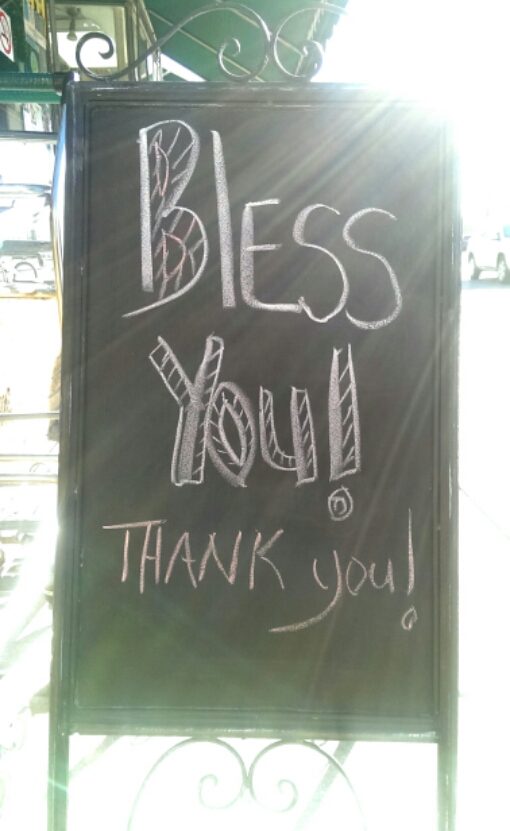
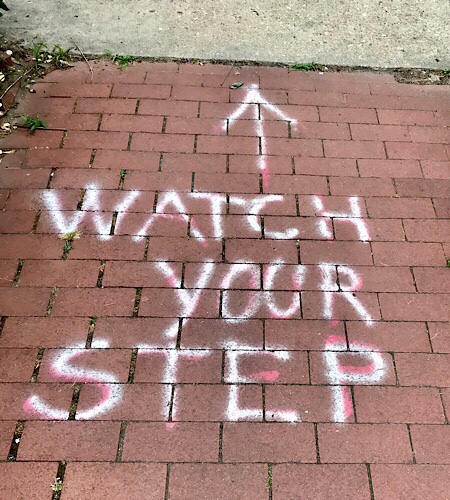
Signs Around Town–Non-Verbal (Happy Valentine’s Day)

Peace and light, E — Posted with WordPress for BlackBerry.
Peace and light, E — Posted with WordPress for BlackBerry.
Last night I went to see the revival of the Bernstein musical version of Voltaire’s Candide, now playing at the Shakespeare Theater’s Harmon Hall (discount tickets available), which was absolutely a delight — fantastic staging and direction, luxurious costuming, enthusiastic performances. Throughout his journey, which is beset with cruelty, hardship, natural disaster, and other mishaps wherever he goes, Candide sings of his tutor’s optimistic advice that “all’s for the best in this best of all possible worlds.” The application of this philosophy leads to some silly results, including the Monty Python-worthy lyric “it’s a great day for an auto da fe.”
I have a friend who, after telling me of various life challenges and griefs, inevitably signs off with the phrase “it’s all good,” though I am not sure she believes it. I thought of her repetition of the phrase “it’s all good,” while I was watching the musical. Later in Candide’s travels, he encounters a second philosopher scholar who (I’m paraphrasing loosely) contradicts the “it’s all for the best” philosophy of Candide’s tutor by telling Candide to just look around and he will know that things are not in fact always for the best. A fluffier version of the debate in the novel, as to whether things are all for the best when there is so much cruelty and devastation, is interwoven into the rest of the play.
I’ve never had a desire to wear the t-shirt proclaiming that “it’s all good.” I look around me, and I simply do not believe it. I do believe wholeheartedly, though, Voltaire’s premise that we have the responsibility to “cultivate our garden.” As my teachers John Friend and Paul Muller-Ortega espouse, we should “respond from the highest,” regardless of what we experience and encounter. By having our response make the best of all possible worlds from things that are not evidently for the best, we bring more light into the world, whatever is our world view. I can only hope that with steady practice of yoga and meditation, I can keep ever truer to these teachings when I am seriously challenged.
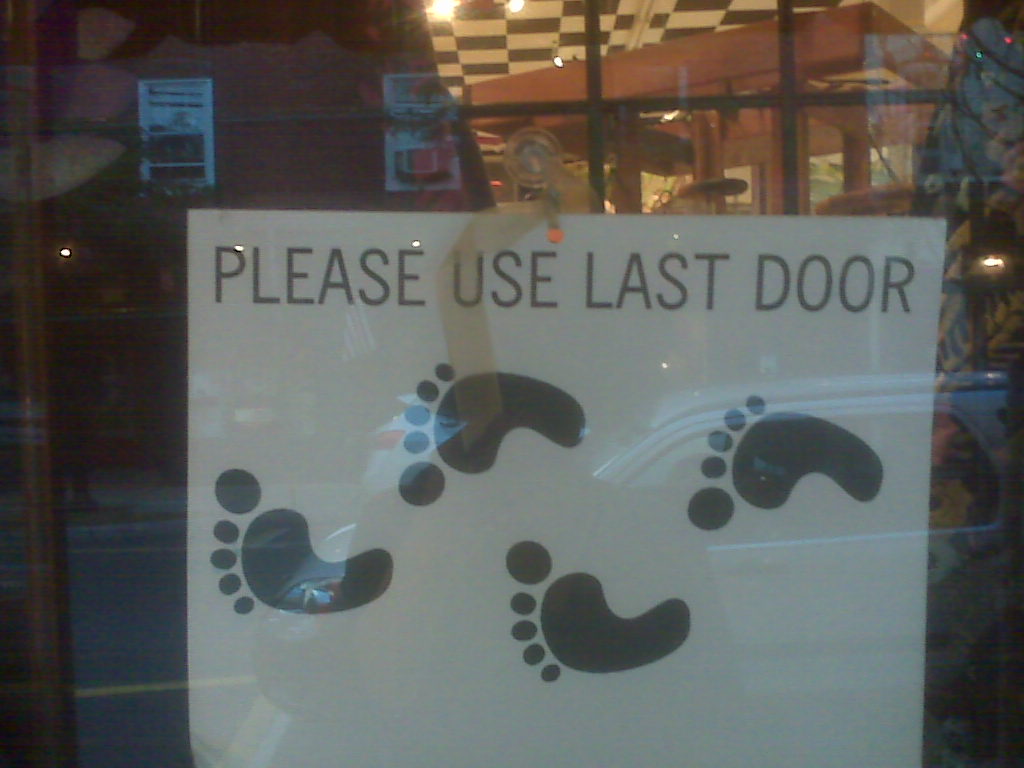
Peace and light, E — Posted with WordPress for BlackBerry.
My studies today (it is a very rare day that I do not read some of a yoga text or commentary) included a mention of the body’s nine openings. The yoga treatises ubiquitously mention the “nine openings” of the body through which prana enters or leaves (is dissipated). Certain practices are designed to open the tenth, which is an energetic opening that corresponds to the fontenelle at the crown of a baby’s head.
A few month’s ago, my astute friend Jane, who has given birth and nursed, pointed out that a woman has 12, not nine openings.
What is a woman to do in response to this apparent disconnect or male exclusivity? Reject out of hand the teachings as only being misogynistic and of limited utility because they originated for male physiology and not female? Interpret the teachings and correlative practices as being based on the anatomical and energetic openings common to both sexes? Deeply explore the practices relating to this teaching and discover whether there are subtle ways to modify and reinterpret and apply the teachings and practices to address the lack of reference to and recognition of the three crucial additional openings that are fundamental to a woman’s being?
Guess which of these I am most likely to advocate and practice.
Peace and light, E — Posted with WordPress for BlackBerry.