Found Exhortation
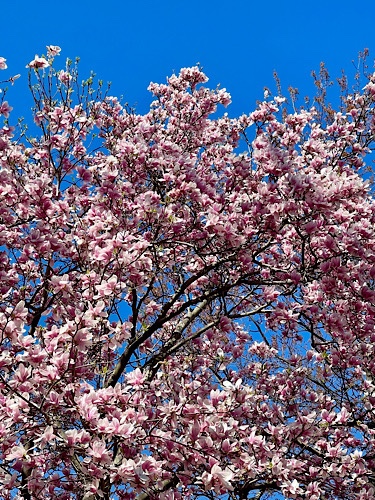
 For yogis, of course, it seems not even remotely ridiculous that the only true revolution is one motivated by love. (Photo compliments of a friend whose phone was capturing the image better than was mine.)
For yogis, of course, it seems not even remotely ridiculous that the only true revolution is one motivated by love. (Photo compliments of a friend whose phone was capturing the image better than was mine.)
The New York Times just published a blog entry on the perils of faking happiness. The first problem with the article was that I could not get to the study to see if I agreed that the actual premise was that “faking a smile” was what led to a deterioration in mood or feeling unduly pressured by a need to do so regardless of what was going on inside was the problem. The second is the definitional problem of what it means to “fake” a smile. I think it not unlikely that contorting the face into a fake smile (i.e., grimacing) because one feels one has to do so does not improve mood when one is in physical or emotional pain. According to the little cover blog, though, those that made an attempt to smile from the inside by thinking a positive though–even though it was a conscious effort– did experience an improvement in their mood.
Any good method actor will tell you that to make an outer expression believable, one has to cultivate inner thoughts to go with it (though that is still “acting”). Having been taught by my mother by age six in preparation for my first school play performance, that to act I should try to “be an apple” a la Stanislovski, I disagree that intentionally putting a smile on your face cannot help improve your mood. It’s all in how you fake it ’til you make it. I have long advocated to my yoga students, based on my personal experience with the practice of smiling whether I think I mean it or not, to try smiling on the outside improve mood. Even leaving aside the inner experience, just walk down the street with an open posture and a smile on your face and see how people respond, though I caution to do this at your peril in New York. When you smile at people and be polite, they generally respond in kind. You are then much more likely to feel good than if you are scowling and rude and people respond back in kind.
What on earth (or in heaven’s name) does faking a smile until you feel one have to do with satcitananda, you may find yourself asking yourself at this point. The second line of the Anusara invocation is “satcitananda murtaye.” Murtaye, from the same verbal root as murti or statue, here is usually translated as saying that Siva (from the first line) embodies the characteristics of satcitananda, being (what I like to call is-ness), absolute consciousness, and bliss.
Another way of looking at this phrase, though, is that when we open to the possibility of discovering our siva nature, which is the reason we practice yoga, and when we use the principles of alignment to help do so, then we discover how to be, if even for a moment, simply present, fully conscious, and blissful with the consciousness of the ultimacy of being. In a word, when we soften and look within, using the knowledge and experience of our teachers and our practices, a smile of recognition lights us up. If we start out having a bad day, feeling stressed or anxious or in pain, or just plain grumpy from reading the news, we just have to practice with more depth and sincerity to find the smile and not beat ourselves up if we are struggling to find the smile despite our desire and the intensity of our practice.
Is that faking a smile or being the smile? Does trying to smile when we are feeling blue really make us more unhappy? I think it is all in how we do it.
The guides who took us to the Taj Mahal and Red Fort were very good. What I appreciated was that they spoke about social issues, including education/literacy, and global warming. Alas, internet connection (lobby only) too erratic today for a photo here.
What does it mean to see what is illusory? To see the illusion or to recognize that it is an illusion?
Cultivate doubt, especially where you might expect illusion and delusion (such as political information on social media). Or when you encounter promises of enlightenment or salvation or the perfect thing.

Clouds were playful in
The purpling twilight dancing
Shapes of light on dark.







Come join us for yoga on some Tuesday night soon. Things always feel a little more at peace with the yoga. That all proceeds every week go to the work camp program makes it even more full as a practice.