Similar Posts

  • | | |

    330 Million Gods (Mas o Menos)

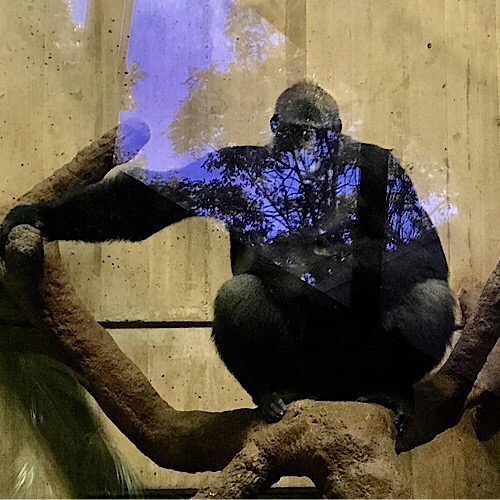
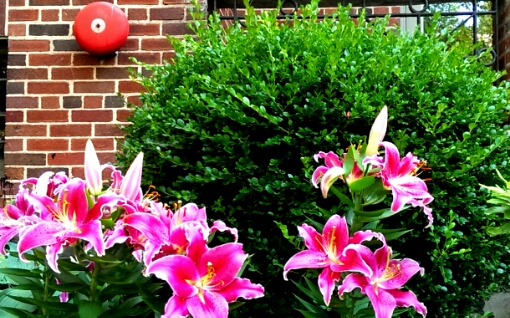
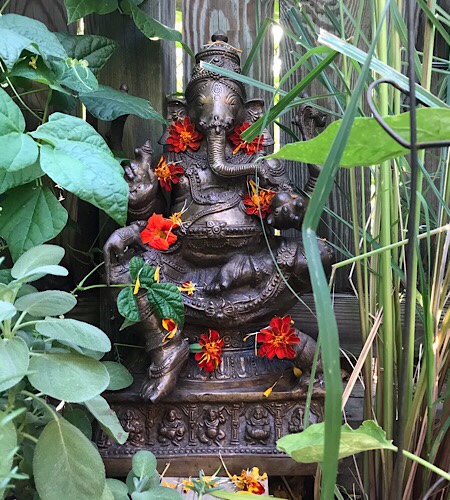
    In which I encounter some more of the 330 million gods (mas o menos).

    (Notes:  (1) Hindu philosophy speaks of 330 million gods, i.e.  a bigger number than we can actually get our minds around, one for every person, giving room for a complete diversity of belief.  While I don’t believe in “God,” I have no problem with the idea of 330 million gods, none more exclusive or correct than any other, with no permission to use of the concept of “God” as justification for murder, physical harm, repression, or suppression of expression because of societal or family of origin privileging any particular belief.  (2) “Maya,” which in Sanskrit not Spanish, literally means to measure, is the tattva that is the bridge between the universal and the manifest.  The “universal” is immeasurable; what we think of as manifest is always measured in space and time.  The distinction between how the tantrikas and other yoga philosophies interpret the concept of maya is for your own research or another day.  (3) The number 108 refers to Shiva.)

    330 million 1a 330 million 1b 330 million 1c 330 million 1d 330 million 1e 330 million 1f 330 million 1g 330 million 1h 330 million 1i 330 million 1j 330 million 1k 330 million 1l


  • | | |

    Boy Leading a Horse

    Last weekend, I went with a friend to see The Steins Collect at the Metropolitan Museum.  I made a special effort to see the exhibit because of the incredible impact on art and culture that the Steins had by virtue of their collecting.  Many of the paintings in the exhibit were familiar; I’d seen them before either at the Met for those from its own collection, at other museums, or in books.  Some, which have ended up in other private collections or in the collections of museums that I have not visited, were completely new to me.

    Among the paintings in the exhibit is Picasso’s Boy Leading a Horse (which, as you can see from the link, the MOMA website currently indicates as “not on view”).  I’ve seen the painting many times before at MOMA.  The shift of location and context shook up my perceptions of the painting, and I indicated that to my friend.  Another woman who was looking at the painting too engaged in the conversation.  “It seems wrong here,” she said.  “It’s a different view,” I replied.  “It is disconcerting, but seeing it in different light, context, and company is enabling me to see new things in the painting and to find a more enhanced appreciation.”

    I have been thinking this week, and talking about it in my classes, how a change of context can bring us new vision.  How often, when things just keep going in a set pattern, do they collect dust and cobwebs (literally or figuratively)?  I asked my therapeutic students whether they had preconceived notions about various challenges of embodiment, especially the chonic ones.  Do you see them as part of your identity, something that causes you pain instead of giving you the joy of movement?  What if you embraced being ever more conscious of alignment instead of being conscious of pain and limitation (and learning better and sooner when you cannot get out of injury without outside help)?

    What of it?  What of the change of perspective?  After all, things get rearranged for us and the dissolution can be gradual or violent or something of both and be something of greater or lesser magnitude.   Times of flux and dissoluti9on are the perpect time for questioning, for new vision, for discovering new ways to experience what had become too familiar, for seeing how one might wish to shift one’s own perspective for the good, to know and take responsibility for one’s own place and piece of this relationship to whatever it is that is shifting, dispersing, or dissolving., to seek to become unbound from the habitual binds of whatever invisible clothing we might be wearing.

  • | | |

    Winter Gardening, Vikalpa Samskara, and Bhavana

    My cherished friend Cynthia for who there will be a memorial service on Wednesday often said that her favorite time of year to garden was winter.  She was not only a passionate gardener who had established an exquisite ornamental garden over a period of decades, but also a scintillating intellect.  In winter, of course, she would tend the houseplants and have flowers from forced bulbs, but that was not “winter gardening;” it was just having some beauty in the house. Winter gardening for Cynthia meant sitting in her nice warm house, reading stacks of gardening books and seed and plant catalogs and planning ways to enhance and develop the garden come the new growing season.  Cynthia did not practice yoga or meditation although she asked about yoga and exhibited her habitual, engaged and polite intellectual curiosity about my practice out of friendship.

    After I took care of the house plants this morning, I sat down with a gardening book and read it while I had my morning hot drink and thought of Cynthia saying this was the best gardening time.  This time last year, I was marveling that I had chard to eat from the garden and espousing the joy of sprouting indoors in order to have fresh food year round (still sprouting and recommend it to all especially this harsh winter).  This year I cannot even see the containers (see picture below after five days of melting and before another coating to come this afternoon), much less any plants outside, so spring gardening will be a completely different experience than it was last year.  I go back, then, to my books.  I read about edible container gardening for climates where spring starts later than is typical for DC.  I think about what I can start indoors and whether I will want to start with different plants.  In the space of time when I cannot actually garden, I develop my intellectual knowledge so that my garden skills and experience can still develop.  When I am out in the garden this spring, digging in the dirt, watching things grow, I will experience with joy in my very being the subtle and not so subtle differences from a dry, warm winter and a cold, snowy one throughout the whole growing season.

    This pulsing relationship among practical experience, study, and joyous understanding is our true practice (sadhana).  Steady practice includes not just actual doing of postures and meditation, but also repeated study for enhanced intellectual understanding of what we are experiencing (vikalpa samskara), and joyous, non-intellectual contemplation with heart and spirit (bhavana) of the burgeoning of combined experience and study.  When we appreciate on the mat and off that there will be times for practical experience, times for study, and times just to rest with a rich fullness of contemplation of the fruits of experience and study for the joyous recognition of beauty and consciousness, then we will never be empty.  We will not suffer from the confinement of a blizzard or an injury because we will know that it is time to shift our focus from being on the mat or on our meditation cushion or out of the garden (or whatever it is that is your work or hobby or course of study) and more to studying what others can teach us in words or demonstration.  We will know that the more we enhance our practice with both practicum and book learning, the more we can move towards an ever refined and steady abiding of whatever is our passion in our hearts.

Leave a Reply

Your email address will not be published. Required fields are marked *

This site uses Akismet to reduce spam. Learn how your comment data is processed.