| |

Prana+Yama or Prana+Ayama (and Global Climate Change)

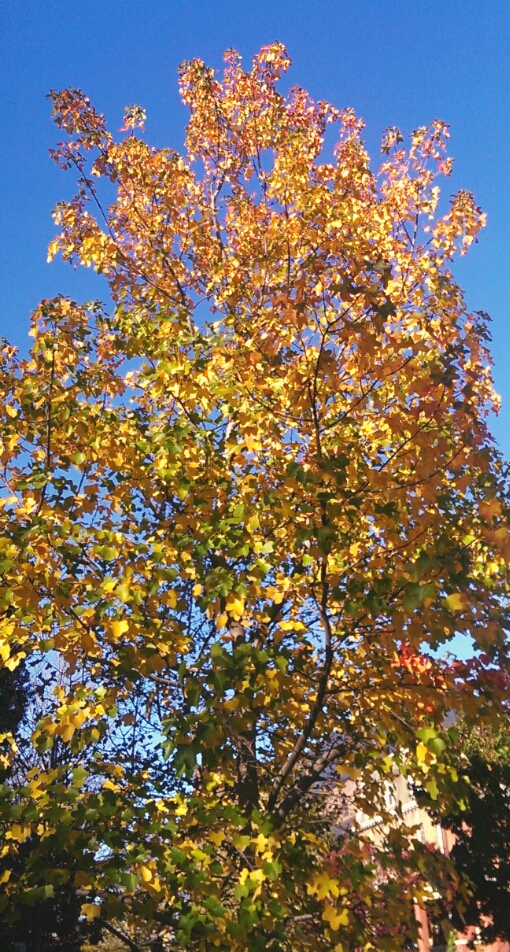
The other day a friend commented that it seemed that a major contributor to global climate change is how we have set out to control our environment instead of aligning with it (my paraphrase).  So much, he said, of what contributes to global climate change is how we heat and cool and light our homes and work places.  For example, instead of honoring the change of seasons, we overcool in summer and overheat in winter, so that we can wear the same clothes and eat the same foods year round in apparent comfort.

This comment resonated with me deeply.  It brought to mind what I have been taught about possible approaches to pranayama — the yoga practice of conscious breathing.  Pranayama usually as translated as breath control or restraint.  This assumes that the conjunction in sanskrit is of the two words “prana” and “yama.”  Prana here refers to the subtle energy of the life force in general, which we can understand best through the breath.  Yama means restraint.  If, however, we think of pranayama as the conjunction of “prana” and “ayama,” which is a reasonable way of looking at the way the word is formed, we can understood pranayama to be the practice of expansion or alignment with prana.

When we seek with our yoga breathing practices on the mat or with our technology and lifestyles off the mat to restrain and control nature at the expense of listening and understanding, we will be at war with ourselves and the earth.  If, however, we seek to align better with nature on and off the mat, to expand and enhance our relationship with the life force, rather than to restrain and control nature, we will expand our awareness of the subtle forces of the earth and live in a more life-affirming way.
Similar Posts

  • | | |

    What My New Smart Phone Is Teaching Me About Yoga

    I spent nearly three hours talking with tech support just to get the phone authorized.  And once that was accomplished, the guy helping me also was unable to figure out how to transfer my contacts from the old phone to the new.  Last night, on the second full day, I opened every item in settings just to learn about this piece of technology and found another way to transfer contacts than tech support had tried.  Hooray!  I didn’t have to enter them manually one by one.

    So it’s like this:  no matter how brilliant a system, if I didnt learn how to use it, I wasn’t going to get any benefits.  The more I studied and practiced, the more I would be able to use it in a way that enhanced my daily life.  Although a teacher is necessary, it takes our own thorough, steady, and attentive practice to empower ourselves and expand our limits.

    I had thoroughly resigned myself to typing.  Now I will have more time to figure out how to resize photos.  That may feel less urgent.  It’s busy at work, and the garden, yoga mat, meditation cushion, library, and beautiful weather call me to them.

    image

  • | |

    “Beginner’s Mind” (and vikalpa samkara)

    Vikalpa samskara is a term that describes the fundamental process of an ever refining yoga practice.  It encompasses both study of text (with a teacher) and experiential learning and practice.  With just experience, we may feel full unto ourselves, but we cannot explain the richness of our experience to others nor can we understand why.  If we just hear something from a teacher or see a picture or read about it in a book, however, no matter how book smart we are, we do not have the understanding that comes from personal experience.  It is by continuously combining and refining study and practice, that we can have a progressive deepening of true knowledge.

    We often talk about “beginner’s mind” with respect to asana practice and meditation (and bringing the beauty of that state off of the mat).  We are invited to be receptive and open the way is an ideal beginner, who wants to learn, but does not yet know the topic.

    What does “beginner’s mind” really mean, though, in the context of someone who is experienced?  I do not believe that it should mean discarding either book learning or discrimination built of experience.  What it suggests to me is to approach our practice and life with freshness, with open-mindedness, without being bound by preconceived notions.  I think this is the true process of vikalpa samskara. To be able to deepen our knowledge ever more deeply, we have to be willing to be open to shifts and changes in understanding.  Then “samskara” does not become a rut, a bad habit, the inevitable effect from a previous action, but the development of a deepening path for more refined understanding.

  • |

    Ice on the Potomac

    A treasured friend and respected colleague who left her body late last week was buried this morning.  The work year started, then, with some colleagues and I leaving the office for a portion of the middle of the day to drive up to the cemtery and offer our love to her family and our good-byes to her physical presence.  On the way back to the office, I noticed that the Potomac has been icing over, which is very unusual.  I also remembered that I had my camera in my pocket.  So I took it out and caught the moment in honor of my friend who would have loved the way the birds were dancing on the ice, in honor of beauty, in honor of the life teeming above and below the apparently still, frozen river.potomac ice

Leave a Reply

Your email address will not be published. Required fields are marked *

This site uses Akismet to reduce spam. Learn how your comment data is processed.