|

Putting the Garden to Bed Sun Salute

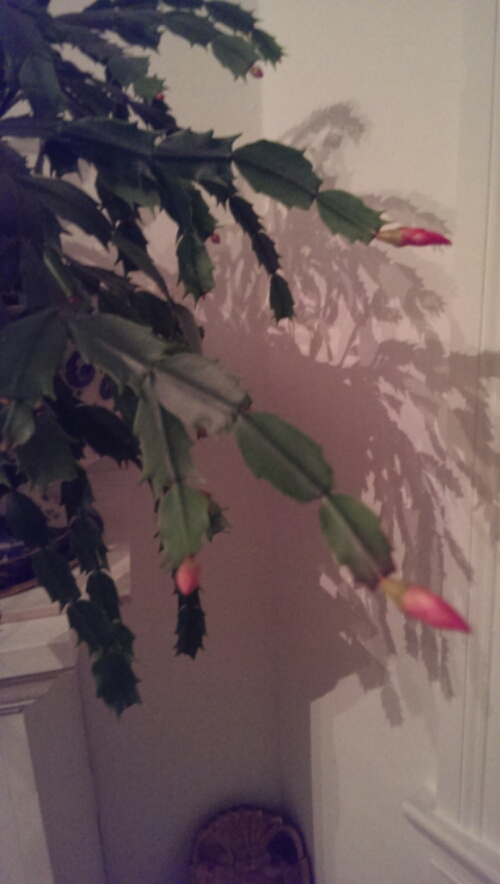
Yesterday (latest in the season ever — see interesting articles in the New York Times last month about Thoreau as a climatologist) I spent the morning bringing all my tropical plants inside.  Part of the reason it was later is that I have learned that the orchids and night-blooming cyrius like nights in the low 40s and can tolerate the occasional single night in the high 30s, but most of it is that it is a warmer season than any in the decade I’ve had a significant number of tropical plants.  I also bring inside the lemongrass and lemon verbena (annuals here; perennials where they are native).  I also like to bring in rosemary in a container.  Also, what were once small plants in growers pots are now a huge jasmine and a bay tree.  When I bring all of this inside in the winter, I transform the house into a retreat.  When I bring it all outside in the early spring, my tiny yard is full and lush before the annuals start flourishing.

Once the tropicals were all inside, I cleaned up, tended the beds and containers, and strew some more winter kale and baby spinach seeds (no frost in the forecast for the next 15 days — so I could have new kale and spinach through December; also, some of the seeds will wait and be the early ones that come up during that warm week we always have in February).

Putting the garden to bed has a sweetness to it.  I prepare for next year, but also engage in tending what will flourish best when the days are coldest and shortest.  It is a going inside, knowing that there is a need to go inside and let some things be dormant in order to flourish fully when the sun is bright and hot and calls me outside.

This type of gardening is stressful for the lower back, hips, and shoulders.  Throughout the hours I am gardening,  I like to engage my alignment by intermittently doing some poses, strongly integrating my shoulders, hips, and core:  working strong “shins in/thighs out” I practice uttanasana (standing forward fold), utkatasana (chair pose), and adho mukha svanasana (downward facing dog), and maybe even handstand.  It is critical to make sure not just to bend from the knees, but also to make sure you have a good lumbar curve and your tailbone is tucked, when picking up containers or other heavy objects.

At the end of several hours of gardening (bringing the tropicals inside also entails vaccuuming), I need to realign, stretch, and reintegrate, but I’m tired.  I also want to practice in a way that honors and celebrates the sweet inward nature of the work I have just done.  This is what works well for me:

1.  Seated foot massage.

2. Balasana (child’s posture) with arms stretched out, palms, forearms, and armpits lifted.  Inhaling lift underside of arms to strenthen, exhaling soften between shoulder blades to integrate.

2. Chakra vakrasana (cat/cow breathing).

3. (putting the garden to bed sun salute):  Table pose (if you make sure you have good lumbar curve, table is one of the best postures for making sure hips, back, and shoulders are aligned well); Downward facing dog (play in the pose to integrate and stretch the legs and arms and strengthen your core); Palakasana (plank);Table pose; Balasana;Table.

Repeat the series several times.  Add in lunges (coming into the lunges from table).  Add in twists from table, threading one arm through and coming down onto that shoulder).  Add in pigeon pose (with a forward bend).

4. End with legs up the wall, a supported or seated forward bend or two, and savasana.

Enjoy how this practice nourishes and realigns, but generally draws the attention inside, getting you ready to enjoy the inside while waiting for the next growing season.

E

ps While I was practicing, I had a big vat of tomato sauce cooking from the last (perhaps second to last) harvest of cooking tomatoes.

Similar Posts

  • | | |

    New Year’s Greetings (Web Version of E-Newsletter)

    Dear  Friends,

    Despite being in the warm and comfortable bed for which I am grateful every day, I woke up sore-hearted this morning.  I’d been dreaming first of dodging bullets in a shootout and then striving to escape rising flood waters.  I did not suffer any physical harm to my person in these dreams, but felt scared and lost and unable to save those around me at greater risk.  With the morning wake-up call, I got out of bed and followed my cat Uma down the stairs for our morning ritual.  I changed her box and fed her.  While she ate, I did some gentle asana to unknot the sleep from my body.  I took my seat for pranayama and meditation, and Uma, as is her practice, immediately curled herself up against me. After meditating, I prepared a healthful and tasty breakfast and then got to work.  After a few hours of working, the charged emotions of my dreams faded into the background.

    I’ve had dreams like this before, and it is not surprising I would be having them now.  Gunfire and flood waters and other violence (man-made and “natural”) are our daily news.  For the most part, even those events that hit closest to home such as Hurricane Sandy have not caused irremediable harm to those I know, even those who were impacted.  I find myself asking what I, as an ordinary person without special insight or extraordinary ambition, should or could be doing in the face of apparently ever-increasing societal rancor, divisiveness and violence and destructively extreme weather and increasing environmental degradation.

    Can the yoga practices help in this?  I think so.  At its most insidious, much of the core elements of the yoga philosophy served to justify keeping in their place without protest those without power by virtue of gender or social class.  I believe that in our Western context, though, these same practices can be used to help us to better handle and accept what comes our way without requiring us to be idle and complacent in the face of injustices or harms that we can change.  I might not be a visionary, but I can be a good citizen.  I might not be able to radically transform, but I can be responsible for taking care of my health and home in ways that minimize my impact on the environment and others and give me the most strength to take care of those with whom I am in relationship.  I can practice going deep into challenge with the yoga with the intention of being able to live with greater grace and beauty whatever comes.

    I invite you to join me in this endeavor (and to share any concrete ideas–especially those of you who have visions for making things better; I’ll listen and contemplate).

    The yoga offerings continue on the same schedule:  William Penn House (pay the suggested donation or whatever you can), Tuesday nights from 6:30-7:45pm; house class for charity on Wednesday nights (email me if you want to join); Friday nights gentle/therapeutics at Willow Street Takoma Park from 5:45-7:15.  For immediate news of a change in class schedule or special offerings when I am substitute teaching or offering a workshop, please like my Facebook page.  If you haven’t already, please consider subscribing to my blog to enjoy photos and musings about the yoga life and join in the dialogue.

    May the new year bring you, along with the inevitable challenges, joy and peace at heart.
    Peace and light,

    Elizabeth

  • | | |

    State of the Garden

    I think during World War II, backyard gardens supplied something on the order of 40 percent (don’t quote me on this) of the nation’s produce. Were we to do that, how much it might contribute to alleviating any shortages–with so much of our food from beyond closing borders.

    How might it help shift our growing climate imbalance and social inequality and the hideous chaos it unleashes? Wouldn’t growing some of your own food be a healthy strategy?

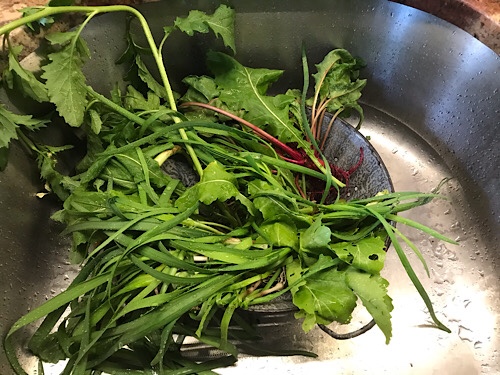
    The generous harvest from today’s garden all came up from prior year plantings. I may joke about how many variations of greens and grains and pulses I can come up with, but the greens are from my back garden, bursting with nutrients, and everything else is a long storage pantry item (including in recent years, dried beans, for having grown enough of them). Most anything else is a luxury. I can go a long time between trips to the grocery store and still have well-flavored, healthy, and inexpensive meals.

Leave a Reply

Your email address will not be published. Required fields are marked *

This site uses Akismet to reduce spam. Learn how your comment data is processed.