Food for the Mind (Yoga Philosophy, etc)

Contemplations on readings and yoga philosophy.

  • | | | | |

    A Flash of Abhuta

    I contemplate (practice bhavana on) the yoga principle abhuta (wonder) on a fairly consistent basis. When we can find wonder in sheer miraculous diversity of manifestation, we can enter a space of joy whence we can more likely respond in the highest.

    This afternoon, perhaps because I have so recently gone on a practice intensive, I experienced a spontaneous uprising of delighted wonder on receiving an email that would otherwise cause me some consternation and annoyance. Instead, my first reaction was, “My goodness! Another one just like the others, but still new and different! Amazing how that happens. And now I will have to respond.”

    I felt that way again as I joined the rush hour crowds on my way from work to go lead the restorative class at Takoma Park. (If you’re in town, drop-ins welcome. Thursdays at 8pm at Willow Street Takoma Park through the end of May).

    Peace and light, E — Posted with WordPress for BlackBerry.

  • | |

    An Obituary and a Quote Being Widely Shared

    It is extraordinary to think how one man can have had such significance in so many lives.  This quote provides valuable insight and perspective:

    “I mourn the loss of thousands of precious lives, but I will not rejoice in the death of one, not even an enemy. Returning hate for hate multiplies hate, adding deeper darkness to a night already devoid of stars. Darkness cannot drive out darkness: only light can do that. Hate cannot drive out hate, only love can do that.” Martin Luther King Jr.

    According to one source, the quote is a hoax (though no proof is offered).  It is a beautiful quote, whoever penned/said it.

  • |

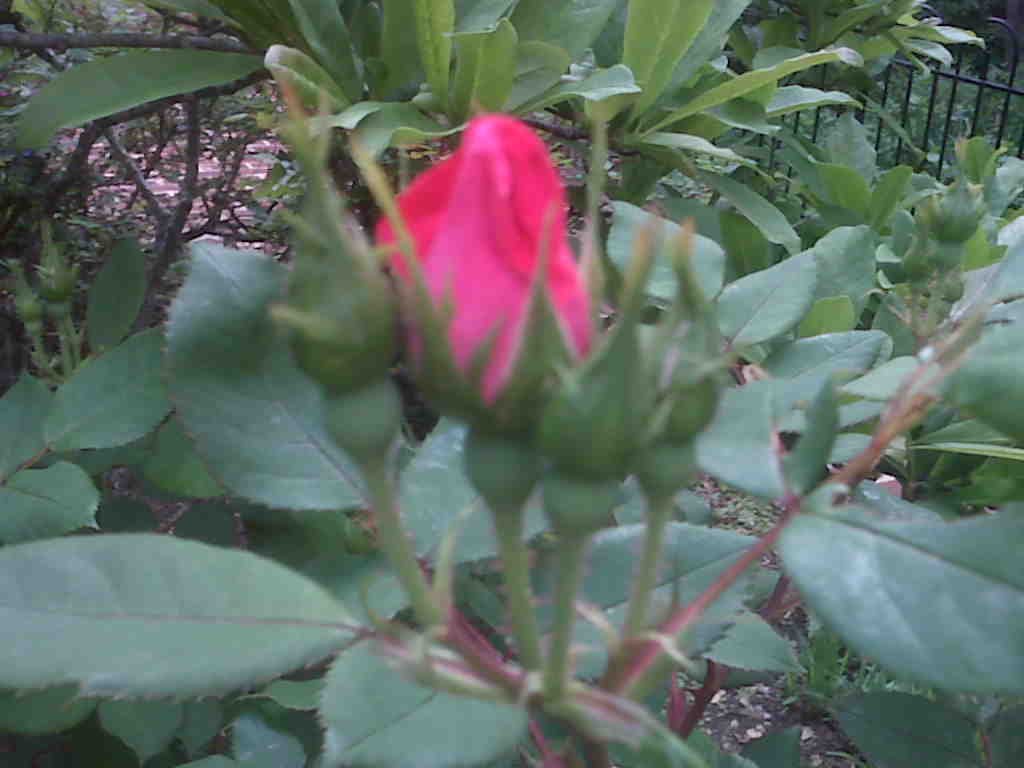
    Nyaya of the Rosebud and the Rose

    As I walked through the neighborhood for the past couple of days, going from one place to another, I have seen hundreds of rosebuds. In enjoying the exquisite form of the buds before they open, I thought about the teaching I have heard from Paul Muller-Ortega of the rosebud and the rose.

    The buds are lovely ad perfect in their on right, and at some level, we hate to see them go. But the rosebud itself must dissolve or be destroyed for us to get the rose. The transformation into the full-flowering of the rose requires the dissolution of the bud.

    So too, with everything in life. When we can fully appreciate this cycle of dissolution as part of creation, we will be less attached in a way the leads us to be bound up in grief and loss, and instead find a fuller appreciation of whatever beauty is present in where we are in the cycle.

    Peace and light, E — Posted with WordPress for BlackBerry.

  • | |

    In Which I Learn a New Acronym While Away on Meditation Intensive

    On our last day of the intensive, many of us ended up talking about different upcoming events and opportunities for study, practice, and exploration. We all had many things that we would love to do. I do not think that I was alone in feeling twinges of longing when friends shared what gatherings or courses they were planning to attend or considering attending. We knew that we could not possibly fit it all into our lives.

    My lovely and witty friend Emma said, “it’s just f.o.m.o.” That’s an acronym I had not heard even though I live in a town that flourishes on acronyms. “It’s ‘fear of missing out,'” Emma spelled out.

    We never want to miss an opportunity to discover the secret, to learn the perfect piece of wisdom, to experience the most exquisite of delights. The reality is, though, that if we get caught up in the fear of missing out, that we undermine the possibility of experiencing the greatest possible happiness with what fits into our lives.

    Peace and light, E — Posted with WordPress for BlackBerry.

  • | | | |

    Balance of Stability and Freedom

    Last night, we were talking about the parameters of cultivating a steady and fruitful meditation practice, and Paul Muller-Ortega suggested that it was about the balance of stability and flexibility. He had learned the principle from a different source, but I have contemplated and explored the principle in depth from teachings I have received from John Friend.

    A critical aspect of the Anusara alignment principles is to find the perfect balance of stability and freedom. We need stability to stay fully and safely in each pose. We need freedom to achieve the fullest and most delightful expression of the pose.

    We find the stability both by making certain that we have established our foundation (which is an aspect of the first principle of opening to grace). By then using the three aspects of muscular energy–hugging the muscles to the bone, drawing into the midline, and drawing energy from the periphery to the focal point, we make possible an expansion of our edge, whatever that might be. Having a solid, aligned foundation and affirming our very core with these actions, gives us security and balance. We also want to reach out, to be playful, to expand to our fullest, which we do using the expansive, outreaching organic energy — from focal point to the periphery, from the midline to our outer edges, from the very marrow of our bones through bone, muscle, skin, and beyond.

    If we over-emphasize (including natural inclination) stability, then we can get stuck. If we just let ourselves be free, then we end up all over the place. When these elements are perfectly balanced, we can safely find our deepest freedom of expression.

    When I teach this principle as the focus of a class, I always invite my students to think of how important the balance of stability and freedom is for every aspect of our lives.

    The discussion last night put this principle in the context of the regularity and steadiness of our practice, with the recognition that to stick with our practice, we will sometimes need to vary the time or amount of our practice, or what elements are included in the practice.

    To get the fullest benefits of a practice (this applies to any practice and not just to meditation), we need to show up consistently and to practice in accordance with how we have been taught. To stay steady, though, we need to give ourselves the permission or freedom not to show up, or within appropriate parameters, to modify the practice when life gets in the way of what we think would be the ideal practice. If we think we have to do things at the exact time and place every day in a perfectly precise way, we become rigid. On the other hand, if we are loosey-goosey about it, then we do not have much of a practice and will not realize the benefits that we could get.

    Where in your practice or life would more stability and steadiness give a field for greater freedom and happiness? Where could you give yourself a little more flexibility so that you feel that steadiness brings the possibility of joy, rather than tying you down?

    Peace and light, E — Posted with WordPress for BlackBerry.

  • | |

    Artha, Kama, Dharma, Moksha (and Politics)

    Last night, Paul Muller-Ortega, as part of the introductory talk for the meditation intensive, spoke at some length about the principles of ardha, kama, dharma, moksha.

    As I have written about before, in the classical yoga view, it is the renunciation of the first three–material well-being, love and relationship, and right work or path, that leads us to the fourth–liberation. From a tantric yoga perspective, it is living and having the first three from the perspective of illuminated wisdom and discerning (viveka) insight (pratibha) that makes us free (jivanmukti) in this life.

    One of the most exquisite things about a steady practice and study, is that each time we revisit a core concept, we hear and understand new aspects to bring into our lives.

    When speaking of approaching these elemental aspects of human being, Paul noted that ardha includes not only material well-being, even wealth, but also the power that wealth brings and how we use it. Although he only mentioned that briefly amidst several other concepts, it really resonated with the current state of my being in relationship to the world and our country.

    I have been contemplating deeply about wealth and power in this time of budget debate, and how they can and should be used to bring nurture, peace, and health to the maximum degree possible. (You might guess that I don’t think increasing spending for war and decreasing spending for education and health is going to bring us freedom).

    Thinking about the power of money as part of our contemplation of our material well-being is something of critical importance at this time. If we shun or disdain in our minds wealth and power while still yearning for our own comforts, than we have lost an opportunity to bring the yoga principles into our lives as optimally as possible. (Of course, grasping and coveting money and power is completely destructive of the possibility of happiness, but most of us think about that, and it is why some say they are bad — money being the root of all evil, etc.).

    If we are really in the world and want to be happy and to share and spread happiness, while living in accordance with the principles of the yamas and niyamas, especially the yamas: ahimsa, satya, aparigraha, brahmacharya, asteya (non-harming, truthfulness, non-greediness, aligning with spirit, and non-stealing), that is when we will start opening up the possibility of true living liberation.

    Imagine, instead of thinking about material well-being as a “guilty pleasure” thinking of ways in which you can use your own well-being (and work through your practice to discover greater health and strength) to be a voice and power for good in your own individual way.

    Peace and light, E — Posted with WordPress for BlackBerry.

  • | |

    Spring Cleaning (and Path of Sadhana)

    For the past couple of weeks, I have been spending as much time as possible in the garden.  When it is too rainy or cold to be in the garden, I have been doing indoor spring cleaning.  As the days get noticeably brighter and longer, it is delightful to see the new growth in the garden and to polish my treasures and make room to use and enjoy what I have.  I’ve been noticing how the first major activities in the garden make a mess.  Inside, activities such as cleaning out the refrigerator and the closets also makes things seem messier before they they get cleaner.  I’ve persisted, though, and now the garden is teeming with visible new life, unencumbered by the detritus of dead growth on the perennials or spent annuals from last year.  With things I do not need given away or repurposed and things clean and repaired, I can more easily use and appreciate what I have in the house.  It seemed like quite a mess for a while, though, when I was taking things off of shelves and out of drawers and closets in preparation for cleaning.

    There can be phases in our sadhana –both asana practice and meditation and related practices — where all the practice seems to be doing is bringing up old stuff.  It seems like we are more physically or emotionally challenged than we would have been if we weren’t practicing. The thought may cross our mind that we would be happier just going to the movies and going on an eating tour of Italy.

    Although sometimes strong reactions can mean that a practice is not right for us (at a certain point in time or not at all — similar to a reaction to food), it can also mean that the practice is doing the equivalent of spring cleaning.  Part of sadhana is learning how to react in a more optimal way to what manifests and arises from our practice.  When a host of old memories or emotions arise or we press up against our limits by digging in deep physically to find where and how to rearrange our bones, muscles, sinews, and energy channels to clear an old injury, we have an opportunity to clear out and let go to make room for new growth.  We don’t have to shove the stuff back into our mind-body closet or leave it where it obstructs new growth.  The old patterns and memories come up in practice so we can either release them or change our relationship to them so they can become something that serves instead of weighing us down.

    When I get into one of those messy spots, I remind myself how good I feel when I’ve done my spring cleaning, and I try to keep going forward, doing the best I can with the teachings I’ve been given.  I admit that it is easier to persist because I love the actual activity of the practices (though the ones I need to do most can be the ones that are not my favorite, but that’s a whole other train of thought).

  • | | |

    Ignorance is Bliss Only If You Do Not Care What Happens the Welfare of All Beings (Do You Know How Your Tax $$ Are Spent?)

    If you are a true renunciate yogi, then the horsemen of the apocolypse don’t phase you.  The ultimate bliss is leaving your body anyway.  For those of us who are engaged in the world, care about what we eat, care where we live, care about the well-being of family and friends, then learning, understanding, and acting — knowing of course that we can control that and how we act, but not the outcome — is a critical part of a tantric yoga life.

    It’s great to know how to place one’s hands for optimal alignment in downward-facing dog, but do you know how your tax dollars are spent?  Here’s a little overview worth sharing widely.  And perhaps it will make all that noise in Washington about the budget and the debt ceiling seem a little more important.  Check out the “People’s Budget,” which enhances domestic programs, increases participation in paying for our society by the rich, and decreases defense spending and military action.

    And then I highly recommend standing on your head or balancing on your hands or otherwise going upside-down, getting twisted, and knowing that the practice will help you stay sane and steady and able to act.

  • | | | |

    Rosa’s Pizza (and a Planned Trip to India)

    Rosa’s Pizza is on the Long Island Railroad level of Penn Station.  To my best recollection, it has been there since before I started taking the LIRR regularly in the early 1970s, and I still go there occasionally when I connect through Penn Station to visit my parents a few times a year.  Rosa’s makes an eggplant slice that tastes like eggplant parmigiana on decent pizza crust.  Yup, it’s got cow dairy and gluten and lots of fat, but it is one of those foods that is so strongly associated with both place and belonging for me that it gives me great delight to eat it once or twice a year.

    When I was meditating yesterday morning, I had a vision of myself jet-lagged and groggy from landing in JFK and taking the train from the airport to Penn Station to head home after two and a half weeks of a study tour led by Professor Douglas Brooks of Tamil Nadu (including Chidambaram), which I am planning to do at the winter holidays.  In this meditation moment, I was ecstatically happy to be eating an eggplant slice from Rosa’s after taking my seat on Amtrak. I enjoyed the moment and then let go of this reverie to slip deeper into meditation.

    At work, I told a friend of mine about this vision.  He said that was not the right approach to a trip to India — shouldn’t I be eagerly anticipating what I would experience in India itself?  I begged to differ.  The excitement and anticipation of what I will see and experience and learn is a given.  It was sweet to have pierce my meditation how happy I will be to return home.  It helps me remember that for all the ups and downs of my choices, I am comfortable enough with them to be finding meditative bliss in the idea of something that is part of “home.”

  • | | | | |

    April Greetings–Delving into the Essential (Web Version of E-Newsletter)

    Dear Friends,

    It has been a mind-boggling several weeks.  The magnitude of the upheavals and the impact on all of the world, including human beings, is beyond my ability to grasp.  Closer up than the unfolding devastation in Japan and the escalating war in Libya, which daily adds to the bankrupting of this country and planet by our wars, I found myself supporting committed organizations, signing petitions, and writing emails saying that I preferred to be locked out of my work place with no pay than to have taken away any existing protection of the environment or provision health care for low income women.  As my mind tries to expand enough to stay present and active, I am more grateful every day to have and share the practice of yoga.

    Practicing helps us minimize suffering by changing how we relate to pain and the full range of human emotion.  The goal, I think, is to fully and joyously engage in life with an intention to live as harmoniously as possible with all beings, including our individual selves, and simultaneously appreciate and be wonderstruck at the extraordinary and wild vastness of being that makes the time and space of the known universe seem finite relative to life (lives) on earth.  When we can find both perspectives simultaneously, then we can be engaged, but not attached (vairagya).

    How do we focus this intention to live fully and harmoniously in this way?    In the past six weeks, I have had the unbelievably fortuitous combination of circumstances to be able to study with John Friend for three days; to attend the Mahasivaratri celebration with Douglas Brooks, Krishna Das, John Friend, Amy Ippoliti, and Sianna Sherman; Ross Rayburn for a weekend workshop at Willow Street;; Desiree Rumbaugh at a special three-hour practice the following week at Willow Street; and Paul Muller-Ortega via telephone conference.

    Wow, that was a whole lot of input for my practice and contemplation, while living itself was getting more intense.  But, it turned out not to be too much because of the singularity of the teachings.  The message I heard from all of these teachers in their own unique and inspiring voices was that is is a good time to get down to get back to basics, or to put it another way, to explore more deeply the essential principles of practice (and of life).  By getting back to the basics in the practice, we can start knowing at a deeper level what is essential for us to relate as deeply and joyously and non-harmingly (yes, I know it isn’t a word, but I’d like it if it were) on and off the mat to ourselves and all in our web of relationship.

    In both my practice and my public class offerings, this Spring, I am especially focused on exploring what is essential to experience life at its most joyous while still be conscious and committed to the need for effort to change.  In addition to continuing my regular class offerings, I am pleased to be offering a short course in restorative yoga at Willow Street, “Cultivating Relaxation with Restorative Yoga.”

    Restorative yoga is perfect whether you are looking for a gentler way to get started with yoga, an opportunity to relax, or alternative practices for when you are feeling stiff or in pain, or a way for advanced practitioners to explore the alignment principles at the subtlest levels. We will explore a variety of types of supported postures and prop-assisted stretches to enable you to relax into optimal alignment, discover your own space of deep rest and peacefulness, and open your body. The course will also offer simple techniques to ease into sleep, find mini-relaxation moments when things are hectic, and sweeten your home practice–what could be of better service these days?  Everybody welcome. 6 Thursdays, 4/21-5/26.

    To get news in between the occasional email offerings or to see my latest short thoughts, please “like” my new “Rose Garden Yoga” page on Facebook.

    I look forward to seeing you in person soon.  As always, please feel comfortable being in touch by comment on the blog or by email.
    Peace and light,

    Elizabeth