Signs Around Town–Non-Verbal (Happy Valentine’s Day)

Peace and light, E — Posted with WordPress for BlackBerry.
Peace and light, E — Posted with WordPress for BlackBerry.
Peace and light, E — Posted with WordPress for BlackBerry.
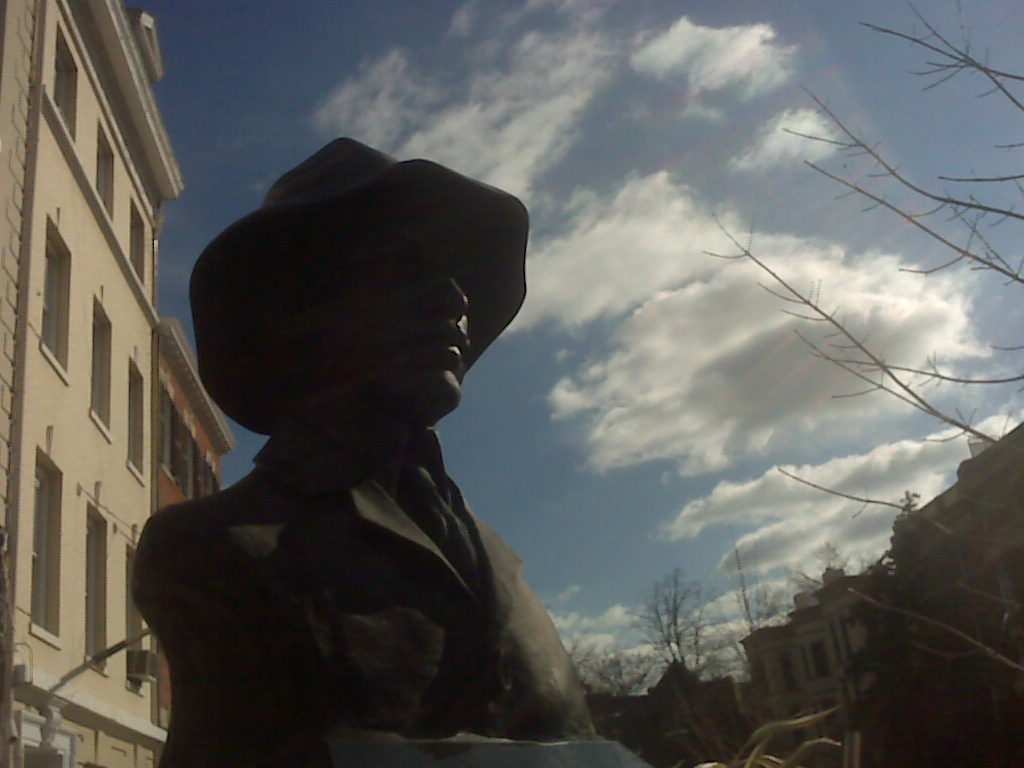
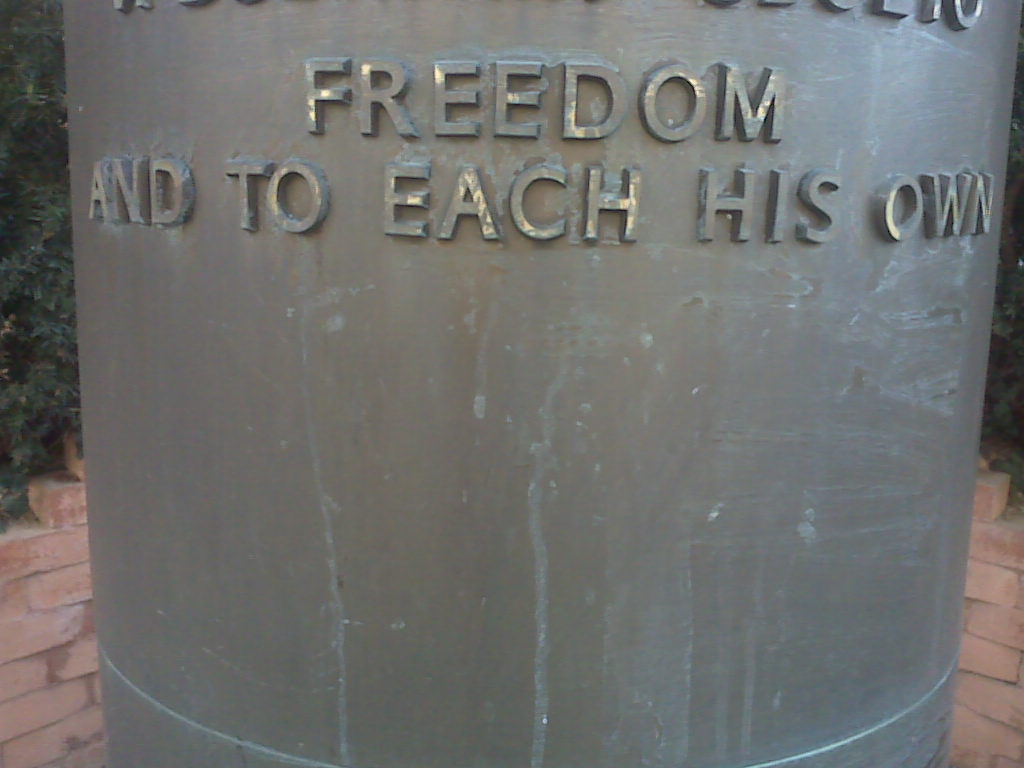
I found on first and second and even third reading this declaration a little confusing. It may be that something was lost in translation (from the Bulgarian–a completely unknown language to me).
It does not say that to each his own is freedom, but that we should have freedom AND to each his own.
I think this means that true freedom is not everyone getting his or her own. Rather, out of freedom, we choose the binds of community and sometimes elect to forego complete individualism so that we can maximize the fulfillment of each individual as a member of the community.
To each his own as the only governing principle does not permit anything other than suspicious and antagonistice relationship. Honoring that everyone wants to be recognized as a free individual but that getting the benefit and support of community requires freely choosing to submit, commit, and work to a relationship in which maximum individuality thrives but the community of individuals is greater than any of its individual members–that’s a great and worthy dance.
Peace and light, E — Posted with WordPress for BlackBerry.
Earlier this week one of my long-time students emailed me before class to say that even though she had strained a muscle in her mid-back, she still intended to come to practice because she hoped it would make her feel better. “It even hurts when I laugh,” she added. I emailed her back saying that I would offer alignment instructions to help with her back, but I could not promise that we would not laugh (which, of course, she reported made her laugh). In fact, it was a class filled with much laughter, but applying the principles of alignment served to alleviate the pain the student had been experiencing.
Towards the end of the class, as we were getting ready to move into a seated forward bend, I asked my student what alignment principles she should apply to take care of her back in the pose. Demonstrating as she spoke, she said that she should spread her toes to activate “shins in;” take her inner thighs in, back, and apart to inner spiral her legs in order to widen her pelvic floor and enable curve in the lumbar spine, releasing some of the strain on her back; and then work outer spiral to engage and protect her back. “Perfect,” I said, “but what should you do before those actions?”
Another student jumped in, “open to grace.” Quite right, but how, I asked, would you apply “opening to grace” as a physical principle in this instance? That seemed a little like a trick question, so I explained how I use the action of “opening to grace” when I am working with an injury (obviously this applies all the time, but it especially applies both when working with an injury and when moving towards a more advanced pose than you have previously practiced.)
Opening to grace here means being patiently and exquisitely sensitive, moving slowly and mindfully enough to be able to tell from the beginning and throughout the entire cycle of entering into, reaching pinnacle (whatever that may be under the circumstances), and getting out of the pose whether the movements are serving to heal and expand before causing more pain and injury. Does any movement into the pose at all aggravate the injury? Does applying the principles gently make it better? Does applying them with fierce intensity help more? If we start with the strongest, we will have already gone past the place where we discover that resting or just a gentle attempt would have been healing or expanding, but any more would be aggravating. When we start with the gentle and sensitive and then move in deeper and stronger without losing the perfect sensitivity that is when true change can occur.
It never feels good to be injured, but because of the immediate motivation to get out of pain, injuries can be great teachers of just how much practicing with true sensitivity and awareness can enable us to expand heart and mind instead of just moving towards wilder poses for the sake of some idea that we are better yogis if we can do more poses.
I am having a momentary yearning that it is hard for me to imagine realizing. Given all my commitments (commitments that I treasure for the groundedness, sense of place, and community that they give me in return), I cannot quite figure out how I could fit in a long weekend in Paris before March 11, 2012.
Nonetheless, I have been enjoying this morning a fantasy of picking up and going to Paris to see the Tagore exhibit at the Petit Palais, and incidentally eating and walking and photographing and delighting in everything else Paris has to offer. I suppose I could buy the catalogue–the internet has made such things ever so easy, but it wouldn’t quite be the same.
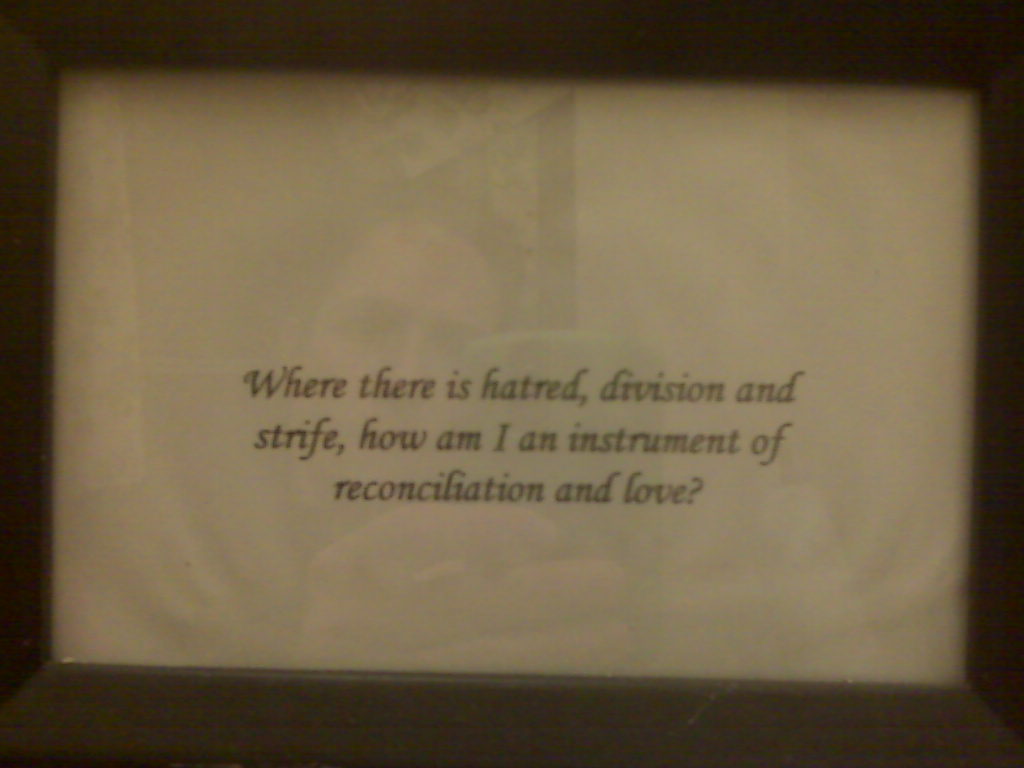
In the washrrom at William Penn House. Come join us for class on Tuesday nights. For me, the practice and study of yoga informs this question.
Peace and light, E — Posted with WordPress for BlackBerry.
Peace and light, E — Posted with WordPress for BlackBerry.
When things are in
A tangle, it is hard
To see what is solid
And what is shadow.

Peace and light, E — Posted with WordPress for BlackBerry.
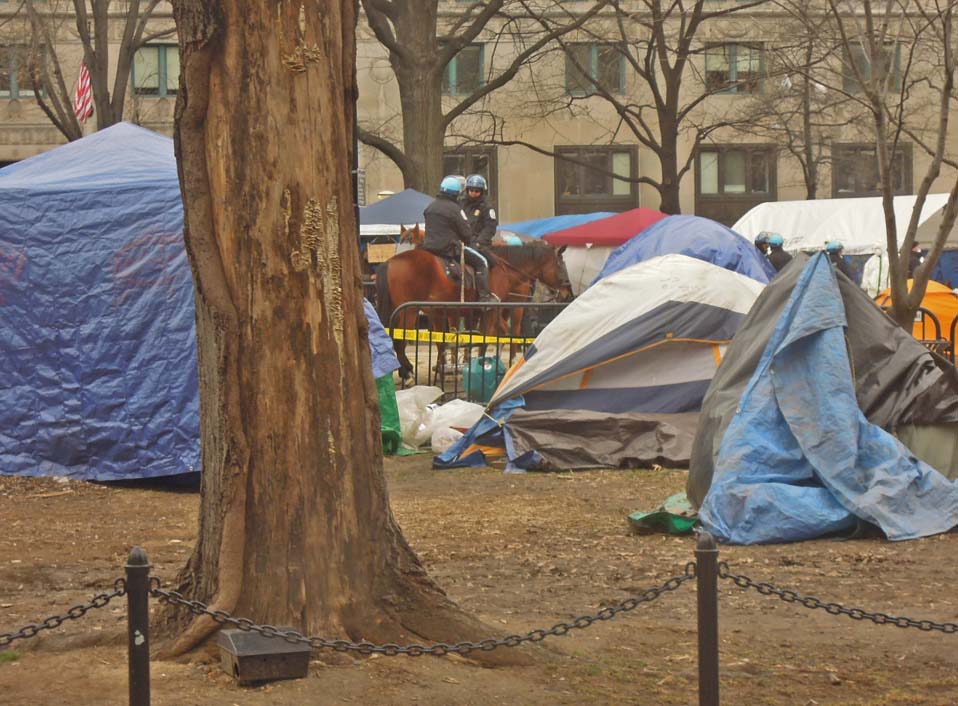
When I was on my way to do volunteer work this morning, I rode the bus past the dregs of Occupy DC-McPherson Square. The police presence was thick. I wasn’t sure why the heavy construction equipment was necessary. It is hard to know what will happen to the movement when it loses its physical location. It is clear that the idea of “occupy” has already entered popular culture, and the idea of the 99% will be part of this year’s Federal elections.
As things are created and dissolved, it is always hard to know what will stay and what will disappear from the fabric of our lives. Part of it depends on the strength of the ideas. Part depends on the commitment of those involved to transform and evolve to keep what is good moving forward even when beset with challenge and upheaval. As for the last photograph, which was taken just down the street (the cop cars were clearly related to those in the Square)–I couldn’t tell you what god or whose country; could you?

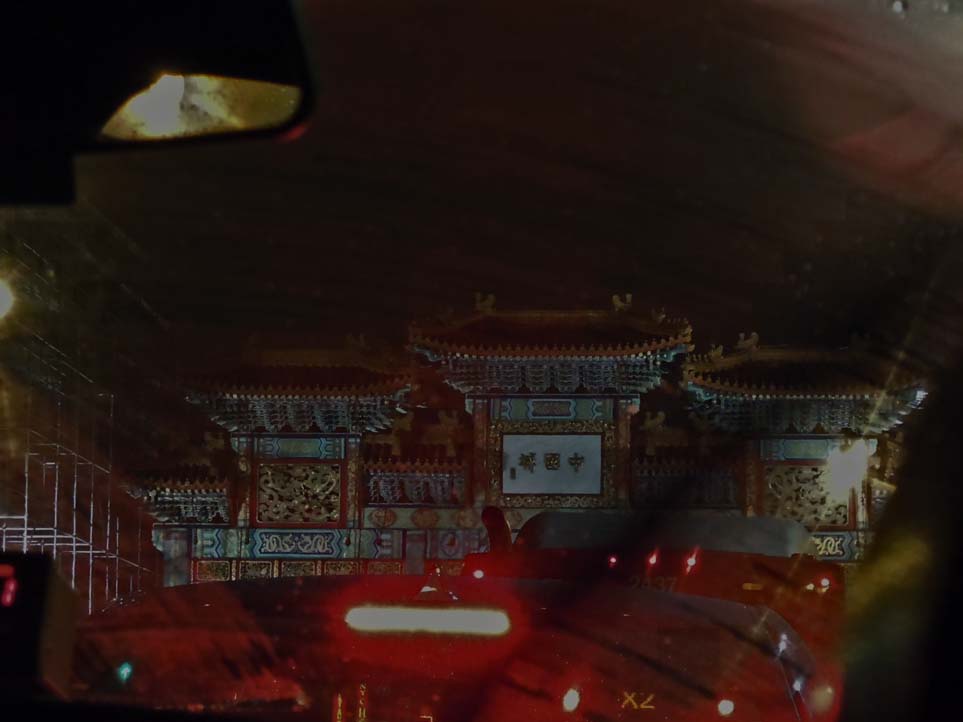
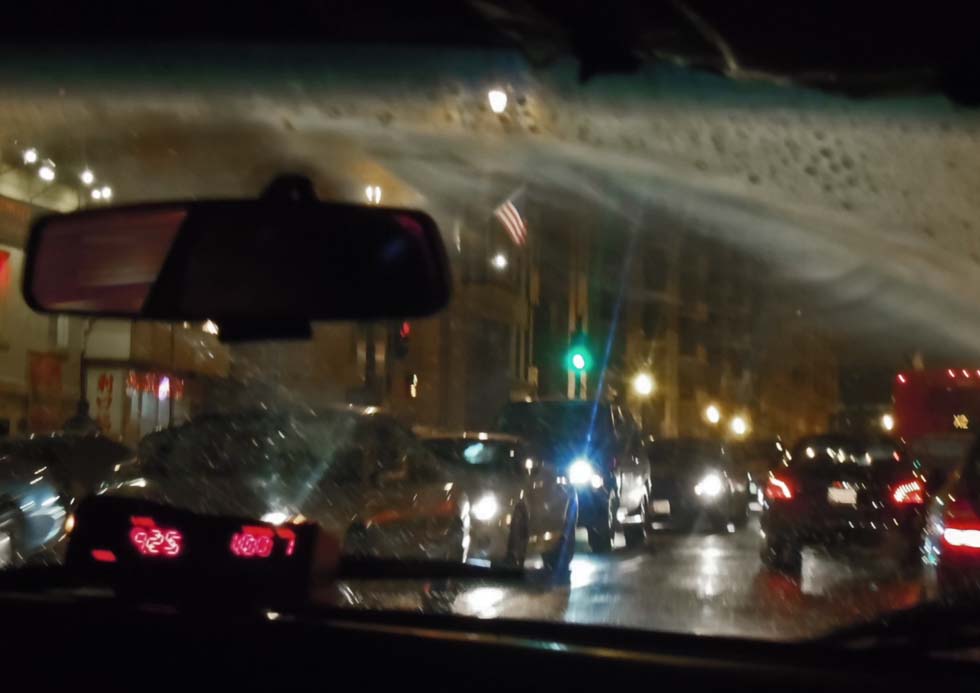
It was one of those days when it was hard to get home. I’d gone to the museum to see the Harry Callahan at 100 and then went out for tea in Georgetown with a friend. I stopped on my way home for some groceries. I got to the bus stop just as a bus was arriving, but with a big suburban SUV hogging the bus stop and the dark rainy night, the driver sailed past without stopping. He must have been really late and was taking advantage of a short break in traffic. I caught a taxi rather than wait in the cold rain for the next bus.
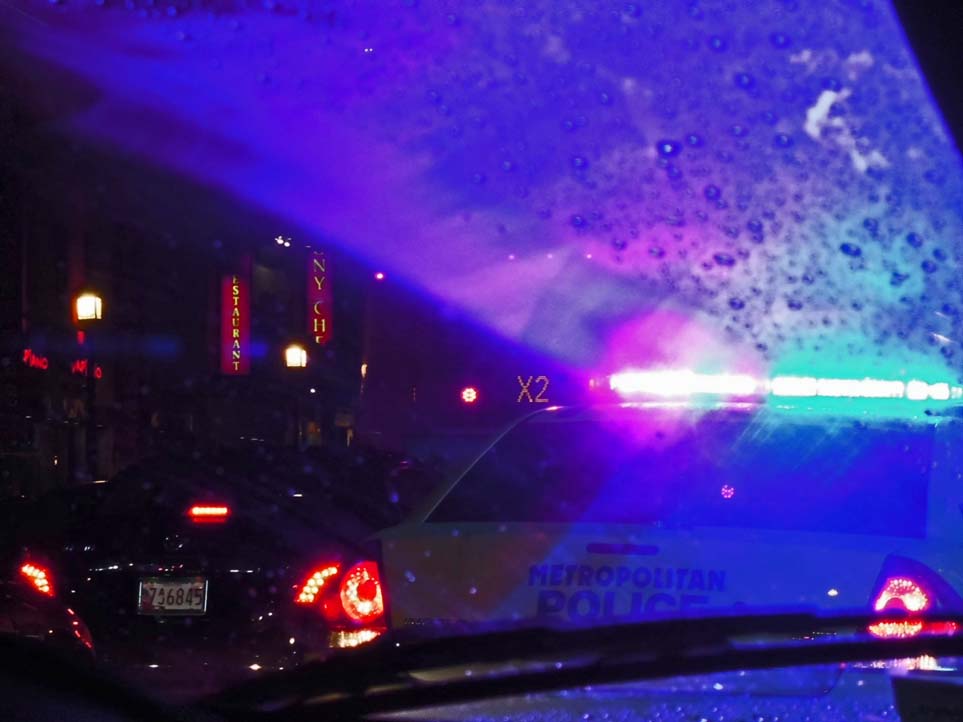
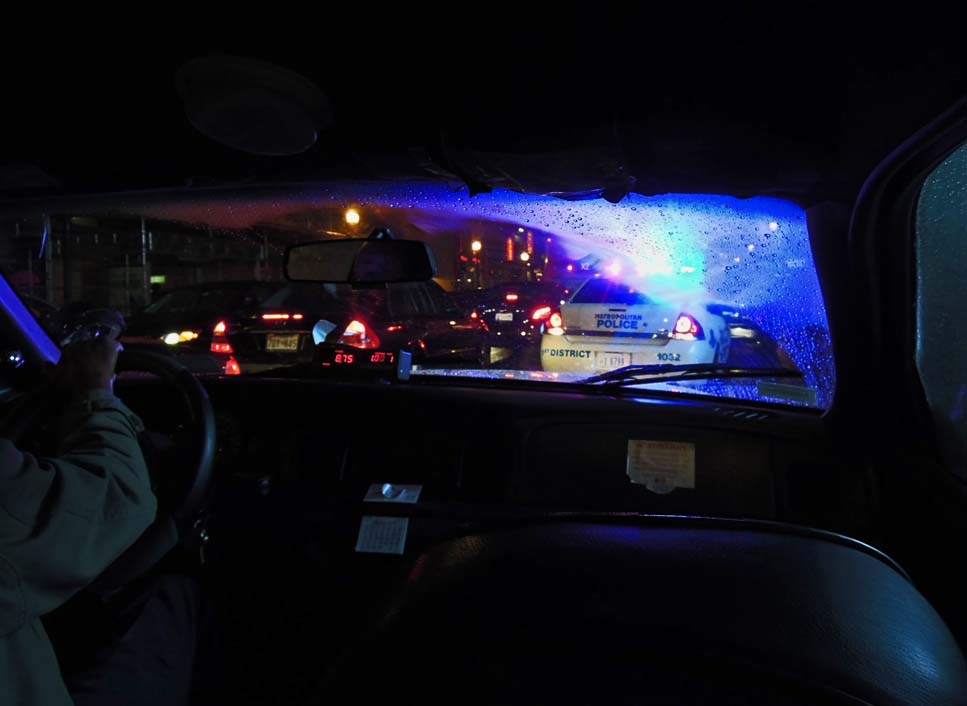
Traffic was completely still on K Street because of the police trying to clear out Occupy DC from McPherson Square and a number of streets were closed off to traffic, so the driver went to H Street, which was almost equally congested. Things started to move for a bit, but then there was then some issue with another big black SUV with suburban plates in Chinatown that had been pulled over by the police. This resulted in absolute tirade by the taxi driver as to why DC should not be allowed to be a state. I was having trouble explaining that Federal voting rights for citizens in the District had nothing to do with whether the cops could have pulled the car over better or faster so that it would less obstruct traffic. I gave up completely when he started in on how DC schools should be better than Maryland’s and Virginia’s because they had so much more tax revenue.
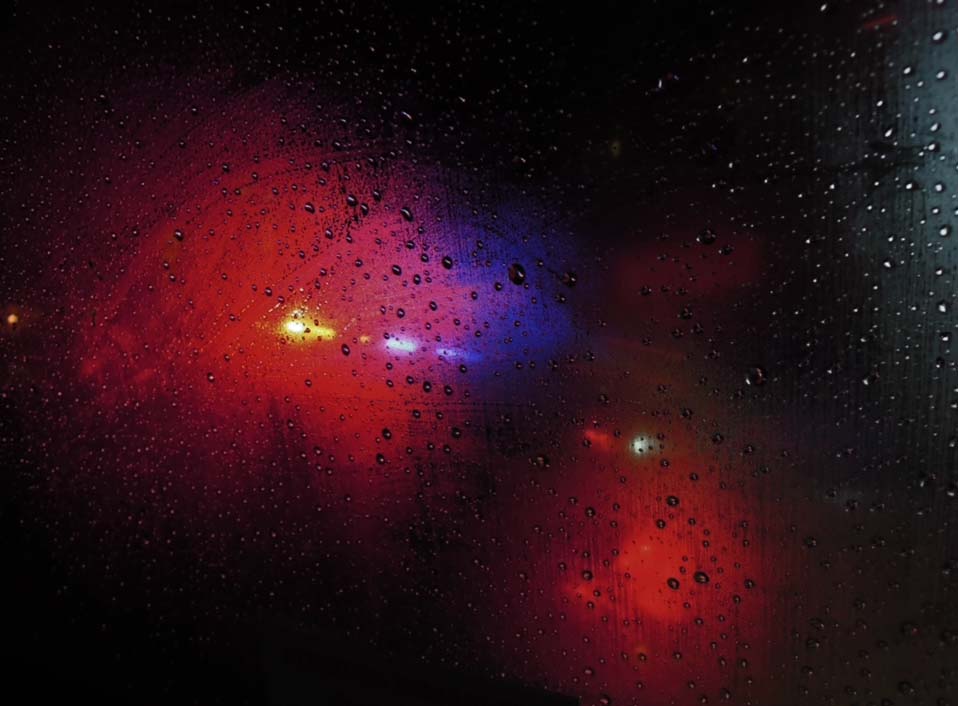
I remembered I had my camera in my pocket. I accepted the the meter was going to run unless I got out of the taxi in the rain (and then what was I going to do?) and enjoyed photographing the lights of the city at night. Sometimes, my camera really helps me accept whatever is and see the beauty in it.