| | |

Found Sculpture

I saw this beautiful roll of chicken wire in the Enid Haupt garden when I was walking back to the office after a quick visit to see the Gods of Angkor exhibit at the Sackler Gallery (sorry about the absence of links; blogging from the BB).

I was first introduced to the idea of “found poetry” in junior high school and have developed a life-long habit of photographing words to change, enhance, and/or question their meaning and hidden beauty by the act of extracting them from their original place and presenting them as a photograph. Marcel Duchamp and others did what poets and photographers were doing with words with ordinary objects by presenting them as sculpture.

Here, where I have photographed the chicken wire roll, is the art a sculpture (because I could treat it as such) of which I have taken a photograph–the photograph being mere documentation? Is the art the photograph of what I have seen to the extent I am offering it as a vision and a dialogue generated by what I saw? Or is the photograph merely a snapshot taken with a hand-held computer device documenting an object that happened to be sitting there–not art at all? If it were not for artists such as Duchamp, could I or would I even be able to ask this question?

I think that analogous types of questions have been and can be asked about the variety of religious and mystical experience. Is there a particular way they must be experienced? Do such experiences have to fit within a prescribed framework to be valid? When are such experiences madness or delusion and when are they the voice of the spirit? Who gets to decide? Does it depend on the era and the culture in which the experiencer lives? Does the answer to any of these questions matter if the experiences lead one to a more loving, compassionate, and beauty-filled life?


Similar Posts

  • Rothko in the Tower Closing This Sunday

    Walk quietly and meditatively to the National Gallery’s East Wing right away if you have not yet seen the Rothko in the Tower exhibit and you are in town.  Exquisite.  I have been many times while it has been open (one of the best things about my job is its proximity to the National Gallery, allowing me to go visit a painting or two at lunch), but have left if more than a couple of people are in the exhibit with me.  Sometimes it is others who appreciate the subtleties and then we get the joy of communal appreciation and connection.  More often with a group of visitors climbing the steps to the Tower gallery space, it is tourists who come up, see that the paintings are mostly black and loudly exclaim that they don’t get it.  The act of not getting it without effort tends to make them louder and more inclined to just chat about whatever and not look at the art.  When I find an art exhibit that is not to my taste, it is my practice (as I was taught) to make an effort to appreciate the technique and intention, if not the aesthetics, and then move on with some insight gained for the broader art world–knowing there is another opportunity just down the hall or the street for me to find deeper delight and inspiration.

  • | |

    Brahmacharya, Civic Responsibility, and Enlightened Self-Interest

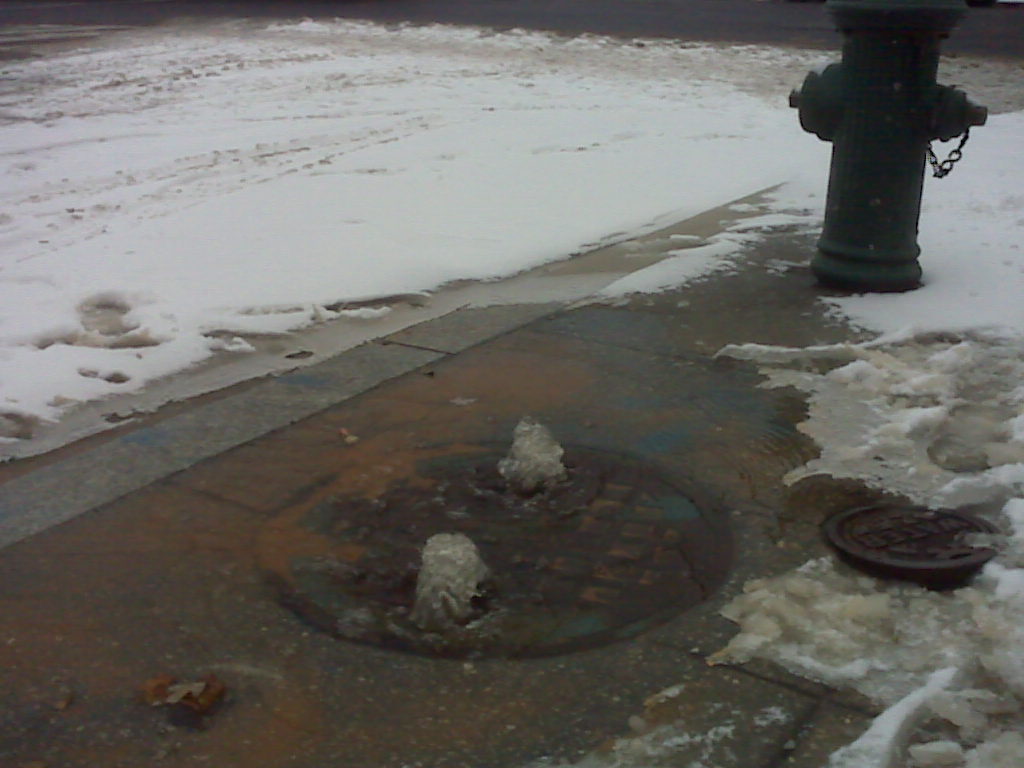
    I saw this water main break while I was walking to work this morning. Several people walked past it without a glance–could they really not have noticed? It looked relatively recent because the puddle was still modest and had not started freezing. I paused, took out my mobile device and telephoned the mayor’s city-wide call center (in DC “311”–whoever answers will transfer you to the right place; in this instance, “water emergencies”). A couple of people who saw me calling looked at me as if it must have been my fault or else why would I be calling,

    I thought about what it was that moved me to call. I saw harm to the environment (colossal waste of water while we are in a drought if the leak was allowed to continue without the earliest possible intervention) and potential danger to people from spreading icy water that will turn into ice late this afternoon. What is it, though, that leads one to take action to change or fix something that is technically not one’s business. What makes it part of one’s duty or responsibility when it is not directly related to one’s individual property or person? At some levels, it is just social contract. By choosing to live together in closely proximate society, it is in all of our self-interest to take care of shared areas, though the ubiquitously unshoveled sidewalks leads me to believe that most people haven’t been taught or grasped the principle that if we all contribute “our share” the whole place and our own lives would be far more enjoyable.

    These thoughts led me to think of the application of the yamas and niyams in Patajali’s Yoga Sutras and in particular, the principle of brahmacharya, which is one of the five yamas on the first level of the eight-fold path of yoga in Patanjali’s Yoga Sutras.

    Brahmacharya literally means being like Brahma, but it is often translated as celibacy. Brahmacharya, from a less socio-morally result-driven interpretation, could also be thought of as aligning with the divine. Before we are enlightened, though, how do we know what will help us align with the divine? I once heard Professor Douglas Brooks say, in a lecture I attended a number of years ago, that the yamas and niyamas, the ethical precepts that lay a foundation for the practice of yoga are for the goal of the individual reaching enlightenment. I was a bit taken aback by the statement at the time. It sounded as though the yoga precept was that the purpose of ethical behavior was self-interest, and was not because ethics was summum bonum. I am less troubled by the idea after much contemplation. What is the harm of the goal enlightenment serving to motivate and shape our behavior? The methodology that includes the yamas and niyamas would have us engage in certain ways of living and practices in order that we can change our karma by shifting the patterns (samskaras) that take us away from spirit rather than lead us toward spirit.

    To me, this means acting in away that not only does not harm (ahimsa–the first of the yamas), but seeks to expand the possibility of fostering the collective good, including the good of the earth. In this sense, to the extent that brahmacharya is a precursor to enlightenment–the merging of the individual self with the greater “Self” or spirit, acting from a placed of enlightened self-interest can be seen as helping us to find the true Self (as long as we are not attached to a particular good or outcome, but that is a whole other topic).

  • | | |

    Extreme Pink

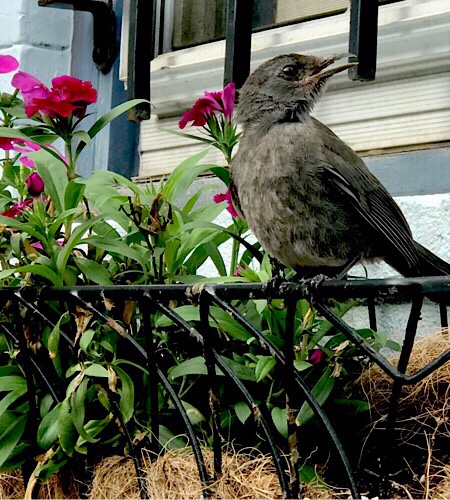
    A friend who was a skilled gardener whose taste in gardening ran to the subtle and quiet (think Vita Sackville-West’s all white garden at Sissinghurst), used to tease me for my attraction to lush, tropical blooms.

    There is a time and place for everything in this world–the quiet and demure, the loud and outrageous.

    The wider range we can appreciate, and the better we can know the optimal use and place for things, the better we will flow and dance and integrate into the joyous possibilities in the fabric of being.

    Peace and light, E — Posted with WordPress for BlackBerry.

Leave a Reply

Your email address will not be published. Required fields are marked *

This site uses Akismet to reduce spam. Learn how your comment data is processed.