| | | |

Outrageous Light (and Sadhana)

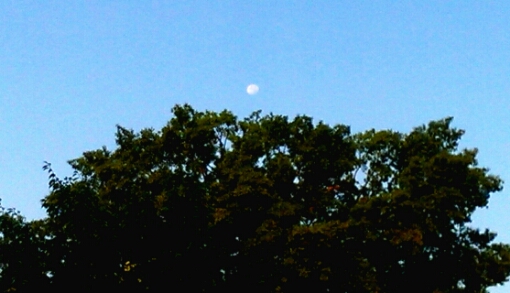
I just spent a week looking at the celestial realms — inner and outer.  Fifty of us spent a week meditating and studying with Paul Muller-Ortega at a retreat center in Sedona.  It might seem from these pictures that there was not a moment when we weren’t exclaiming in awe over magnificent visions.  The truth is that many times of the day, the sky was not spectacular, but I was always looking and always had my camera in my pocket, whether the sky was dull or flat when I left my room or whether it was engaged in some outrageous display of light.  The photographs below are in chronological order to show the pulsation of night and day, the progression of the moon from almost full to full, the shift in mood from day to day.  But, the images show a completely edited view.  There were the views for which I did not take out my camera at all.  Those were the majority, but I was still looking.  There were the views I photographed, but deleted from the camera memory, choosing not even to save them.  There are the photographs that I downloaded onto my computer, but did not even enlarge to get a better view.  There are photographs I enlarged, but decided not to edit.  Then there were the photographs I chose to edit by making decisions about cropping, brightness, contrast, hue, and saturation.  The photos below are a subset of the last group.

If I were doing a show where I printed and framed the work, I would have worked from at least ten times as many images and would have done multiple prints of each image before choosing what to display.  In this persistency and discrimination, photography teaches much about meditation practice.  To show what is seen in a way that shifts the soul of the viewer, the photographer has to look over and over again.  For example, Robert Frank took over 20,000 images for “The Americans.”

Anyone (especially these days with the technology available) can take an extraordinary picture or two if in the right place at the right time with the camera.  But to have a body of work takes consistent devotion, work, and presence.  So too, with our meditation practice.  Some days exquisite visions arise.  Sometimes we are pulsing with extraordinary energy that fills us with a sense of the very fullness of being.  Other times, old issues or the to do list or even feeling trapped by sitting still is what comes.  If we sit consistently over a long period of time, though, we will witness — just as the camera did — the extraordinary.  We will know from being consistent that it is our very consistency that reveals bliss.

Similar Posts

  • |

    I Don’t Have a Life (Really? What a Strange Thing)

    Last night I was thinking about what that phrase means.  I was talking with a friend who has a similar enthusiasm for studying, practicing, and teaching yoga, who also has a full-time job/career.  At some point in describing the number of hours I have spent studying with John Friend and other Anusara teachers, it came out of my mouth that I have been able to pursue this passionate engagement with yoga because, as others have said to me, “I don’t have a life.”  My friend, being in the same society after all, initially went right along with that statement as if it was a perfectly reasonable thing to say.

    Then we started questioning it.  It is not as though we do not both have rich, full, engaged, active lives.  How did the vernacular come up with a phrase  that says we do not “have a life,” if we are not so occupied with the things that society would have us do (for the “modern” woman I think this means high-powered career, husband, children, nice house) that we have enough time and flexibility to deeply pursue and explore beyond what we are supposed to do?

  • | |

    A Happy Coincidence (and the new Willow Street Yoga book club)

    As regular readers may have noticed, last Sunday I was inspired to blog about Arjuna’s dilemma on the battlefield in connection with local events.  Later that day, I was reminded that this coming Sunday, January 16th, will be the first meeting of the new book club at Willow Street Yoga Center (Takoma Park studio).  The book for the first meeting is Ram Dass’s Paths to God, Living the Bhagavad Gita.  Perhaps I was thinking about the Gita because in the back of my mind, I knew that the reading was on my to do list.  Perhaps, the book club reading was just energetically connected to where my thoughts were already going.  Perhaps it was just a coincidence (though I do not much believe in coincidence).

    Although the date had crept up on me unawares, I did already have Paths to God on my shelf and began reading it upon getting the reminder about the book club.  The book, which is taken from a series of lectures at the then newly opened Naropa University, is rich with stories about Ram Dass’s own spiritual journey, recommendations for a wide range of practices for discovery of our own spirit, and has lots of juicy thought about taking the study of the Bhagavad Gita and other spiritual texts out of our heads and into how we live our lives and embrace the world.

    I hope to see many of my local yogi friends at the book club meeting, not just to expand ourselves by reading and discussing this beautiful text, but to deepen our yoga community and practice by being together.  I am sure you are welcome, too, to bring your needlework.  If you cannot join us this time, do think about adding the book to your list of yoga books to read.  Ram Dass is always thought-provoking, inspiring, and delightful to read.

    There is a google group for the book club if you want to get updates.  I trust that you will be added to the group if you email:  willowstreetbookclub@googlegroups.com

  • | | |

    An Excellent Sufficiency, Homegrown Tomatoes (and the Isha Upanishad)

    The Isha Upanishad starts, “That is fullness (purna).  This is fullness.  Fullness comes from fullness.  Take fullness from fullness, and the remainder is fullness.”

    My maternal grandfather died when I was just a toddler, so I never got to know him.  My mother used to tell us that when he had eaten enough at a bounteous meal, he would say “that was an excellent sufficiency and any more would be a superabundency.”

    On Sunday I went over to Lovejoy Gardens to my little plot (approximately 3′ X 7′ raised bed on concrete, half shaded by a fence) and harvested tomatoes.  There were about 15 ripe tomatoes.  The first thought was that it was too many tomatoes.  Then I thought of all the neighbors I had who didn’t have their own tomato plants.  I knocked on one neighbor’s door.  He gave me tea while I played with the cat.  I gave him tomatoes.  I went for a massage in the afternoon.  I brought tomatoes.  I was sent home with freshly made spanakopita.  I invited another neighbor over for dinner.  We at pesto with basil from the garden and cucumber and tomato salad (cucumber, tomato, and shallots all from the garden drizzled with a little of the best balsamic vinegar and seasoned with just ground sea salt and pepper).  We had a lovely visit, and I sent him home with tomatoes.  In the next day or two, I will make a batch of tomato sauce and put it in the freezer and have someone over for dinner another night.

    There is only “too much of a good thing” or a “superabundency” if we hoard it or try to ingest it all ourselves out of fear, greed, or desire for power or control.  When we have enough ourselves and then share the abundance, we simply create more abundance.  Once again, I am given again from my garden another sweet insight into the yoga teachings.  I am also reminded by this small example that I could share even more broadly from my blessed lot of fullness in global society.

One Comment

Leave a Reply

Your email address will not be published. Required fields are marked *

This site uses Akismet to reduce spam. Learn how your comment data is processed.