| |

Sauca (Another Perspective)

My friend and Willow Street colleague Natalie Miller taught a lovely class on Monday night, using sauca as her theme.  She said that she had recently read a book that described the yamas as things we do to be better persons, but that the niyamas were precepts for our spiritual practice to lead us better on the path.  In that sense, she suggested, sauca is about clarity or purity of intention.

What I love about contemplating and practicing with these concepts is that they are so pregnant with meaning; they have so much to offer wherever we are in our life and on our individual path of spirit exploration.  The more we contemplate and visit and practice and discuss, the more we will discover both about the meaning of the concept and about ourselves.
Similar Posts

  • | | | |

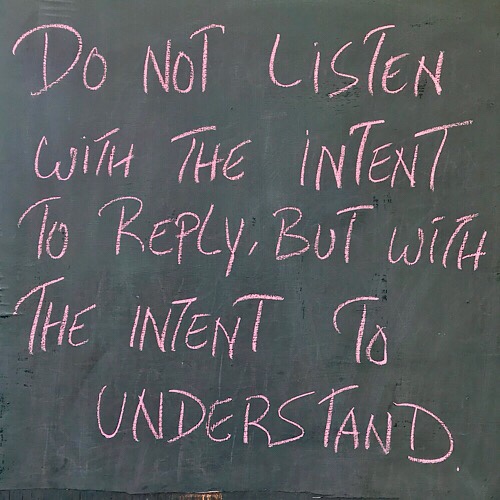
    Found Exhortation (and the Women’s March on Washington)

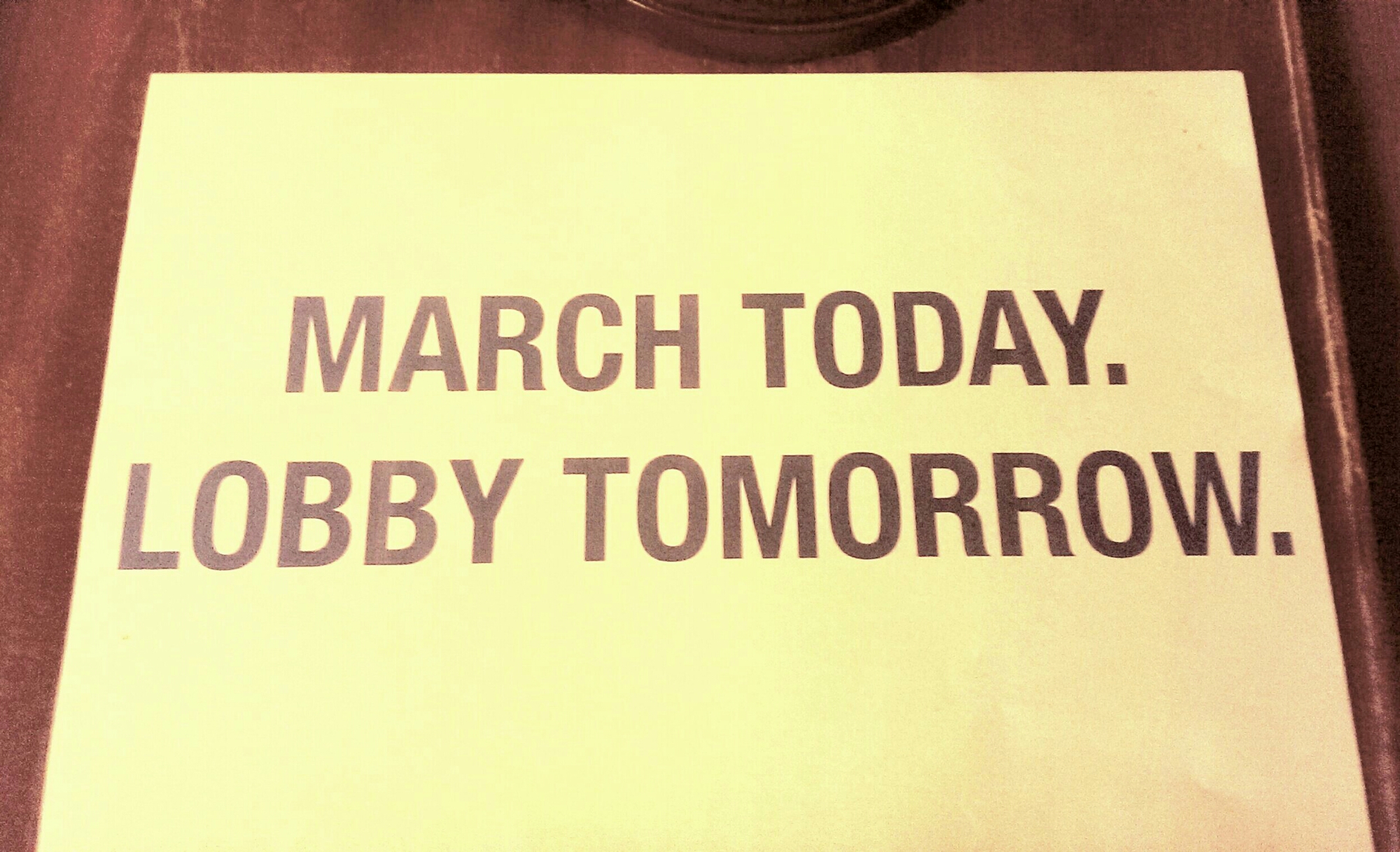
    I was volunteering today at William Penn House, which was providing a comfort station for marchers during the day, as well as being full to capacity with guests.

    I was doing some work in the office when a woman who looked about my age came who was in town with a group of women from Long Island for the March.

    She came in to William Penn House for a bathroom, not because of any connection to Quakers or the house. But while she was waiting in line for the bathroom she ended up in conversation with the executive director, who said that the board member volunteering downstairs was also from Long Island–perhaps she knew me. It turns out that we went to the same elementary school and lived near enough to each other that we rode the same school bus.

    It is just one of the reminders I’ve had this weekend of how connected we are.

  • | | | | |

    Outside the Verizon Center

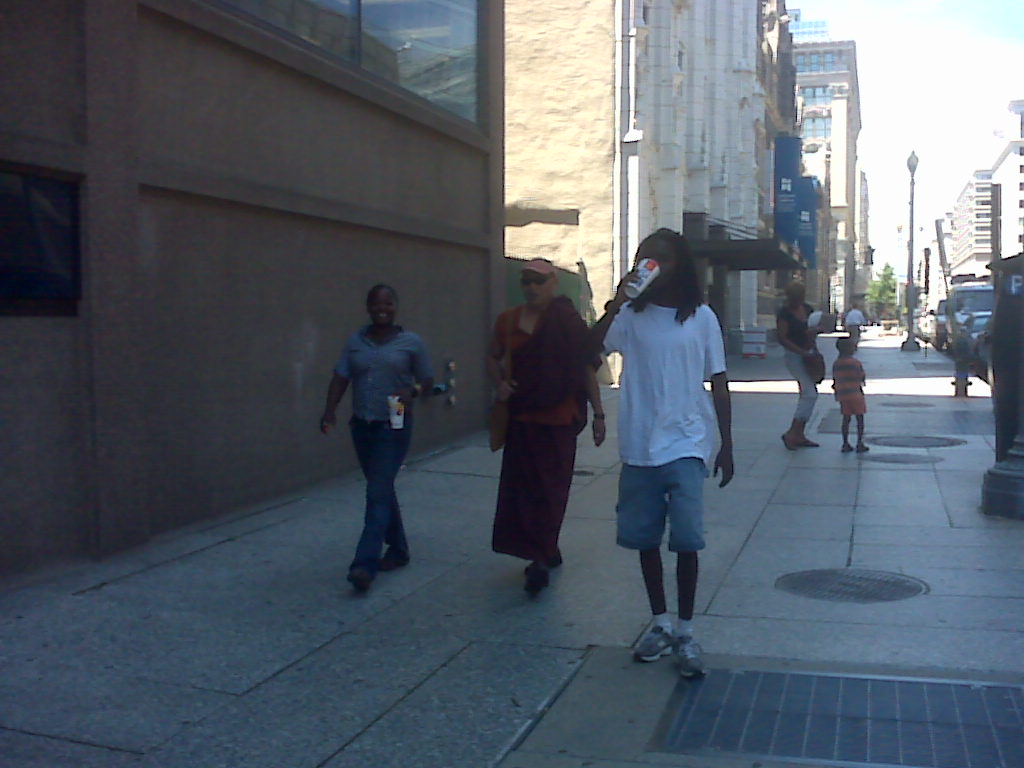
    I walked over to the Verizon Center to see how the kalachakra was spreading into the space around it. Towards the end of my foray, the traffic light at a corner outside the Verizon Center changed in my direction, and I headed into the crosswalk. A cyclist going north in the southbound lane started cursing and screaming at me for blocking his way. The loudspeakers were blaring their usual commercial fare, the neon were glaringly lit even by day, the big video screens showing ads and offerings of upcoming sports events, and the tourists were jostling down the sidewalk, carrying their plastic containers full of stuff from McDonalds and Starbucks. On the other side of the Portrait Gallery was a special “market place” with silk shawls, t-shirts, silver and turquoise jewelry, thangkas, prayer wheels, and Himalayan food served in styrofoam containers with plastic forks.

    I am as certain as it is possible to be that the space inside the Verizon Center is being transformed by the practice of the kalachakra for world peace empowerment inside. We cannot make others receive such an offering if they are closed and uninterested. We can, though, seek to open our own receptivity and our own hearts. As I observed my reaction to the plastics and the noise and having been cursed out when I had the “right of way,” I thought that the axiom “peace starts from within” is counsel that though we may not be able to change others, we can and are responsible for ourselves.

    Peace and light, E — Posted with WordPress for BlackBerry.

  • | | |

    Found Sculpture

    I saw this beautiful roll of chicken wire in the Enid Haupt garden when I was walking back to the office after a quick visit to see the Gods of Angkor exhibit at the Sackler Gallery (sorry about the absence of links; blogging from the BB).

    I was first introduced to the idea of “found poetry” in junior high school and have developed a life-long habit of photographing words to change, enhance, and/or question their meaning and hidden beauty by the act of extracting them from their original place and presenting them as a photograph. Marcel Duchamp and others did what poets and photographers were doing with words with ordinary objects by presenting them as sculpture.

    Here, where I have photographed the chicken wire roll, is the art a sculpture (because I could treat it as such) of which I have taken a photograph–the photograph being mere documentation? Is the art the photograph of what I have seen to the extent I am offering it as a vision and a dialogue generated by what I saw? Or is the photograph merely a snapshot taken with a hand-held computer device documenting an object that happened to be sitting there–not art at all? If it were not for artists such as Duchamp, could I or would I even be able to ask this question?

    I think that analogous types of questions have been and can be asked about the variety of religious and mystical experience. Is there a particular way they must be experienced? Do such experiences have to fit within a prescribed framework to be valid? When are such experiences madness or delusion and when are they the voice of the spirit? Who gets to decide? Does it depend on the era and the culture in which the experiencer lives? Does the answer to any of these questions matter if the experiences lead one to a more loving, compassionate, and beauty-filled life?

Leave a Reply

Your email address will not be published. Required fields are marked *

This site uses Akismet to reduce spam. Learn how your comment data is processed.