Be Here Now (Var.)

What does it mean to excel, to do well? I think there is no excelling in yoga, at least not the way we conventionally think of excelling in school or career or sports. But to practice in a way that is more than casual, there must be ardor–tapas.
Tapas is often translated as fire, and the texts are full of stories of outrageous physical exertions done to prove the tapas of the practitioners looking for boons from the gods.
There is a fiery aspect to tapas, but I question whether it must necessarily be burning from physical exertion, though that is a path that calls out to many.
The fire of tapas could be thought of as doing what it takes to manifest the will to know something deeply enough to be able to experience the fluency and grace and delight of expertise. It could be the ardor to show up in a disciplined and committed way for hours and days and years of practice, always still wanting deeper, fuller knowing.
One moment in a long day.
It’s no surprise: I find myself more and more consumed by thought and activity regarding the state of the country and what I can do as a citizen (including voting) to make things better. As I seek to stay engaged, but grounded and without anxiety, I find solace of the teaching in the Bhagavad Gita that true yoga is action without attachment. To be detached is not the same as withdrawing from action. In fact, the Gita suggests that the path of action is better than the path of renunciation.
What is actionless action? Given the Gita’s fundamental premise that we must act in accordance with our duty (what that means is the subject of much debate that is beyond a simple blog), actionless action does not mean disengaging from the process. It also does not mean not caring. Rather, it means that we should act fully in accordance with our principles (which principles should be shaped by the yoga guidelines of non-harming, truthfulness, non-stealing, alignment with nature, non-greediness, cleanliness, contentment, fervor, self-study, and surrender), but with the mental understanding that we are ultimately not in control of the outcome. We act because not to act is a cop out. We offer the fruits of our action to forces beyond ourselves. We act out of love — not selfish love for personal gain — but with loving gratitude for being able to act at all. We engage fully and then still seek to be free of being unsettled by either pleasure or pain from the outcome. Whatever the results, we keep acting, we keep doing our duty, fully and with loving engagement.
See: BG IV.19-20: He whose undertakings are free from anxious desire and fanciful thought, whose work is made pure in the fire of wisdom: he is called wise by those who see. In whatever work he does such a man in truth has peace: he expects nothing, he relies on nothing, and ever has fullness of joy. (trans. Juan Munoz)
He who has abandoned all attachment to the fruits of action,/ Always content, not dependent,/ Even when performing action,/Does, in effect, nothing at all./ Performing action with the body alone, / Without wish, restrained in thought and self,/ With all motives of acquisition abandoned, He incurs no evil. (trans. Winthrop Sargeant)
P.S. I will have voted in the morning and will be teaching at Wm Penn House on Tuesday so come join me resting in yoga before going home to watch the returns.
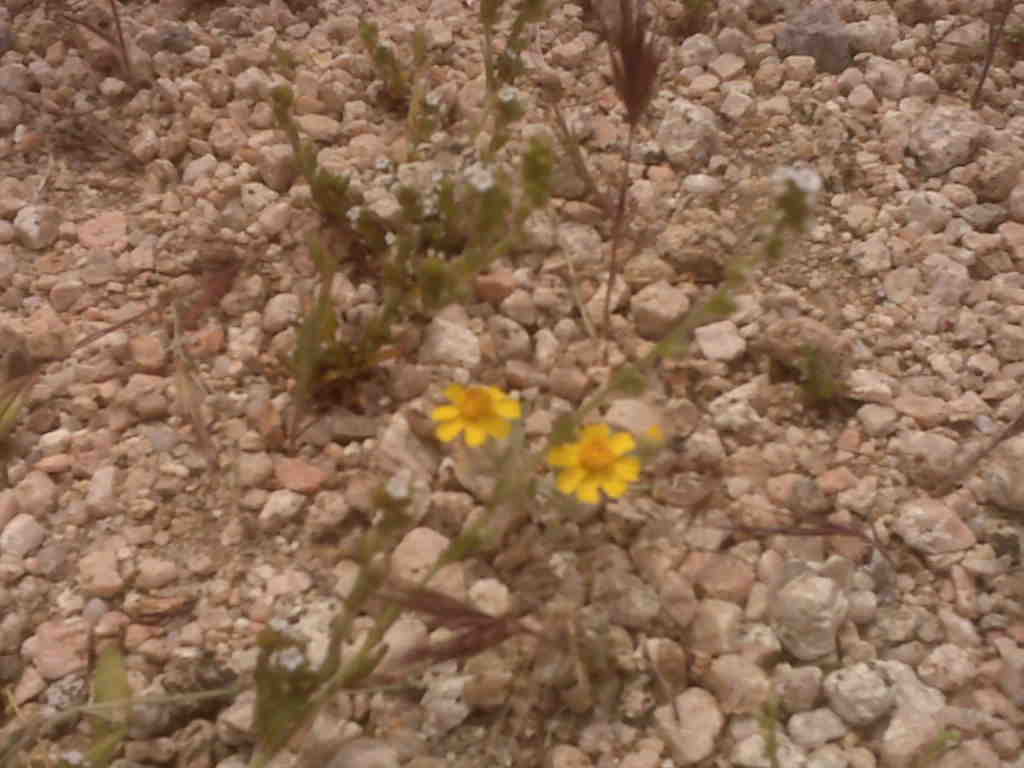
Sometimes, things seem dry. It is hard to imagine what we want truly flourishing. There is always, if we soften to witness, a single flowering that shows us it is worth continuing.
Peace and light, E — Posted with WordPress for BlackBerry.
This week I have been working on twists both in my own practice and in my classes. In so doing, I have been thinking about the difference between turning around or doing an about-face and staying steady and true to oneself, while truly being open to another perspective.
In order to get into twisted and bound asanas, it is critical to be steady in your place and to use the three self-affirming elements of muscular energy — hugging into the midline, embracing the muscles to the bone, and drawing from the periphery into the focal point — to be able to revolve on the midline and open the heart to a new direction.
The same is true off the mat. If we just flip our position or turn an about-face, we are not grounded or reliable. Inside the beltway, for example, I’ve heard people saying they think McCain and Specter should be voted out of office because it is not clear where they stand. Their positions seem more about expediency than about a steadiness of conviction, coupled with an openness to listen to and work with others with differing views.
Ideally, we want to embrace ourselves, our history, and our nature, and be sufficiently comfortable and secure with ourselves that we can hear others. Even if it feels convoluted or binding to open to true listening, by reaching while staying steady, we can better have compassion and recognize the light and humanity in those with whom we disagree. By doing so, ultimately, just as we create greater strength and flexibility by practicing twists, we experience a greater openness of spirit with respect to ourselves and all around us.
This is a big part of my current practice, and perhaps one of the very hardest. Steadfast commitment to a balance of steadiness and openness makes possible, I think and hope at this point in my practice, radical affirmation of the good in everything.