Similar Posts

  • | |

    A Slow Metro Ride, A Missed Yoga Class, and Meditations on the Costs of War

    Yesterday I wrote to my DC elected officials and to the budget office to let them know how important it is to me that local municipalities fully fund public transportation, as the budget year comes to a close.  Metro officials are threatening to close down many bus lines entirely, which will mean that far too many people will be unable to get to work, especially for low-paying jobs.  Hundreds of workers are scheduled to  be laid off, which means (as an icy cold budgetary matter — the budget after all being a moral document) that they will need services and no longer will be paying taxes.  Disrepair, injuries, and accidents will become even more prevalent, and service will be slowed at already overtaxed and overcrowded times.  Our air quality will go from yellow/orange to orange/red from the increase in gridlocked traffic.  I discussed the issue and the urgency of making our voices heard with several co-workers today.

    I left the office at 5:40 pm this evening to go to take Suzie Hurley’s 6:15pm class at Willow Street, Takoma, Park.  I was standing on a metro train at 5:46pm.  The ride is supposed to take 13 minutes from Judiciary Square metro.  We reached Takoma Park at 6:27pm.  I went over to the studio when I arrived.  If the door was open, I would have looked in and caught Suzie’s eye and quietly seen whether I could slip in.  The door was closed, and I could hear that the class had already started doing standing poses.  Under circumstances where being late is clearly not my fault (and I try to avoid those by being willing to be early if it turns out the travel has been optimally sequenced), I will join the class just after centering and before the asanas begin.  As much as I would have liked to have taken a yoga class after the slow metro ride, I felt that I shouldn’t risk disturbing the other students by coming so late.  I instead will be doing a long, deep, slow, inward-moving practice when I am finished writing, corresponding, getting ready for practice and sleep, and doing some preparations for tomorrow’s work day.

    In my growing acceptance that I would be arriving too late to Takoma to take class, I thought about the email I had received earlier in the day about the Friends Committee on National Legislation’s “Our Nation’s Checkbook” campaign.  The email reminded me that a third of my tax dollars are being spent on war.  “What about investing in green jobs, preventing more home foreclosures, and funding diplomacy to prevent wars?” I was asked.  “What about public transportation,” I thought, as I sat on the stationary train between stations.  “How many trains could be operated efficiently and safely for each fighter aircraft?”

    How do I want to live?  What are my priorities?  When does short-sightedness or immediate personal satisfaction impact my long-term health and happiness and peaceful co-existence on a crowded planet?  For what purposes do I practice?  How would I like to invite others to live?

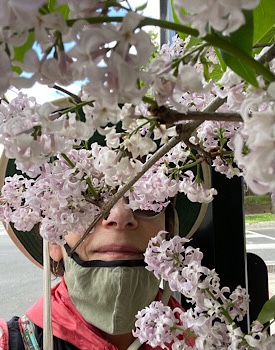
    The ride home, of course, had nary a problem.  A train arrived in under five minutes.  The ride back to Union Station was exactly 11 minutes.  Everyone had a seat, and the car was nearly full,  so it was at perfect capacity.  It was still light, and lots of people were out because of the balmy night and the beauteous blossoms, and I felt safe strolling home instead of taking the bus.  What a beautiful night!

  • | |

    A Different Perspective

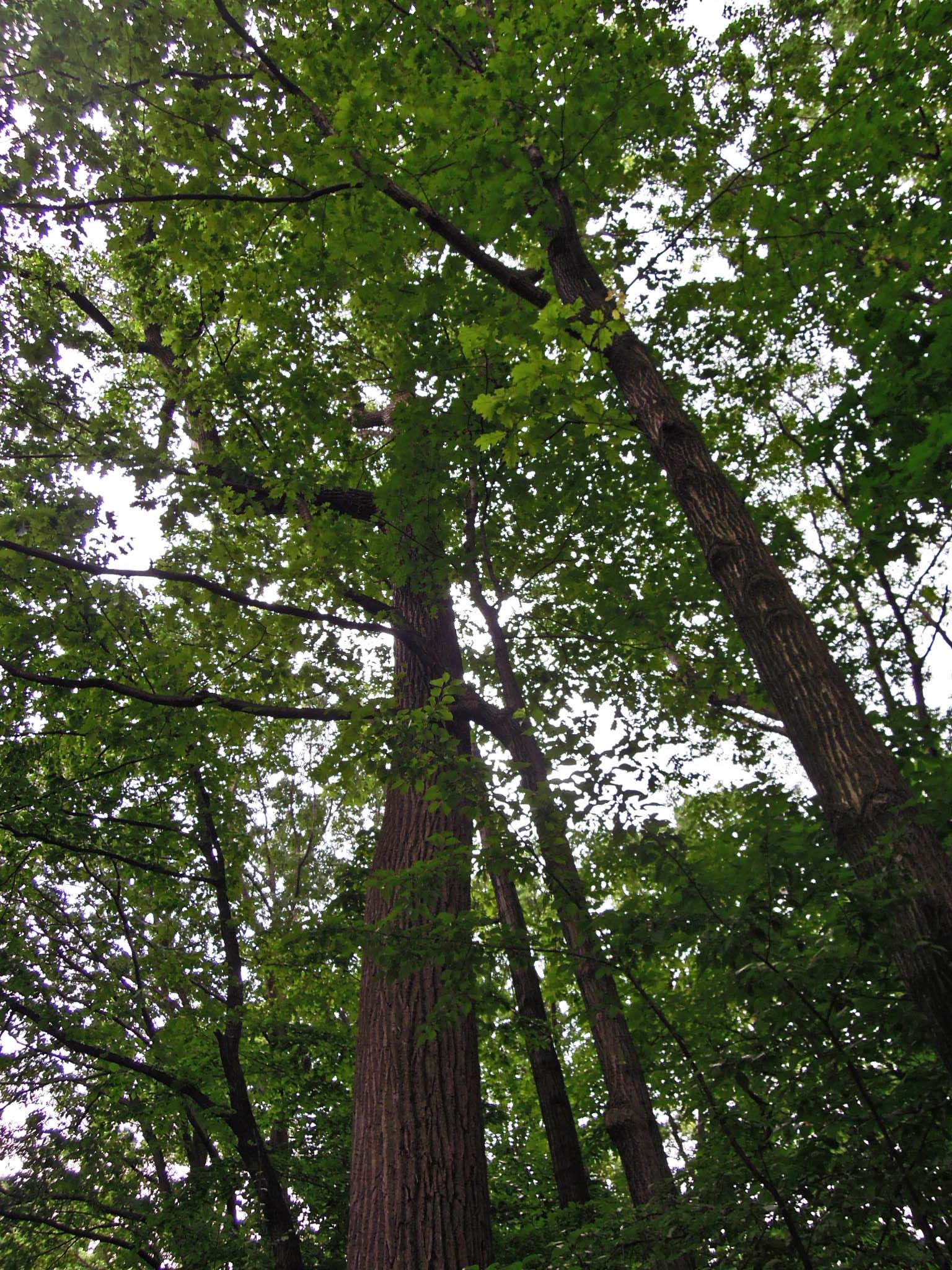
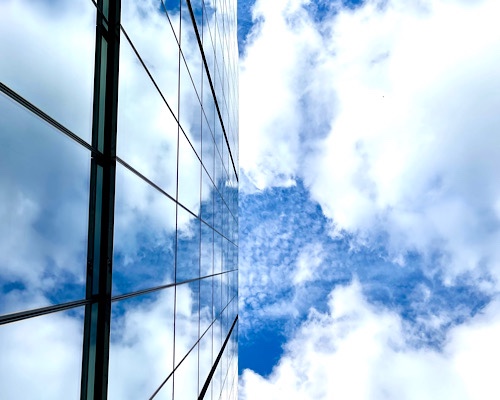
    This view is always there, we just do not always get to see it from our habitual place on the ground.

    Sometimes people ask me how I can sometimes still feel unworthy or get depressed or be edgy with all the committed practice that I do. A friend said recently that an answer to that question might be to suggest what I might have been like if I was not doing the practices.

  • | | |

    0herry Blossoms in the Rain

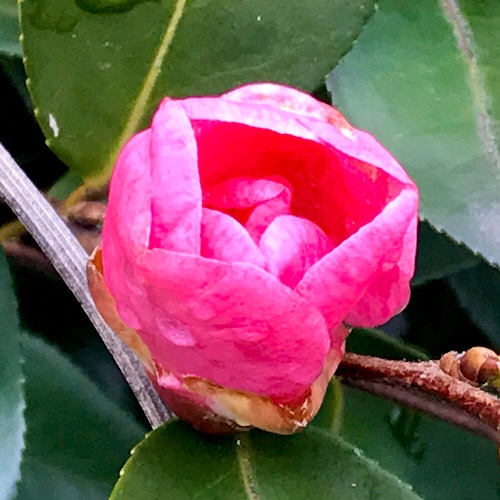
    As I have walked around town enjoying the spring surge of blossoming trees, I found myself remembering that our most famous cherry blossoms were a gift from the Japanese, which remembrance sent a deeper yearning to help send healing.

    At one sunny, pink-blossomed drenched moment yesterday, I found myself asking how could one’s heart not reach out to a people who brought us such beauty. I then thought that this country had no problem incarcerating “those” people on “our” soil and bombing their country when the arrival of the gift of our famous cherry trees was still in living memory. At that time, “they” had become our country’s enemies because of the actions and statements of those in power. The gift had become irrelevant in the context of war.

    The peril in both thoughts is that they distance us from opening and relating to the essential identity and humanity in all of the individuals we meet of various nationalities and alliances–whether in a time of gift-giving or in a time when we cannot abide the actions or ideas of those in power.

    Peace and light, E — Posted with WordPress for BlackBerry.

  • |

    The Parable of the Guru, the Disciple, and the Mad Elephant

    It is a constant dialogue that arises for me with others in my various communities about the place of political discussion in a spiritual community.  Is there a place for examining the state of the world, calling for action, and trying to change things when we believe (or are seeking to understand) everything as being at its essence infused with the light?  I just happened to read this parable today, after being advised that spiritual and political dialogue have no place being conjoined (today, it was about the budget and the war; it could just as easily have been about how to address from a place of spirit the complexities of how to shift and respond to the Gulf oil spill):

    “RAMAKRISHNA: … [W]ater remains water, whether it stands still or breaks into waves.  Divine Reality remains exactly the same when one is silent and one speaks.  Relax your mind a moment and consider this parable.  A guru teaches his disciple that every being and event is simply God.  The ardent disciple, while walking home meditating on this truth, encounters a mad elephant.  The elephant-driver, who has completely lost control of the animal, shouts to all who are in the way, warning them to run.  But the stubborn disciple refuses to deviate from his path.  He continues his contemplative exercise, regarding himself as God and the elephant as God.  The crazed beast picks up this foolish man with its trunk and dashes him to the earth.  The guru, famous for his healing powers, is called to revive the unconscious victim.  After certain prayers are recited and holy  water is sprinkled, the young man regains consciousness.  He is surprised to find his guru gazing at him.  When asked why he did not run from such evident danger, he replies:  ‘Why should I run?  My guru, you teach that all beings and events are God.  I have implicit faith in your inspired words.’  The venerable master then addresses his immature disciple:  ‘But my child, why did you fail to heed the inspired words of the elephant-driver, who is also God?'”

    Lex Hixon, Great Swan:  Meetings with Ramakrishna (Shambala Publications 1992)

Leave a Reply

Your email address will not be published. Required fields are marked *

This site uses Akismet to reduce spam. Learn how your comment data is processed.