When Was the Last Time You Practiced Savasana?

At the Tillai Kali temple in Chidambaram, above the murti of Kali where ritual offerings are made, is a mirror that reflects the viewers, bringing their reflection into the puja. I noticed the mirror and asked Douglas Brooks, who was standing next to me on the trip he was leading, “prakasha and vimarsha”? He affirmed my guess—saying it had taken him many visits to appreciate the presence of the mirror and its purpose to remind of the S/self reflected in the light of consciousness.
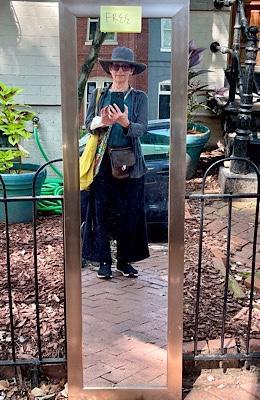
Seeing the “free” sign on this mirror when I was out walking, that place and time came to mind.
A work colleague of mine graciously said to me that he did not know how I got through certain meetings without yelling, he did not know if he could do it. I replied that lots of yoga helped. “Maybe I should get back to transcendental meditation,” he said, “but I found it did not really help; I should find something, though.”
I said that I tried to think of the challenges at work as just part of the dance that yields such rich abundance for me. The discussion carried on, and we not only resolved the minor problem that had led to the phone call, but also felt a deeper connection that will make it easier in the future to resolve work issues that we mutually encounter.
What I like best about the myth of Nataraja is that the dance is not for the purpose of creating the world or with any particular design, but for the sheer bliss of dancing — anantatandava. The dance makes possible both destruction and creation, but it is not its reason. When we engage in the dance of our own lives, yoga invites us just to dance fully with wonder at the rich diversity of experience. We make choices and seek to be more aligned, but ultimately we are just dancing.