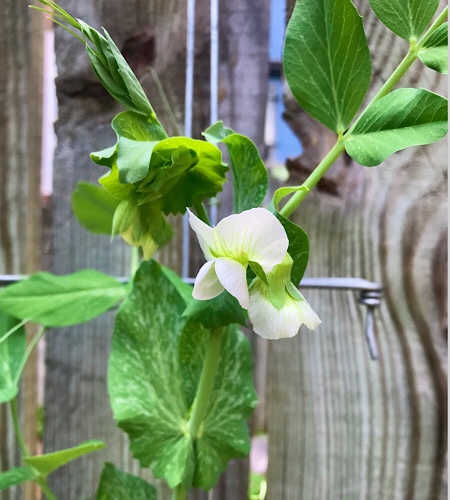
Snow Pea Blossoms
Thanks to the generous Cate Stillman for this podcast. What I like most about Cate’s perspective is her teaching that truly practicing Ayurveda is paying attention at the deepest level, including paying attention to what in the classic teaching of Ayurveda work for you and what do not–being that they are imbued with cultural elements of the Indian subcontinent that do not necessarily support or resonate with our culture or individual constitutions.
As I study more, I find that it turns out that I had been practicing Ayurveda already by keeping to a regular daily and weekly routine, eating seasonally and locally, eating with sensitivity to impact on my digestion and energy level, and by having a steady practice. Not being interested in detox (more some other time on the dangers of detox) or constitution types, or arcane herbal remedies (many of these, by the way, are becoming endangered species), it turns out, does not mean having rejected Ayurveda. I do know that whether I call it Ayurveda or just plain common sense, the more I live in a balanced, sensitive, and steady way in terms of diet, sleep, entertainment, work, and consumption in general, the more I optimize my health and sense of well-being.
Locals, divides and volunteers of various herbs available for sharing. Send a message and find a time to stop by.

Last night I was feeling deeply sad not having Becky with me any more. The first week, I was telling myself how lucky I was to have had her for so long, that she lived a long, happy, well-loved life, and that it was truly time. Then I threw myself into work, errands, the garden, etc. This week, I have been filled with a deep sense of grief and loss.
Classical yoga would have us try to transcend the pair of opposites — pleasure and pain. Tantra would have us experience the full range deeply, knowing it is all part of the play of being manifest in human form. I have been thinking about my teacher, John Friend, who often talks of the intensity of grieving for loved ones who have died, because of having loved truly and fully.
Thinking about Becky, this chant started repeating itself in my head (I have it recorded by Dave Stringer): “sukha hara, dukha hara, hara, hara Shankara.” “Hara” is an epithet of Shiva, from the root word to bear away or destroy. “Sukha” means ease; “dukha” pain. “Shankara” is another epithet of Shiva in benevolent form. I think of this chant not so much a call to have Shiva energy destroy or remove both pleasure and pain, but rather a reminder that both pleasure and pain are integral parts of our experience of being. Recognizing that grief and loss are as much part of our own humanity as love and pleasure, helps remind me of my own connection to spirit. It ultimately inspires me to try and live in a way that is more benevolent and generous, and to respond with the most light, whatever I face. (This of course is a life work).
I would not give up the full and wonderful years of companionship I had with Becky and her sister Henrietta (and others who I have loved) just to avoid the grief of loss.