Art and Culture | Asana, Pranayama, and Yoga Practice | Community and Family | Food for the Mind (Yoga Philosophy, etc) | Meditation | Photos | Quaker
Signs Around Town
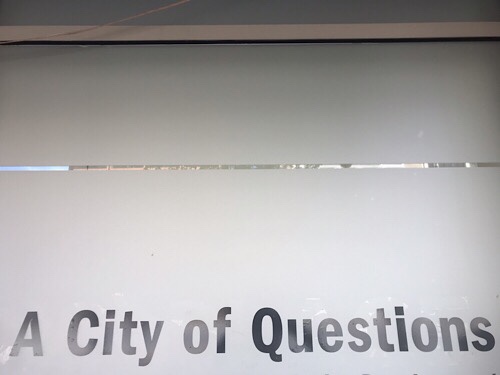
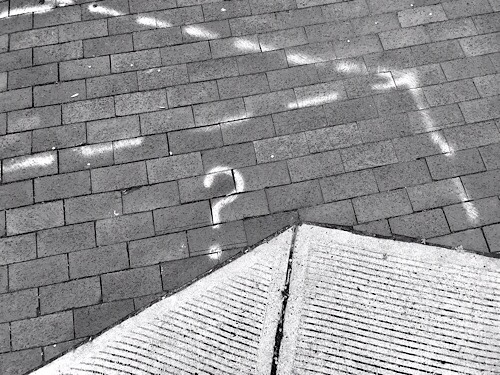
As I have walked around town enjoying the spring surge of blossoming trees, I found myself remembering that our most famous cherry blossoms were a gift from the Japanese, which remembrance sent a deeper yearning to help send healing.
At one sunny, pink-blossomed drenched moment yesterday, I found myself asking how could one’s heart not reach out to a people who brought us such beauty. I then thought that this country had no problem incarcerating “those” people on “our” soil and bombing their country when the arrival of the gift of our famous cherry trees was still in living memory. At that time, “they” had become our country’s enemies because of the actions and statements of those in power. The gift had become irrelevant in the context of war.
The peril in both thoughts is that they distance us from opening and relating to the essential identity and humanity in all of the individuals we meet of various nationalities and alliances–whether in a time of gift-giving or in a time when we cannot abide the actions or ideas of those in power.
Peace and light, E — Posted with WordPress for BlackBerry.
I have in my library books in which just one phrase or just the very beginning is most resonant. It is this time of summer, when the light seems endless, and the heat just setting in as if on a permanent basis, that my thoughts turn to watermelon in food, and again in literature. I think of watermelon differently each summer from the perspective of having lived another year, and the same in having experienced the taste and the thoughts of the taste so many times before. When it comes the time of year when thoughts of watermelon spontaneously arise, I revisit these words:
“In watermelon sugar the deeds were done and done again as my life is done in watermelon sugar. I’ll tell you about it because I am here and you are distant. Wherever you are, we must do the best we can. It is so far to travel, and we have nothing here to travel, except watermelon sugar.” (R. Brautigan, In Watermelon Sugar).
Refreshed, I put the book back on the shelf, look forward to eating watermelon from the fresh farm market, and set the intention to start each day with open, receptive, and unjaundiced eyes, ready to learn and experience the same old things as glorious new ones, and to do the best I can.
Last night I was thinking about what that phrase means. I was talking with a friend who has a similar enthusiasm for studying, practicing, and teaching yoga, who also has a full-time job/career. At some point in describing the number of hours I have spent studying with John Friend and other Anusara teachers, it came out of my mouth that I have been able to pursue this passionate engagement with yoga because, as others have said to me, “I don’t have a life.” My friend, being in the same society after all, initially went right along with that statement as if it was a perfectly reasonable thing to say.
Then we started questioning it. It is not as though we do not both have rich, full, engaged, active lives. How did the vernacular come up with a phrase that says we do not “have a life,” if we are not so occupied with the things that society would have us do (for the “modern” woman I think this means high-powered career, husband, children, nice house) that we have enough time and flexibility to deeply pursue and explore beyond what we are supposed to do?