Found Quotation
This resonates as one of many reasons of why photography is a meditation for me .
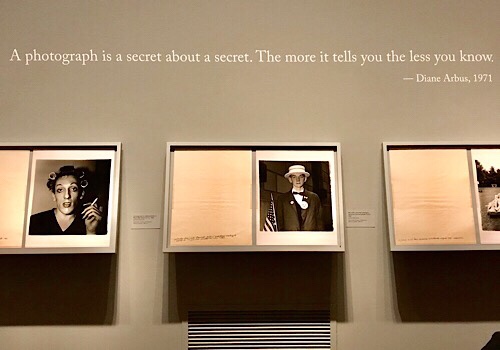
This resonates as one of many reasons of why photography is a meditation for me .
I did not have much time for a break today as I had a meeting scheduled for 1:30 pm. I always try to take at least a short break from work in the middle of the day, including a walk and some time to sit quietly. I am far more productive and have a better day all around when I do.
One of my favorite places to go is directly across the Mall to the US Botanical Gardens. When I sit and close my eyes, it feels and smells like I have gone someplace warm, beautiful, and exotic. I had only time to take a few good breaths and write a couple of sentences in my journal, but that brief interlude can be all that I need to bring renewed enthusiasm to my work.
Do you have an idyllic place you can go for a few moments? If you cannot leave your office, do you remember to close your eyes and breathe or engage in other simple meditation?

Having just returned from Arizona (yes, Sedona is in Arizona, as hard as that may be to believe from any perspective other than cartographically) from a meditation retreat, and having two more scheduled with my teacher at the same location during the year, I have pondered with my usual degree of self-questioning about the potential impact of my choices the suggestions to boycott Arizona.
I had decided — perhaps because continuing to study with my teacher, including on retreat is so important to me now — that as I pretty much go straight from the airport to the meditation retreat and back without shopping, I am probably supporting people who did not support the immigration law. On previous trips, in addition to paying for the food and lodging at the retreat (my teacher lives in California, so the tuition goes to California), we ate at a Mexican family-owned restaurant and a raw foods restaurant and bought some supplies at the natural foods store (eschewing the Whole Foods in favor of the local natural foods store). I’ve decided it is OK — perhaps even a good thing — to support those who clearly were not in favor of the immigration law.
What does it mean to engage in a boycott? Who does it hurt and help? What impact could the Arizona boycott have? Have you thought about whether to boycott Arizona?
I realize that this blog entry was in my drafts page; I never hit the publish button. As I ponder the few intervening weeks of snow (in some ways it feels as if time just stopped, except for the work that piled up and the lengthening of the light of day), I treat this as a reminder to myself to come back to “first principle” to respond with the most light — even in this unusually harsh winter:
On my way to Friends Meeting yesterday, I stopped at the Dupont Circle Fresh Farm Market yesterday to buy whatever was fresh. When I got in line with a daikon radish, a bunch of turnips, and a couple of leeks, I noticed the way the woman in front of me in line was holding her selection: sunchokes. Her hands were held as if she had just received prasad — the offering sometimes made after a puja so that the fruits of worship may actually be tasted and injested, incorporated with our senses and our whole bodies into our being. “Your hands and those sunchokes are so beautiful,” I said, “may I take a picture and use it for my blog?” “Sure,” she replied, “and shifted her hands a little so that it would be easier for me to frame the picture.” We talked while we waited in line about potential ways to cook sunchokes and how happy we were that the farmers (these particular farmers’ must be incredibly good at working with cold frames) were out all year.
Seeing this offering of the earth itself, the farmers who tended the earth and grew the vegetables, the workers who made and repaired the vehicles that enabled the food to be brought into the city, the city and neighborhood for allowing the market to block off a street, the shoppers for supporting it, brought me back to my contemplations this week of what “first principle” means to me. I mentioned in an earlier post that my focus for winter classes would be Anusara sequencing principles. No matter what else we are doing or focusing on, it always starts with “first principle.” The “first principle” is what we call in Anusara “opening to grace.” For me, a large part of “opening to grace” is a recognition that all the nourishment we receive is a gift. When we practice such a recognition, then we practice receptivity, openness, gratitude, courtesy, respect, delicacy, and reciprocal desire to serve and make offering. How could one mindfully receive nourishment such as this fresh, beautiful food on a bitterly cold winter day, and not want to celebrate it by giving thanks, nurturing the earth, supporting the farmers and the market, learning how to prepare it as tasty and healthful as possible, and share it and other things with those around us?

Have you done your practice (in Sanskrit–sadhana) today, whatever your practice may be?
If you don’t yet have a regular practice, what do you think it would take? I recommend starting small–allow it to be short and what you like to practice, rather than failing because you think it must be challenging or for a longer period of time than fits readily into your schedule.

Peace and light, E — Posted with WordPress for BlackBerry.
On the walk home from Union Station after teaching the Friday evening gentle/therapeutic class at Willow Street Takoma Park. Come join us some time. It is a fine way to spend Friday after work “happy hour [and a half].”

Peace and light, E — Posted with WordPress for BlackBerry.