Sadhana
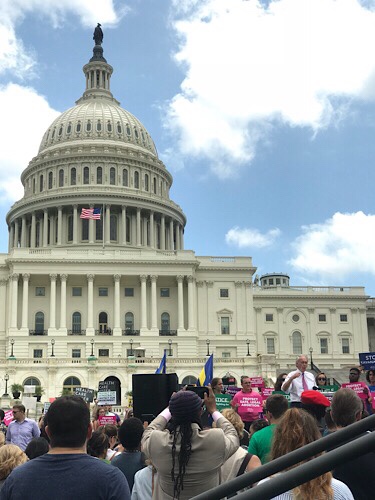

I had previously committed to volunteering at the Lantern at the same time as the demonstration at the White House against the separation, incarceration, and deportation of those seeking asylum. I left the house an hour early and got off the bus at Farragut Square instead of taking it all the way to Georgetown. Volunteers were actively coordinating and people were starting to gather.
I talked to people who were heading over as I walked on to the Lantern, and I brought the demonstration with me.
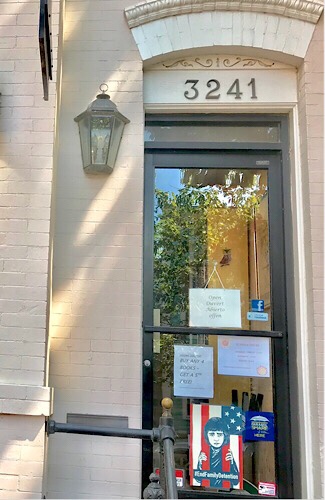
This bumper sticker (on an enormous black SUV with suburban plates) is likely intended to have only a message about the current wars in which the US is engaged. I wholeheartedly support the sentiment at that level.
What if we took it at other levels? What if we applied it to spiritual-religious practices? We could interpret this as suggesting that we honor the great teachers who have gone before us, invite religious observance and spiritual practice to heal ourselves and others, and dissolve notions of differences among religions and spiritual practices as bases for conflict. How many wars between countries or civil wars would end if saw unity while still honoring difference in this regard?
Perhaps most cogent for the yogi: what if we thought of the exhortation in terms of our own personal practice? It would be an invocation to honor our ancestors, heal the wounds of our family and upbringing (samskaras), and release inner conflict. This is, I think the point of practicing (whatever the style of practice) so that true peace can abound.

Peace and light, E — Posted with WordPress for BlackBerry.
Paul Muller-Ortega, who is offering a meditation and philosophy workshop at Willow Street Yoga Center this weekend, says that sadhana (yoga practice, incuding meditation), doesn’t just give us “freedom from, but also freedom to.”
The “freedom from” is freedom from suffering. The freedom to” is freedom to move towards light and blissfulness.
When we first come to the yoga mat or meditation cushion, we are usually coming to discover the “freedom from” we have heard about — perhaps relief from aches and pains or disease, perhaps weight loss or improved body image, perhaps lowering anxiety or easing depression. We discover, when we start practicing, that even if we do not get “freedom from” exactly as hoped within a limited view, that discovery of the “freedom to” itself provides a “freedom from” by making that from which we seek freedom less prevailing as the focus of our being.