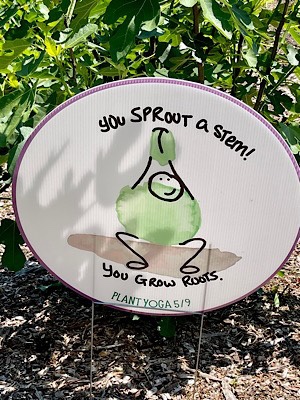
Yoga Instructions Around Town (and Root to Rise)
I have been walking past this sculpture regularly ever since I was a judicial clerk in 1987-1988. It is in the plaza between the Federal and DC court houses. It is dated in the subject matter. The partner-associate relationship has shifted over the years, both from the inclusion of women in the law place and the changing economics. The shift in economics to assume that most associates will not be partners because the firm simply does not have the space for more partners and because the associates feel freer to move around and for a whole host of other reasons, some more benign than others, has left new workers bereft of the support of a mentor. In the disruption of the continuity of the workplace, those who stay are less motivated to serve as mentors and lose the delight and strength that comes from the action of mentoring. Those who come into a workplace without a mentor never learn the way they could. Although some of the changes are good, the missing mentor is indeed a loss.
Though the sculpture reminds me of something lost, I love this sculpture, especially where it is set. It is absolutely suited to its location and was made with great skill and love.


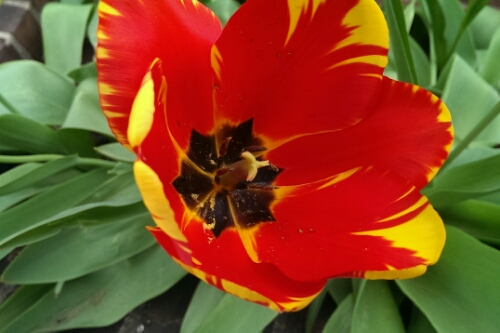
I spent most of my waking hours today working. I did meditate and stretche and walk to and from the office for a meeting. I ate well. On my walks I enjoyed the outrageous blooming everywhere. Enough to count myself happy, I think.
Part of the reason “around town” is within several blocks of my house since the pandemic began is the limits on being able to find a safe bathroom. I prefer that to dehydrating prior to going out. I’m lucky to have the choice.
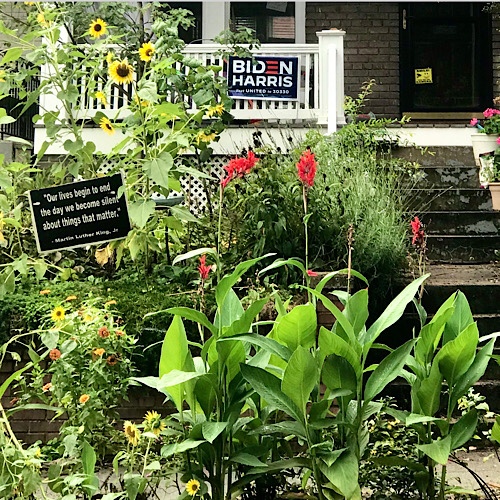
One sign reads: “Our lives begin to end the day we are silent about the things that matter.” The other sign reads: “Biden/ Harris/ text “UNITED to 30330”
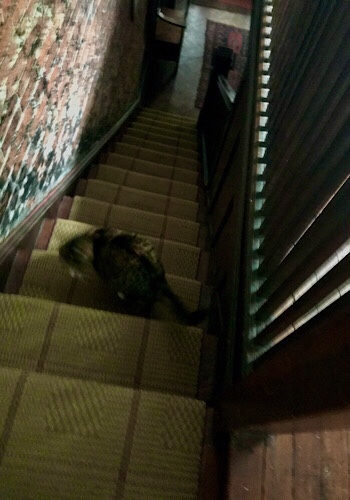
Last week, I was talking to a friend of mine from yoga and mentioned that I was almost embarrassed that I found myself being extra careful on the stairs of the house because I so much want to avoid any need to go to the doctor.
The next day a neighbor posted a picture of her bandaged ankle; she sprained it falling down the stairs.
I felt a little better about my feeling a need for my minor care-taking.
As I think about whether I will be able to get up to Willow Street to teach my last classes of the session, how much shoveling I will need to do , whether the next forecast storm (middle of next week) might create challenges for my planned trip to NY, etc, etc, my favorite (well, in the top 10) sutra of Patanjali, sprang to mind: heyam dukham anagatam, 2.16, which means roughly: the pain that has yet to come can be avoided.
I have several translations/commentaries of the Patanjali’s Yoga Sutras in my library. All have a different spin on what this means in practice. What I know is that it is at least partly about being in the present and taking things as they come. One should still practice and plan. By practicing and planning, we are better prepared for inevitable pains and challenges. (For those of you who are giddy with excitement with the thought of a “white Christmas,” this Sutra still helps. Part of the pain that can be avoided is disappointment when expectations are not realized the way we hoped they would be realized.) Once we have prepared in a healthy way, though, there is no point in agonizing about what might come, in being in pain in the present because of the possibility (or even inevitability) of a future pain.
The snow seems inevitable. I am charging my camera battery. I’m picking what is probably the last of the chard and the baby leeks from the garden, and I am getting ready for Serenity Saturday restoratives. As long as I can walk to the studio — eight inches is just plain fun, not impassable — I’ll be there with a warm and full offering. In the meantime, I am enjoying my day instead of worrying about the potential barriers to enjoyment.