In Paths to God, Ram Dass speaks of satgurus and upagurus. A satguru is the true teacher. The upaguru is anyone who teaches us something, which, when we are truly open to recognizing the good in all, is literally every one.
The satguru may refer to that within us that is the power, or the essential pulsation, or the light, or the illuminative wisdom, or the heart unbound by space and time that leads us to know the true Self. As such, the satguru unfolds the means to experience the love that the satguru is/experiences. The very rarest of individuals do not have to make any effort either through the various yoga practices (yama, niyama, asana, pranayama, pratyahara, etc.) or practices in another spiritual tradition to experience the fullness of consciousness unbound by self, or time, or space. The rest of us must engage in shifting our lives to align better with nature to experience the highest bliss of being. For this, we need teachers and we receive, if we are paying attention, teachings.
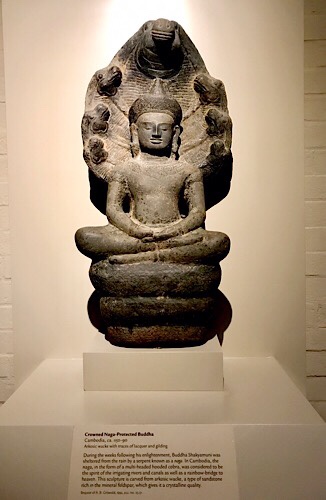
Sometimes a person will will recognize the satguru embodied in a particular human form, as Ram Dass has with Neem Karoli Baba. Sometimes, the teachers illuminating our journey are acharyas, great spiritual teachers who illuminate pathways and practices for finding the satguru within ourselves and in others. They are important teachers for many and a profound influence, but except to the extent that we are all the satguru, they are not “gurus,” nor do they hold themselves out as such. I think of my primary teachers–those I have studied with personally and a couple, like Ram Dass and J. Krishnamurti, whose writings have deeply shifted me–as acharyas. That they may have human foibles does not diminish the power of what I have learned from them and the joy I have experienced and shared from studying with them.
Other people we meet — all of them — are upagurus; we can learn from everyone and anyone. That is what Quakers are taught and seek to practice; that is what Ram Dass is offering for us to consider in both Paths to God and in more detail in Be Love Now. Sometimes we meet a stranger just for a moment, but the stranger in that moment exhibits such grace, that the stranger is one of our teachers for life. It is by being open and spacious that we get the opportunity to recognize those who have just one perfect teaching for us. When we are closed off, we can miss both teachers and teachings.
If we are open enough to seeing the light in everyone, we will also find that even those that trouble us can help us better respond in the highest. Those are the ones Ram Dass calls “teachings” instead of “teachers.” And those who will trouble us will come. We will meet someone and that person will push our buttons. Perhaps the person demonstrates too strongly some behavior or trait we don’t like in ourselves. What a great teaching that can be. When I see such a reflection of myself, I know that when I respond or act in similar ways, I am out of alignment, and it is a great motivator to release the behavior or trait.
Perhaps someone shows up to help us reenact an old emotional pattern that has not served. That someone is the laboratory upaguru who has arrived to give us the opportunity to discover whether this time around we are able better able to embody the principles that we are studying. In being faced with our old stuff, we are given an opportunity, by changing how we respond, to dissolve the old patterns (samskaras) that, if not dissolved by practice, commit us to perpetuate the suffering resulting from our past actions (karma).
Sometimes the upagurus come from the past. They are seeing you through the filter of their own past and have reappeared for something on their own journey. In such people, we perhaps get a teaching that reminds us why we are seeking to better align, why we have sought to shift and change old patterns. We might also meet in an upaguru who has been part of our past someone who has shifted and grown and inspires us to go further on the path, sharing it for a while. Those who are parts of our life for a long time, I think generally serve as both teachers and teachings, and we are the same for them.
With regard to everyone we meet, from an embodied satguru to the most troublesome, the more we are open, the more we hold all that we encounter in what John Friend calls “luminous spaciousness,” the more able we will be both to recognize the true teachers and to learn from the teachings.