Asana, Pranayama, and Yoga Practice | Community and Family | Food for the Mind (Yoga Philosophy, etc) | Meditation
Found Exhortation

We are composed of nothing different than earth, water, fire, air, and space, and much of yoga practice (as are related practices such as ayurveda) is designed to recognize and align our elemental identity. It is human nature to manufacture, just as it is the nature of a beaver to make a dam or a termite to make a mound of mud that displaces what was in its path. Why then is it so common to think of man-made as completely separate from “nature” rather than to recognize the wild and extraordinary creations of humans as an integral part of the complex fabric of being on this planet?
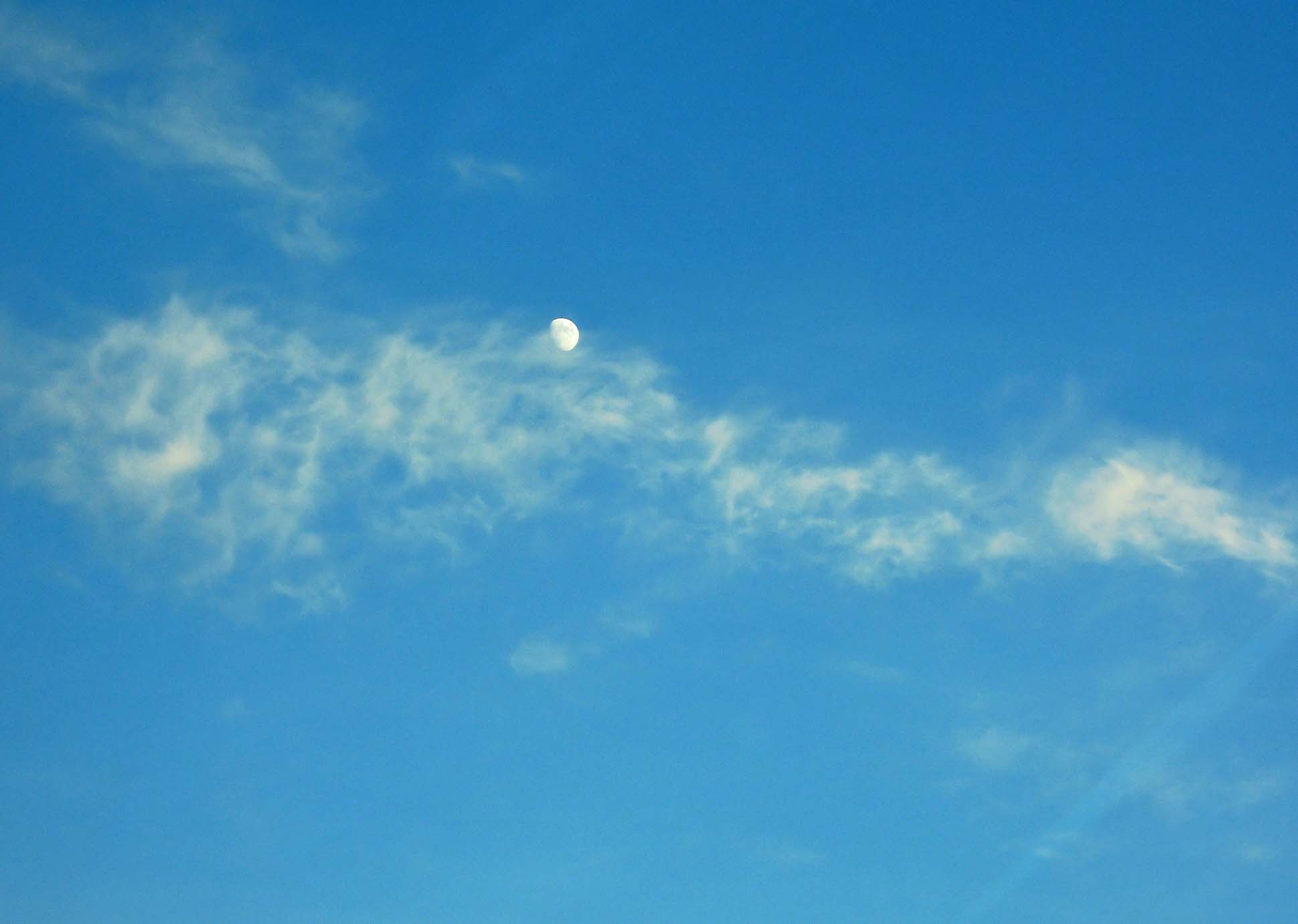

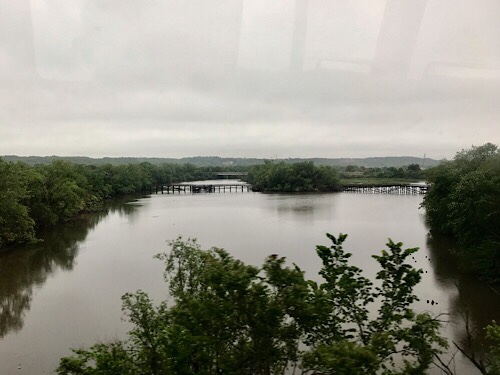
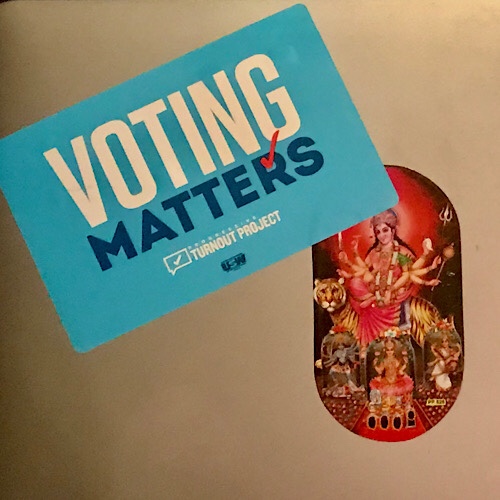
Photos taken on a Thanksgiving trip shared with friends and family: DC to NJ, Cape Cod, and back to NJ before heading home. Without the time on highway and train, I could not have seen so much “nature” in so short a time. Nor, might I add, would I have appreciated being out exposed to the wind and water without the shelter and protection of manufactured goods (including houses, cars, and clothing, etc). This does not mean, of course, that to live better, we should not seek to balance and diminish our consumption of resources for our protection and comfort.
As if–like chanting–you are saying the names of the divine. For if there is anything such as divinity, it is the spark in each and every one.

The mahabhutas are the grossest, most physical of the 36 tattvas described in Kashmir Shaivism. They are: prithivi — earth or solidity; ap (or jala) — water or liquidity, agni (or tejas) — fire or formativity; vayu — air; akasha — space. When we practice asana, we can focus our practice on discovering one of the elements in our bodies and how we move. As we get more skillful, we can choose which element seems out of balance and emphasize one or the other to bring ourselves more into balance. This week, for example, I have noticed that my mind has been scattered and distracted because of all of the excitement of the Inauguration. After being blown about by the cold and the wind and all the excitement, I had gotten to airy (which is my tendency anyway). It is a good time, therefore, to explore prithivi (earth) in my practice. By emphasizing a strong foundation coupled with the Anusara principle of muscular energy, I can literally bring myself to a more solid, stable, and grounded state.
We can work with the tattvas as described above, to realign our energies so that our physical and mental state is more balanced. We can also explore the more concrete tattvas as we embody them to understand better how they are manifestations of the subtler tattvas — the tattvas that the great yogis who have described them would call more real and we dwelling in our bodies and minds might think of as observably less real. Where we can best appreciate and experience the relationship between the gross and the subtle elements is in meditation, and our asana practice can help lead us there.
Look forward this week to working with the earth element in your bodies and minds, practicing strong standing poses and shaping your physical and energetic bodies like clay. Use your earth nature to sculpt the art of your intention.
For suggested readings see my earlier post on the tattvas.
Part of the reason “around town” is within several blocks of my house since the pandemic began is the limits on being able to find a safe bathroom. I prefer that to dehydrating prior to going out. I’m lucky to have the choice.
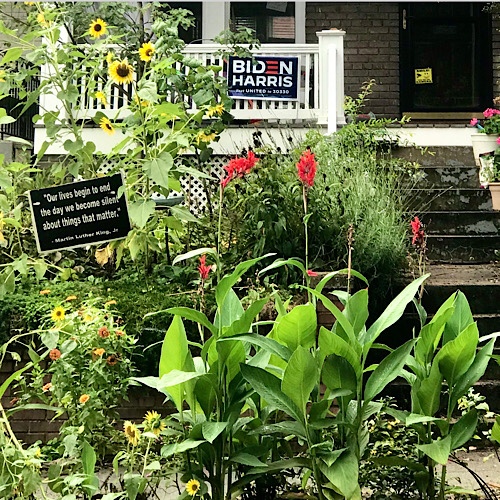
One sign reads: “Our lives begin to end the day we are silent about the things that matter.” The other sign reads: “Biden/ Harris/ text “UNITED to 30330”
Looking in the opposite direction from yesterday.