Art and Culture | Community and Family | Food for the Mind (Yoga Philosophy, etc) | Meditation | Photos
Samscara?

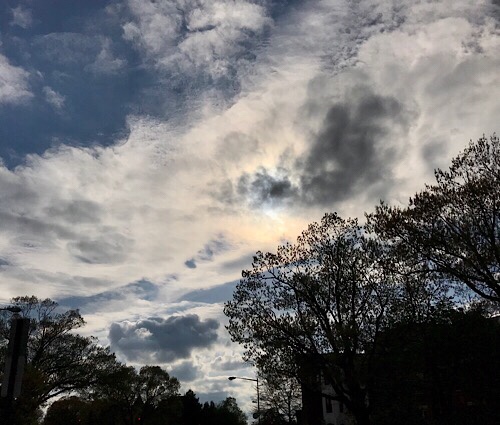
This morning when I woke, my first thought was that I thought it had rained in the night. My second thought was that I felt well-rested for having slept through the night — not having had my sleep disrupted by thunder or the earthquake, as was the case for recent nights — perhaps I had just dreamed about the sound of rain..
The yoga teachings say that there are four states of consciousness: waking, dreaming, deep (dreamless) sleep, and the fourth or turya state. The fourth state is both beyond the other states and also encompasses the others. It is where we find in meditation the merger of the individual consciousness with universal consciousness. The better we are able to access the fourth state, the more the other three states, and how we think and act in them, are illuminated by the very light of being.
The more I meditate, the more aware I am of what is going on around me while I am in a non-waking state. I am also finding that waking and dreaming are more luminous.
My awareness of the rain without knowing whether the awareness came while I was awake or asleep show both that I am finding more awareness in the different states and that I have a long way to go and much to discover.
I feel compelled to learn more about ways to live differently and in better alignment with nature (in addition to studying the yoga texts). I then ponder, study more, and try to act when I can. Here is a good article from our friends at the Union of Concerned Scientists on biomass, about which anyone who is interested in sustainable energy should know at least a little.
ps. CS, please feel free to add your two cents if DH tells you about this blog entry or if you happen to read it on your own.
Twitter? What would be
The point without an I-phone?
Buy one? Save the nation?
Last night I wrote this “twaiku” (why is it not a “twittiku?”) after having read yet another series of articles on why or why not to Twitter and still more articles on why it is important for a nation of consumers to keep consuming even if that is what got them into trouble in the first place. One of the articles was lamenting the loss of true communication that comes with being limited to 140 characters, and it set forth some examples of how peculiar, when taken out of context, some twittering can sound, especially to the uninitiated. In my attempt to keep an open mind about devaluing language while still communicating in language, I was led to think about haikus v. sonnets and other longer poetic forms. A haiku easily fits into 140 characters. This led me to wonder whether anyone had created a haiku trend on Twitter? A quick Google search revealed that I am way behind the times in terms of the twaiku?
One of the articles suggested that Twittering is about being in the moment. Contrarians say it fosters attention deficit disorder and a host of other language-loss ills. This led me to think of the Yoga Sutra of Patanjali “yoga citta vrtti nirodaha” (yoga is stilling/aligning with the thoughwaves of the mind). When evaluating what to consume, when to consume, and how to consume (whether it is language and communication methods or electronic goods or anything else), if we are serious about taking yoga off the mat, it is good to think about whether our consumption eases the trials of being embodied or makes daily living more agitating, and whether our consumption brings us more into alignment with nature/spirit (brahmacharya) or turns us away.

Peace and light, E — Posted with WordPress for BlackBerry.