| |

Found Objects Around Town

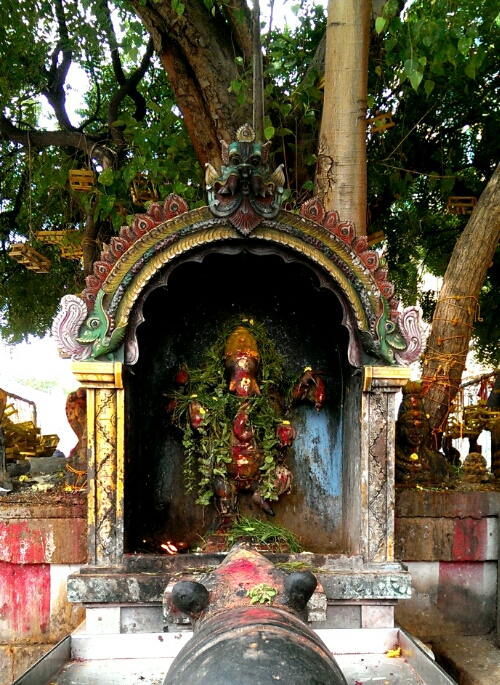
Probably intended to represent beseeching compassion or assistance from a judgmental male god, not a gesture meant to honor the light within each one of us. But I could be wrong; its the same hand position after all.

Peace and light, E — Posted with WordPress for BlackBerry.
Similar Posts

  • | | |

    A Good Place to Sit

    I came out briefly to sit and contemplate and write in my journal before a staff meeting at lunch time (no lunch provided).

    The Scott Burton chairs in the National Sculpture Garden are one of the more delightful places to sit outside near my office.

    First, I was joined by several birds. Then some tourists came along. The one with all the jewels sat down at the direction of her friend in orange for a photo. “We’re not allowed to sit here,” the sitter said with a little glee in her voice.

    I directed her to the sign near the seats giving permission. This led the photographer both to sit down with her friend, but also to lose any real interest in taking the photograph.

    What was it about the loss of transgressiveness that made the photo less desirable? The chairs are the same whether permitted or not. In fact, with sitting permitted, there is more time to explore fully their function as chair as well as their form as art.

    This set me wondering about how much our desires are driven by social ideas, rather than needs and comforts.

    A father and his son approach the chairs fro the other direction. After reading the sign giving permission to sit, they promptly sat down. The bare statement “granite chairs,” was all that was said before they got back up and went on they’re way.

    Peace and light, E — Posted with WordPress for BlackBerry.
  • Sauca (and the blanket)

    There are lots of ways to clean out a closet.  Partly, it depends on what is in the closet.   Per my earlier post about freecycle, I think that part of the practice of sauca or cleanliness, is making sure that the hidden parts of our homes are not overfilled with stuff we do not use.  Cleaning out the closet, does not mean throwing everything out.  It can mean creatively rethinking where things should be and how we should use them.  It also means for every artist, cook, crafts person, periodically making use of all those things you picked up or saved because they would be of use in something.

    I was raised to save things that possibly could be used later, and to try and make every scrap usable.  I was taught this because my father was born in 1929 and my mother in 1936 of Jewish peasant immigrants.  Now, we are re-learning how to maximize the use of objects and minimize waste for ecological, rather than financial reasons, though the two are inextricably intertwined.  As the recession progresses, it will be interesting to see whether financial constriction will foster more environmentally conscious living.

    About four years ago, when I was engaged in a periodic review of what was in the hall closet, I came upon my big box of leftover yarn.  In the late eighties and early nineties, I traveled extensively for business, and spent many hours in airports and evenings in hotels.  I found it comforting to have a lapful of mohair, homespun, or other delicious to touch yarn.  Airport security was less invasive, and it was possible to knit in the airport and take knitting needles on board the airplane.    As I love working with multiple colors, that resulted in a leftover skeins from each project.  Over a 10-15 year period, even with only a couple of aborted projects and no yarn bought for imagined future projects (unlike a really serious knitter), I ended up with enough yarn for a queen-sized blanket (shocking, really).  As you can see, I designed it like a crazy quilt.  It took an educated sense of color and line — imagine this as a painting or pastel and you can see the influence of the Washington Color School, but it did not require much in the way of knitting skills (the whole blanket knit in panels of “mistake rib” — (k2, p2), end k2, p1 — about 50,000 times).  The patch of fire engine red and the grape juice purple next to it, came from my friend Sara, who is a fabulously talented knitter.  I felt the need for those colors, so we swapped for some of the teal and green that I had.

    The blanket took almost four years to knit because I only did it in fits and starts.  Finally, last year, I decided that I needed to finish it in time for Becky be able to curl up on it.  As you can see, she thinks it is great.  Now my closet is not stuffed with a big box of yarn, I have an extra warm blanket that helps me keep the house just a little cooler, I made a thing of beauty where I might have been tempted to go out and buy something new, and Becky has a new happy spot.

  • | | |

    The Svadharma of the Pinky Toe (and Radical Affirmation)

    Svadharma, from sva (self) and dharma (duty) means our personal path, duty, calling, or place.  The principle of svadharma is a significant teaching in various yoga texts, such as the Bhagavad Gita, especially emphasizing the importance in acting in accordance with one’s caste (for example, Arjuna needing to act in accordance with his dharma as a warrior) or one’s sex (consider Sita’s role in the Ramayana).

    Extrapolating this teaching and taking it onto the mat, during one of the practice sessions the previous week at the Certified Teachers’ Gathering, John Friend said that “every part of the the body has its own svadharma to increase the pranic flow.”  He then said that if you just took a photo of the feet of an Anusara yoga practitioner in any pose, you should be able to see that the whole body was fully engaged and active.  John Friend’s teaching here was not just using the yoga philosophy as a catalyst to better understand the body.  By using the principle to illuminate the practice, the practice reflectively illuminated the principle itself, without denying or denigrating its original context or getting bogged down in its historical baggage of perpetuating the caste system and demarcated, subservient roles for women.

    Thinking about the svadharma of the pinky toe has no such baggage.  The pinky toes are homely looking things, they do not fit well into most women’s shoes, they rather painfully bump into things, and they are hard to move independently.  They are not essential for living and do not have the emotional charge of the heart and brain, the exquisite connection to the world of the sense organs, or the connection to life itself of the lungs.  Despite this, the call to lift and spread the toes, to draw the pinky toe toward the heel, or the hip happens just about every time I go to the mat in my practice or teach a class.  Activating the pinky toe by opening it and spreading it apart from the other toes is a conscious act of opening that helps hug the shins to the midline.  In hugging the shins in by means of activating the pinky toe, the yogi on the mat can then safely move the thighs back and apart, creating an expansion of the pelvic floor that provides room for more strongly tucking under the tailbone to access core power.  The pinky toe thus is an important part of our practice, even if we could manage to get by without it.

    But the svadharma of the pinky toe on the mat is not just to be able to help us access the movement of “shins in” so that we can better do “thighs out,” although that is an important physical part of its essence.  The toe does not move on its own.  We have to start by bringing our awareness and consciousness to the toe.  Part of the pinky toe’s svadharma, then, is to invite the infusion of consciousness to show how full participation of even an apparently insignificant part of the body can lead us to a better understanding and personal experience of the pulsation between reaching out and hugging in and affirming ourselves.   By intentionally bringing our awareness to the power we can unleash in the pose by the movement of the pinky toe, we bring the opportunity for greater strength, expansion, and flow of energies.  This is why, I think, John Friend suggested that by just seeing the toes we should be able to know the engagement of the whole body and mind in a particular pose.

    As a practical and therapeutic matter, recognizing and bringing into play the svadharma of each and every part of the body serves to help us increase the flow of energy and expand our range of movement.  In addition, activating the parts of the body that are inclined to slack (for example, the pinky toe or the adductor and abdominal muscles) will bring ease to the muscles that tend to overwork to compensate, such as the neck and low back muscles.  We are not just stronger and more flexible when every part of the body does fulfills its svadharma, but we eliminate much pain and suffering.  (More to come on this particular concept in other posts.)

    Off the mat, when all parts of the whole are fully conscious of and know their svadharma, the whole will itself have more consciousness, more light, and better experience the bliss of being.  It is easy to see, without judgment or question, that the pinky toe cannot do the work of the heart, although when the pinky toe is working it can help contribute to an integration of mind and body that will further the opening of the heart and thus the whole person.  Finding our svadharma as a whole person within society does not have to be about conforming to preconceived social norms that no longer serve.  The better we are able to understand where we are in time, space, and the interconnected web of being, though, the more fully we can participate in leading society itself to a more conscious and light-filled place, just as bringing our conscious awareness to the actions of the pinky toe can do the same for us as individual yogis on the mat.  When we recognize and live out our true svadharma as such, we radically affirm ourselves, the community, and the very essence of all being.

Leave a Reply

Your email address will not be published. Required fields are marked *

This site uses Akismet to reduce spam. Learn how your comment data is processed.