What Inspires You When You Practice Asana?
When was the last time you were moved to be in tree pose (vrksasana)?
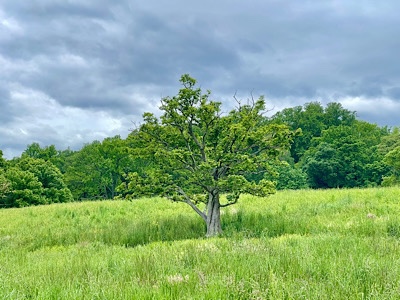
When was the last time you were moved to be in tree pose (vrksasana)?
Last week, I used as a theme sukha — ease, comfort, happiness. I was inspired by Lorin Roche’s discussion of translating in his “version” of the Vijnana Bhairava, which he entitles “The Radiance Sutras.” In it he notes that “[e]ven more literally, sukha is (according to some etymologies) composed of su, good + kha, space. A good space.” At first blush, teaching about sukha might seem to be off-topic from my session theme of sequencing principles. The whole purpose, though, of seeking to understand, practice, and optimize our sequencing in time and space on and off the mat is to find just that. It is to be in a “good space,” to feel at ease, whether we are being challenged or delighted.
I found myself contemplating sukha yet further this week (it is a recurring practice and contemplation theme for me — I love Patanjali’s sutra “sthiram sukham asanam”), as I have been observing and helping the foster cats make mine their new home. When we are uprooted or out of alignment, we are not in a good space. It is a struggle to feel happy or at ease. When we find our rhythm again, then ease unfolds.
There is a set of principles that generally works for taking uprooted animals (or people) and helping them feel at home. Part of making them at home is their new person holding him/herself in a “good space” for the newcomers, which indeed helps them find their own, which is its own yoga.
The blessing of yoga for us, and why we take ourselves to challenging difficult places on the mat, is so that we can, by use of intelligent sequencing of practices, techniques, and mindsets, discover how to feel connected to our own spirit wherever we are in time and space — the essence of ease in this body and mind. The more we can do this for ourselves, the more we can do it for others.
This past Sunday I went to an afternoon workshop with Leslie Kaminoff. Though I was familiar with his book and I follow what he has to say about yoga anatomy on Facebook, I had not ever studied directly with him. Much was familiar, but–and this is why it is important for teachers to study– I did take home some thought-provoking nuances that will invite my own explorations in practice.
A sound bite that very much resonated, especially from the perspective of therapeutic practice and mindful embodiment is the notion that making small changes to things we do very frequently can have a big impact. For example, if all we do to optimize our practice is a minor alignment adjustment to how we stand in tadasana (standing “mountain” pose) or fold forward into and rise up from uttanasana (forward bend), we will make a huge difference in how our physical practice influences and helps day to day movement in our body because they are the most ubiquitous of poses in our modern asana classes.
Next time you’re looking for a bigger change in your health and embodied well-being, instead of looking at big changes and hard effort and feeling overwhelmed, see if there is a little alignment enhancement in a common posture (right now I’m thinking of how I sit in my desk chair) that might shift your everything.
Is a mark of privilege. I know that and give from there.