Vinyasa Krama?
The movement from one moment to the next is always a transition. How then do we sequence most optimally?
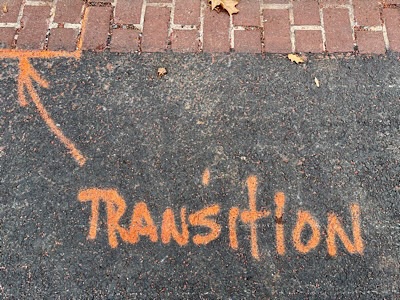
The movement from one moment to the next is always a transition. How then do we sequence most optimally?
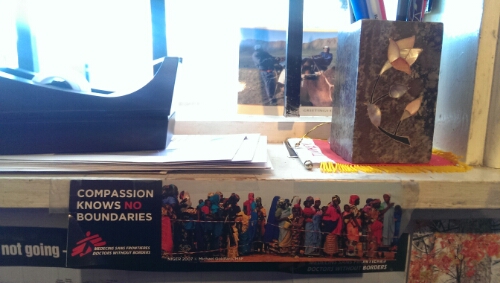
At Woven History near Eastern Market
Today I was deeply and heartily grateful for my knee-high rubber boots and my big impermeable coat both when I was snow shoveling in the rain and later when I sloshed through puddles out walking to do some errands.
During one of the sessions at the workshop last weekend in New Jersey, John Friend made a passing reference to the difference between receiving and taking. He did not go into any detail because it was not central to the theme of the class, but it led me to contemplate on my own about the difference between taking and giving in the context of yoga practice. In so doing, I thought about the concept of prasad — which is food that has been blessed and is offered to those who have participated in worship (puja).
When offered prasad, one does not take it. Instead, the cupped palm is turned up to receive the prasad. The recipient does not get to pick through the basket and choose which sweet looks the biggest or the tastiest, but simply receives with gratitude the sweet or fruit that is infused with the intention of spirit. The active part is the showing up with openness and receptivity to the offering, the blessing, the nourishment being offered.
Coming to yoga class or doing our own practice (asana or meditation) should be, I think, like preparing to receive prasad. What is primary in the practice of Anusara yoga is being open to grace, but we can no more force openings or enlightenment (grace and insight always elude grasping), than forcing any particular physical posture or goal really yoga practice. The point of effort in yoga to improve and expand alignment and knowledge is to enable the practitioner to receive more fully all the potential gifts and grace of practice, and then in turn make fuller and more complete offerings to others.
Below: offerings at the Chelsea Farmers’ Market
We all (or at least most of those who would be reading this blog) have heard the Buddhist-inspired saying: before enlightenment, the laundry. After enlightenment, the laundry. The question is whether after the moments of enlightenment can we infuse doing the laundry with more joy, acceptance, and peace. A young adult acquaintance asked me the other day whether I was readjusting ok. I did not know to what he was referring, and he had to explain that he was asking how I was doing on my return from my India trip. “It was just a vacation–albeit an extraordinary one,” I replied. “Life continues.”
“The good experiences just slip away like dry sand through my fingers,” he made a motion of letting something slip away.
“When you practice and when you get older, it will be easier to bring the temporary, good experiences into your life without feeling they are lost when you have moved onto the next thing,” I said with hope that would actually be true for him, he seemed so bereft.
The yoga teaches us neither to be out searching for the highs nor actively avoiding the lows; the dance of grasping and avoiding is what makes us suffer. That does not mean that the highs, the times of wild abandoned joy, the experiences of utter fulfillment, of exquisite understanding are of no value. What brings joy is a thing of wonder and an opportunity to deepen our ability to love and be generous. They are only a problem if we ruin our time by vainly clinging to or trying to repeat the sensation. As our practice (and our understanding of a life well-lived and loved) matures, we understand that there is no readjusting in the return to the day to day. We welcome what we have had, try to remember what we have learned, including how much joy and delight we are able to drink in, and approach each day as another opportunity to seek and share connection.

The first of Patanjali’s niyamas (part of the ethical precepts that are precursors to the practice of asana, pranayama, and meditation) is sauca — purity or cleanliness. The practice of sauca includes in it a literal exhortation to be physically clean. I think it also carries with it a sense of order, a cleaning out of physical, mental, and emotional clutter, so that we have more clarity. When we find more clarity, we can be more in the flow with the inexorable sequence of time and space.
Experiencing how we fit into the pulsation of time and space is one of the exquisite joys of gardening. This time of year, avid gardeners are eager to get int the garden, and it is tempting to get started to soon, to start new things without cleaning out the old. When we are more experienced (and know better the optimal sequencing of starting the garden with the shifting of the seasons), we also know that we might have gotten a few days in the 50s F, but it is still winter.
Emphasizing the practice of sauca now will serve the whole gardening season. When it is still cold, but the heart yearns for the garden, is the time to be planning, reorganizing, and cleaning to get ready for the days when it will stay warm enough for growing outside a cold frame or protected area. As I use a lot of containers, now is the time for me to see what containers need repairs, removal of perennials that did not make it through the winter, and new soil. It is the time to prune what is better pruned now than in the fall. This is not just trashing everything, but seeing what should be preserved, what should be repaired, what should be cleaned, and what should be discarded or given away. It is cleaning out what gets in the way of an optimal flow of energy to experience the greatest effulgence of nature. By practicing the cleaning and clearing out phase with intention and enthusiasm, I am present with the garden and also in sequence with the light and the temperature. In this way, just as I am when I practice these principles on the mat, I get the bliss of yoga.
