Shadow and Light
I entered Union Station this morning to head first to NY and then on to Vermont for the Anusara Grand Gathering for the summer solstice. I admired for the several thousandth time how grand and extraordinary a space it is. As I looked up and around its lovingly crafted vastness, I thought of how we live in the samscaric wake of those who put their dreams, their hopes, and their pride in traveling from one place to another, believing that it was at the next place happiness would manifest. Then I thought, this is home and not just a place of departure and arrival. This grandeur is a space that is part of my every day.

Peace and light, E — Posted with WordPress for BlackBerry.
One of the aims of yoga, according to Patanjali’s classic eight-limbed path of yoga, is to be free from being torn between the pairs of opposites — pleasure and pain. We cannot be free if we are always grasping at pleasure or acting to avoid pain. From a tantric perspective, we are not trying to disengage or transcend body and mind and the natural arising of pleasure and pain, but we still want to be engaged without an attachment or aversion that leads us into entanglement and suffering rather than towards openness and light.
One of the kleshas (afflictions) is dvesa, which can be translated as hate, dislike, abhorrence, enmity, avoidance. Why wouldn’t we want just to avoid something that we dislike? Sometimes we have no choice, and one of the benefits of yoga is helping us make peace with having to face or be engaged with things that are painful or distasteful.
I often hear students say, “I hate [insert name of pose].” Last night, I heard it twice. I am no stranger to the “I have to go to the bathroom poses,” the poses which are so challenging or uncomfortable, that I feel the need to leave the room. One of the most profound ways I have grown with yoga, though, is staying present for the poses that did not initially appeal to me, usually those that pushed my fear, trust, strength, anxiety, worthiness buttons. One of the obvious superficial benefits of staying present and practicing the “I hate” poses is that they can yield an extra sense of accomplishment when we get them. We can also learn more about our friends and colleagues by starting to understand why the poses are the ones that naturally draw them and thus expand our perspective on the fullness of life.
For example, arm balances are still most challenging for me, partly because I am more flexible than I am strong, and partly because I am fearful of falling. I’ve started to appreciate how another person could be drawn to them for the exhilaration, the rush of danger, the excitement, the challenge, the very topsy-turvyness of the poses, although those aren’t sensations to which I am naturally drawn. But I have learned how much practicing arm balances fuels the energy in my core and heart and when I get them, what it must feel like to fly.
The teacher’s duty (and I have been blessed with wonderful teachers who have given me this gift) is to offer the full range of experiences (within the parameters of the class level, style of yoga, and class description), so that every student gets to practice both favorites and least favorites. This is not so much to make sure that every student gets a favorite sometimes and so is happy in the class when the favorite shows up, but so that the students are invited to be present, grounded, and open to his or her own light through the full range of delights and challenges. On a day when I just get my favorites, I feel like I have been to the spa. The real pleasure from yoga has been from the challenging poses over the long term. It has been steadily coming to the challenge that has started easing my reactions off the mat to the inevitable challenges, pain, and losses of a full and active life. In being less reactive to challenges, I also find I crave specific pleasures less, and so enjoy the pleasures that come all the more.
Yoga home practice challenge: pick one pose for which the phrase, “I hate…” usually proceeds it and make it an element of your weekly home practice for a month. Witness your reactions on and off the mat. Enjoy what happens next time the pose comes up in a class. Maybe the phrase “I hate” will stop arising as soon as you hear the teacher name the pose.
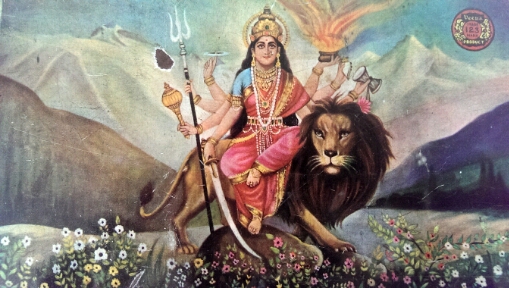
Old advertising tin for “Scent of Flowers” hair oil. Since 1919.