Found Exhortation
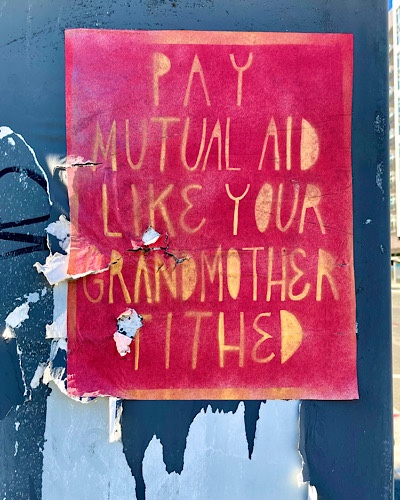
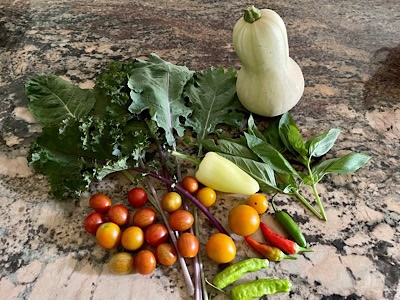
Even though not documented much recently, the garden has moved into summer effulgence. It is a place of curiosity, wonder, and delight. What brings you joy and nourishment in these troubled times that are calling for ever more engagement?
The lotus may indeed rise exquisite from the mud, but the mud, too, has its own necessary and intrinsic beauty.

Peace and light, E — Posted with WordPress for BlackBerry.
Martin Luther King, Jr. said: “A true revolution of values will lay hand on the world order and say of war, “This way of settling differences is not just. …A nation that continues year after year to spend more money on military defense than on programs of social uplift is approaching spiritual death.” Still, the Pentagon suggests that Martin Luther King “might” have supported the war in Afghanistan. Not sure on what basis.
Last night at the Willow Street Book Club, where we were reading Ram Dass’s Paths to God–Living the Bhagavad Gita, one of my fellows raised the question of how we could read as a spiritual guide a book whose context is war. Another asked a similar question from the perspective of a feminist. It was a fabulous, engaged, lively discussion, and I hope to see more next month.
It would be an injustice to the text and the historical context to read entirely out of the Bhagavad Gita the duty of a warrior to kill, a wife to practice suttee, and persons born into each caste to accept their lot in life in a society structured on the caste system. There is much richness in the text, though, that can provide guidance for a feminist, pacifist, who believes that “all men are created equal.”
We have reread “men” in the Declaration of Independence to include women and those of all races (though we cannot manage to rewrite the Constitution to explicitly state that women are equal, but that’s a thought for another day). Similarly, without doing injustice to the text, we can see that the ultimate teachings about living in accordance with duty (svadharma), love, devotion, and sacrifice in the Gita, like the concepts of “life, liberty, and the pursuit of happiness,” provide guidance and force for social action and spiritual devotion beyond a historical context that oppressed and bound on the worldly plane the very persons who are now seeking the deeper meanings in the text. In fact, I believe that we can use the essential intent of the text to teach and transform the oppressors, to use the very text to show why the violence and oppression of the historical context is injust and needs to be changed so that the spiritual intent can be expanded and spread beyond the privileged.
Webster’s On-Line Dictionary defines a “weed” as”any plant growing in cultivated ground to the injury of the crop or desired vegetation, or to the disfigurement of the place; an unsightly, useless, or injurious plant.” At first blush, this might seem like an easy concept, but if we start breaking down the definition, we can see how much our education, assumptions, and prejudices come into play in deciding what is a weed and what is not. We need to recognize individual plants (when they first come out of the earth and when they are in full leaf or flower) and what they offer. We need to know how to foster growth of what we choose to plant, including knowing what will thrive in our location and bring more health and beauty to ourselves and the planet, and we need to have a sense of aesthetics that will cultivate not only our connection to spirit, but optimize the shining through of spirit in all that surrounds us.
Several years ago, I bought a sprig of epazote in a two inch grower’s pot. It went to seed and came back all over my little garden. It grows wild beside highways where it is a native plant. I really like the taste, and it is hard to find here, so I give seedlings away to friends who want it for their own gardens (locals just ask, and I’ll give you some). It is one plant I know I do not have to replace; it will come back every year if I let it go to seed. If I had not controlled it by taking it out of prime planting spaces and either using it right away or replanting it someplace nothing else will grow, though, it would be crowding out other plants in a way that is less than optimal. It is thus both a desired plant and a potentially invasive weed depending on how it fits in with the whole.
I have seen neighbors using Roundup to kill purslane and dandelions that have grown up between the bricks on the sidewalk in front of their houses. Although I think both purslane and dandelions are pretty plants and perfect for spots where nothing else will grow, I can appreciate wanting the front of the house to look tidy. Why not pick the free edible plants instead of spraying toxic chemicals? I let edible wild plants come up between the crevices and then either relocate them or treat weeding as harvesting, getting incredible flavor and nutrition from something that most are taught to try and eradicate.
There are other plants that are sufficiently invasive or poisonous, though, that I do my best to eliminate them from my space (though I do not use pesticides). The other day, I was walking down East Capitol Street after teaching the William Penn House class and saw some English Ivy climbing up a beautiful tree in one of the sidewalk tree boxes. I stopped to pull it all off because English Ivy left unchecked will kill a tree. While engaged in this activity an older couple who lived in the house next to the tree walked up to me and my fellow yogi who was helping me with the ivy removal. The woman thanked me, saying that she had been meaning to pull the ivy. Ivy is an example of a plant people think is pretty and appropriate to plant, but it does not belong in our climate and is incredibly destructive. By my lights, it is a weed, even though I can buy it in most nurseries in the area. I am blessed not to have poison ivy where I live, but it should be removed. It is too hard to live with it.
What does determining whether a plant is truly a weed, whether it causes injury or interferes with what is desired or is unsightly, useless or injurious have to do with the “first principle” in Anusara yoga of “opening to grace?” The first principle invites us to be ready in the first instance to recognize the auspiciousness of both what we seek out and what we encounter. In teaching meditation and related practices of Blue Throat Yoga, Paul Muller-Ortega speaks of this as “the highest first.” As we study and practice (jnana/vijnana), we approach the same and new things with ever more refined technique, knowledge and understanding. The progressive refinement from our efforts helps us then to open up to a deeper perception of the best of our nature. We keep repeating the cycle of studying and practicing, always remembering the first principle, and we, despite and because of ourselves, shift our relationship with the world around and inside us. To be open is a softness, a spaciousness, a willingness to see that is without effort. We temper what gets in the way of effortless opening with the fire to study and to practice with the intention learn how to be more effortless in understanding how things are part of the whole.
How do we apply first principle in knowing what to weed from our garden (or, for that matter, how to address in ourselves a physical, mental or emotional characteristic or pattern of behavior that may or may not serve us or both–our individual “weeds”)?
Is the “desired” vegetation a desire that would help align the gardener and the garden with nature or is it something that was taught that comes from an unsustainable aesthetic and social paradigm (for example, a perfectly green lawn with no plants other than grass)? If the crop is one that truly nourishes (so worth preserving from injury or interference), does it just mean that the “weed” needs to be relocated so that both the crop and the “weed” can flourish simultaneously? In other words, is the “weed” beneficial in its own way, but just needs to be shifted so that its inherent good can truly be appreciated and honored?
Is a determination of injuriousness, uselessness, or unsightliness based on ignorance or true discriminative wisdom? We cannnot know unless we both sweetly open to recognize the potential for discovering the good in what seems most harmful (perhaps one day scientists will find an extraordinary benefit from poison ivy, just as the deadly poisonous plant digitalis is also a powerful heart medicine) and continue to study and practice with an intention to open ever more deeply.
From left to right: volunteer epazote, lemon balm, purslane and dill. Dinner: black beans flavored with epazote; greens, including purslane. Lemon balm (aka melissa) makes a delicious and quieting evening tea.