Where to Meditate

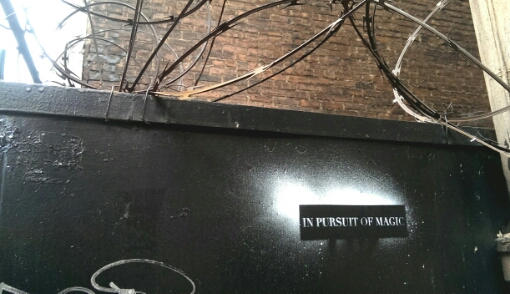
Be careful what you pursue, when, how, and with whom.

Peace and light, E — Posted with WordPress for BlackBerry.
I found the 1934: A New Deal for Artists exhibit at SAAM quite moving. The exhibit was put together for the 75th anniversary of the New Deal; it is merely coincidence that paintings commissioned by the United States government to depict American life in a time of dire conditions happen to be on exhibit at this time. It is a good companion to view along with Robert Frank’s Americans at the NGA West Wing — also on view because of an anniversary, not because of its coincidental timeliness.
The art is not great art, and it is stuck in the period in which it was painted, in part because of the nature of the commission. The depictions of America show any resilience and beauty inextricably intertwined with hardship and struggle. In its very datedness, the art on exhibit raises questions about what are society’s priorities today, how we are responding to the crisis of war, environmental devastation, and economic crisis and how we could enhance and celebrate humanity and the planet rather than continue to decimate the earth and ourselves.
According to the Friends Committee on National Legislation, approximately 43% of your 2008 taxes will pay for war. President Obama’s proposed budget has a smaller increase than previous years, but does not lower in any way military spending. I’d rather my tax dollars were buying art.
As I think about whether I will be able to get up to Willow Street to teach my last classes of the session, how much shoveling I will need to do , whether the next forecast storm (middle of next week) might create challenges for my planned trip to NY, etc, etc, my favorite (well, in the top 10) sutra of Patanjali, sprang to mind: heyam dukham anagatam, 2.16, which means roughly: the pain that has yet to come can be avoided.
I have several translations/commentaries of the Patanjali’s Yoga Sutras in my library. All have a different spin on what this means in practice. What I know is that it is at least partly about being in the present and taking things as they come. One should still practice and plan. By practicing and planning, we are better prepared for inevitable pains and challenges. (For those of you who are giddy with excitement with the thought of a “white Christmas,” this Sutra still helps. Part of the pain that can be avoided is disappointment when expectations are not realized the way we hoped they would be realized.) Once we have prepared in a healthy way, though, there is no point in agonizing about what might come, in being in pain in the present because of the possibility (or even inevitability) of a future pain.
The snow seems inevitable. I am charging my camera battery. I’m picking what is probably the last of the chard and the baby leeks from the garden, and I am getting ready for Serenity Saturday restoratives. As long as I can walk to the studio — eight inches is just plain fun, not impassable — I’ll be there with a warm and full offering. In the meantime, I am enjoying my day instead of worrying about the potential barriers to enjoyment.