Art and Culture | Asana, Pranayama, and Yoga Practice | Community and Family | Meditation | Photos | Quaker
Invocations Around Town
This murti of Nataraja has been in the window of a store near where I work for at least 20 years. I often walk past is and just as often stop to admire it. I have never really considered taking it home, lovely as it is. The murti is simply too large for any of my rooms. I have mentioned its needing a home to a couple of different friends, who were looking for large murtis of Nataraja, over the past few months, but none have followed through.
Today, when I was walking past it on a lunchtime walk to the bank, I noticed a “commercial property for rent” sign in the window. I will miss having this resplendent image in my work neighborhood, but not enough to buy it and bring it home. I decided, though, to take a photograph. I know the owner only very casually, but well enough to know he is retiring, rather than being driven out by rising rental costs or the recession. The neighborhood has gotten trendier since Nataraja first appeared in the window. Nataraja might be replaced with a delicious restaurant or a fabulous store purveying things that entice me. Or the space could stay vacant or be used for something that holds no interest for me whatsoever.
Nataraja–lord of the dance of concealment and revelation, of dissolution and manifestation–is dancing here. The murti will be sold or transported away when the shop closes and will physically be gone.
I will have my memories of the image, a photograph I took with my BlackBerry, and will have had a sweet opportunity to observe the lord of the dance dancing away his own image.

Advancing
The practice.
Community.
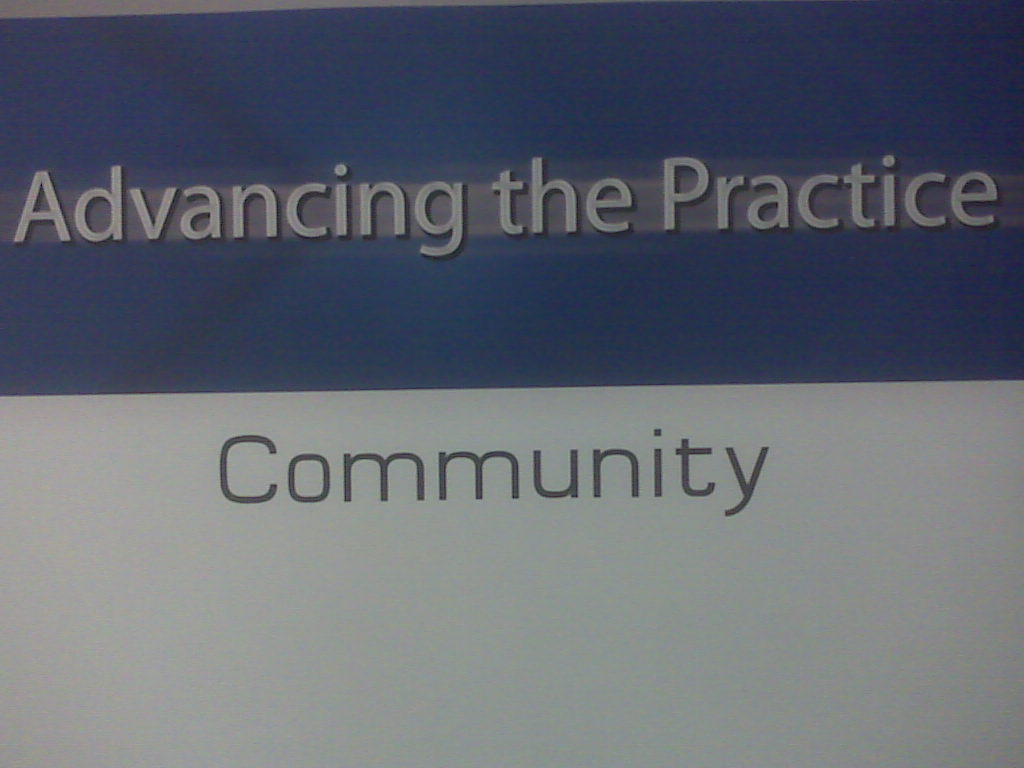
I spied this sign yesterday in the exhibitor hall on the lower level of the Marriott in Woodley Park. I was attending a portion of the 38th Annual Conference of Enrolled Actuaries. (Go ahead: I dare you to put that into your favorite search engine).
Although this sign was to invite enrollment in one of the actuarial professional organizations, it seems most similar to the stated aspirations of various yoga groups and schools.
I’m not surprised by this symmetry. I think that anyone who seeks to live so that employment and dharma (aligned life) are in harmony and who supports, participates, and works in community, is living like a yogin, though perhaps never knowing about or having any interest in yoga per se.
There are many life paths and humanistic and spiritual practices that guide life towards a contented path of service, the true reason, to my thinking, for a steady, long-term yoga practice (including asana, pranayama, and meditation).
I personally find the yoga practices to be among the most helpful ways to engage my body and mind for my health and well-being. Among other things, the practices have helped me listen with open enough awareness to be able to comprehend with my law-trained mind some small portion of the language of actuaries.
Peace and light, E — Posted with WordPress for BlackBerry.