Similar Posts

  • |

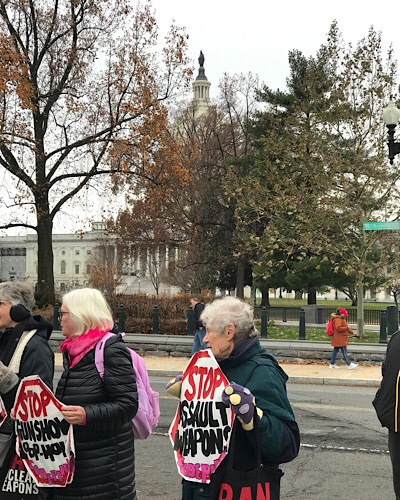
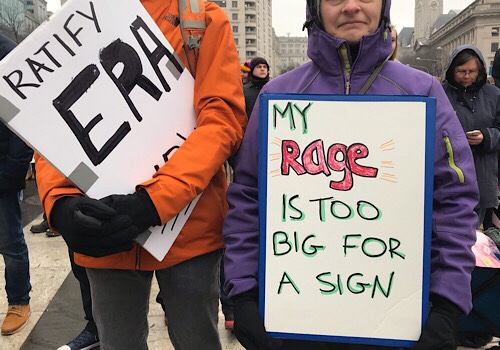
    I had previously committed to volunteering at the Lantern at the same time as the demonstration at the White House against the separation, incarceration, and deportation of those seeking asylum. I left the house an hour early and got off the bus at Farragut Square instead of taking it all the way to Georgetown. Volunteers were actively coordinating and people were starting to gather.

    I talked to people who were heading over as I walked on to the Lantern, and I brought the demonstration with me.

  • The Green Film of Pollen (and how yoga can help)

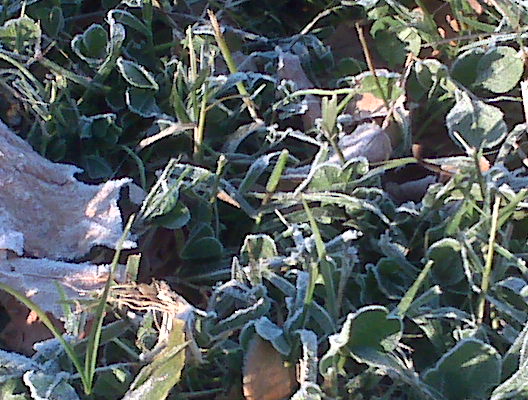
    With the spell of hot, sunny weather, the tree pollen has arrived.  Everything is covered in a haze of green.  It is beautiful in its own way.  Even if one is not particularly allergic, though, the sheer density of the pollen, coupled with the degraded air quality from car emissions and other city pollution without any cleansing rains, can make it hard to breathe easily.  You may have noticed that you are feeling especially sluggish.  I do not have significant seasonal allergies, but when there is this much pollen, we are all breathing in a lot of particulate matter, and I notice I am fatigued for no apparent reason.  That by itself is a challenge.

    What can you do to feel better?  Listen to your body.  You may feel a need, after our long, snowy winter, to get out and run and play, but take it a little slowly.  Drink lots of water, juice, and herbal tea to flush out your system.  Use a neti pot to clear the pollen out of your sinuses so that it doesn’t stay there bothering them.

    Do cleansing practices.  Kapalabhati can be especially effective.  Make sure to use ujayi breathing while doing your poses.  I find that the action of channeling the breath with ujayi makes it much easier to breathe through the nose.  Incorporate some extra twists into your practice for their cleansing action.  Instead of giving up your practice because of allergy symptoms and fatigue and choosing to just lie around, make the effort to set up some restorative poses.  I find supported twists for the cleansing effect and supported backbends, which expand the area of the heart and lungs, making it easier to breathe, feel especially good.

    It may be hard, but instead of looking at the green film and your dirty tissues, notice the beauty burgeoning around you.  The flowering and leafing trees, the greening grass, the proliferation of flowering bulbs and bushes are extraordinary.  Where we put our attention is what we feel and experience the most.

    ps Using cloth handkerchiefs and napkins instead of paper and just throwing them in with your other laundry, will make breathing easier in the long run if enough of us do it.  Fewer trees killed.  Less pollution.  Better air.

  • | | |

    Web Version of E-Newsletter “New Year’s Greeting”

    Dear Friends,

    The changing of the calendar gives us a wonderful opportunity to reflect on the past year and think of how we might wish to grow or shift to best serve ourselves and others in the coming year.  2010 was such a difficult year for so many, with suffering of a magnitude of which I can hardly conceive, even though I have had my own struggles.

    In the midst of the challenges we are facing globally, societally, and locally, 2010 was a good year for me, although it had some partings and disappointments that were painful.  With all the challenges and suffering of so many, I am especially conscious of how fortunate I am.  John Friend, at the weekend workshop in Bryn Athyn, reminded us that with the privilege of having the material, physical, and intellectual well-being to be able to study and practice hatha yoga as we do, comes the responsibility to serve, to share in the best way we can and to seek to illuminate not only our inner world, but the world around us.

    In 2010, most important of what filled my year was that I deepened and committed further to my studies of meditation and tantric yoga philosophy with Paul Muller-Ortega.  I have been invigorated by my continuing studies with John Friend and other senior Anusara yoga teachers.  I am almost overwhelmed by how much joy I get from practicing and studying and the community of fellow practitioners and look forward to going deeper and sharing my explorations in 2011.

    Three new things that were not part of my formal yoga practice brought great joy into my year, and I am sure, in the years to come.  The magnificent and enormous middle-aged cats, Uma and Sully, who moved into my house on an emergency fostering basis, quickly became permanent inmates and  unceasingly offer entertainment and comfort.  I had a solar array installed on my roof, which was an inspiring way to see technology in a positive light.  I look forward, as the days start lengthening, to watching the electric meter run backwards. Most recently, I was led to the DC Contact Improv Jam, which I am finding just wonderful.  I am sure the delight of dancing and the freedom and play of contact improv will shift my own practice and expand the offerings for class.

    What I have learned during my time practicing is that when I am sick or injured or feeling excessively challenged my practice supports me and helps me remember what is good and nourishing and sweet.  When I am feeling exuberently full of life then my practice just expands the joy.  Most of the time it is somewhere in between.  With the expansion of my own studying and practice, I will be teaching a little less and, in my offerings at Willow Street, emphasizing healing, nurturing, and a sweet opening to supportive shifts; all are welcome both to the Gentle/Therapeutics Saturday noon-time class (registration preferred, but drop-ins always welcome) and to one or all of the restorative workshops that will be held the last Saturday of January, February, and March.  The William Penn House class is as all levels an embrace and invitation  as you need it to be for your support and delight–from chair yoga to drop backs, depending on your practice and the day. Drop in any week; no advance notice required.

    Proceeds from the house classes will continue to go 100% to environmental causes in 2011.  In March, I will again be offering at Willow Street, “Yoga for Gardeners,” with my profits going to benefit the Youth Garden at the National Arboretum.  And if you are ever looking to browse for used books — or looking for a good place to donate some of your own — please visit the Lantern Bookshop in Georgetown, where I have been volunteering one Sunday a month for 15 years or so.

    Whether 2010 was a more a year of challenges or joy and expansion, I wish you the best in 2011 and hope to see you soon, sharing in the joy and support of the yoga.

    Peace and light,

  • |

    “First principle” (and akrama and krama)

    When I think about the Anusara alignment principles in the context of the tattvas (see earlier posts), I think about “opening to grace” appearing in two places on the tier.  As “first principle” it is the first among a larger sequence about how we come to the mat, rather than just the first of the physical principles.  “First principle” not only starts the practice and the dialogue, but is already there. It is, in this sense, so fundamental that it is not part of the sequence, but is sequenceless (akrama).  If you are fully conscious of “grace” and can embody it in all aspects of your physical, energetic, and mental day to day existence without further instruction, study, or practice, then there is no need for other practice or instruction (this I think is a very rare being, and certainly I’m not such a being).

    The next set of tattvassuddha vidya, ishvara, saddha shiva, and shiva-shakti (see link above), correspond to the Anusara alignment principles of “attitude, alignment, and action,” which although they are themselves described in sequence, are fundamentally sequenceless as they happen all at the same time and are more elemental than the practice of the physical/energetic alignment principles in sequenced practice.

    In this way of understanding the play between the sequenceless and sequenced, we have a universal “first principle” that embodies the purpose of all we do on and off the mat.  It is followed by how we want to practice, described in a way that becomes less of just a concept (which as a universal concept is akrama) and more of a practical understanding (which applies when we are in space and time and therefore in the krama of embodied existence).  As we dance in this play between the sequenceless and the sequenced, we come to practice (or to do any activity) with the “attitude” of wanting to live the “first principle,” to know and experience what is fully present and not bound by time and space.  We then (because we must) study and practice specific “alignment” to try and express this attitude with our “actions.”

    The physical/energetic alignment principles then come in as a the way of better refining, studying, and practicing the desire to recognize with mind and body the “first principle.”  The sequence of “open to grace, muscular energy, inner spiral, outer spiral, organic energy” comes then at the level of physical and mental practice to return us back to “first principle.”  “Open to grace” is first in this sequence, too, but as “first principle,” for me, it is something more than the first of the alignment principles.  “First principle” is not just the start of how we practice when we practice Anusara yoga, but the whole reason for practice.  It is the universal, overarching, blissful element of being that draws us to the practice because of our yearning to know it.

Leave a Reply

Your email address will not be published. Required fields are marked *

This site uses Akismet to reduce spam. Learn how your comment data is processed.