Empty Promises
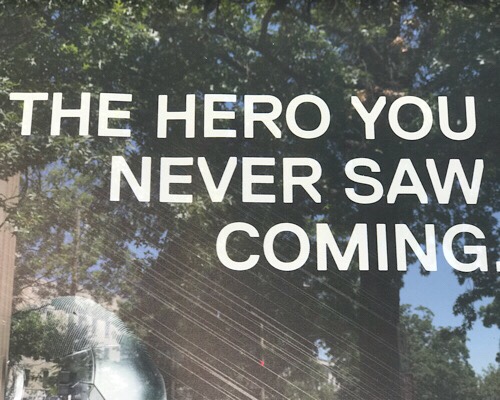
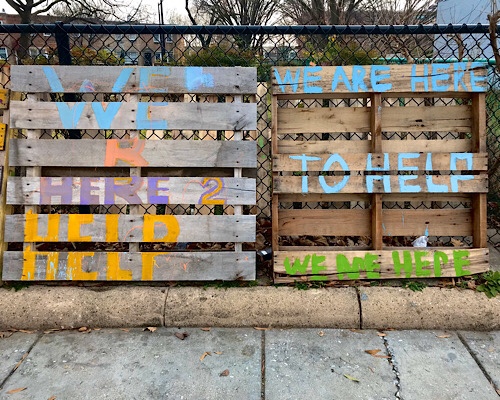
Best to make an effort than to hope or expect someone else to save us. The hero you never saw coming might not come, or not come soon enough, or be a false hero.

Best to make an effort than to hope or expect someone else to save us. The hero you never saw coming might not come, or not come soon enough, or be a false hero.

It started before yesterday’s Tuesday night class. There was a piece of fuzz next to one of the students mats–a schmutz. We then decided that the yoga outfit, especially the old raggedy one, was a schmata. Tonight, I was in an uncharacteristically silly mood. With birds falling out of the sky, fish washing up on the shore, and the Republicans taking back “control” of the house, I could weep or I could find the laughter in small things. Tonight, with a practice theme of the Anusara’s “first principle” — opening to grace — I spontaneously and giddily came to the latter.
I mentioned the idea of yiddish for yogis, and the class took off. We were all women tonight, so it was “yoga for yentas.” The word one utters when going into the first forward bend of the practice, is of course, oy, which can be lengthened to oy vey is mir. When we are truly opening to grace, we are kvelling; when we are noticing our aches and pains and forgetting to move towards the good, we are then kvetching.
Just FYI, I learned after doing a cautious internet search before posting this blog entry, that it turns out that the phrase “Yiddish Yoga” has been trademarked. I am pretty certain we can still have fun talking about using yiddish vocabulary words in yoga class without violating any laws, though it has been over 20 years since I took class in copyright and trademark law. So feel free to think of your favorite yiddish word and how it should be used in yoga class. You never know how it will enhance your practice, for whom it will bring a smile or a laugh, and what other thoughts might arise. I’m pretty sure that there isn’t a yiddish equivalent for satcitananda, any more than there is an English equivalent for weltanschauung or schadenfreude, or a French word for sandwich, but at least one student wants to give it a try.
There are three important things going on under my desk:
(1) my feet are planted firmly on the floor with the inner edges of my feet parallel. This is the foundation of a good, comfortably upright posture where my low back, shoulders, and neck are in alignment and not overworking; my inner organs are in the right place for optimal functioning; and my lungs and diaphragm are situated for full, easy breathing, which helps me be healthier and more alert.
(2) the only shoes for the day have flexible, supportive soles and leave my toes free to work–whether I am walking or sitting. I do not change into narrow-toed and/or high-heeled shoes to look “professional” or fashionable. I think if we try hard enough, we could make shoes that are good for us be in style. Think about how much we would reduce health care spending and lost work time (for foot, knee, and back surgeries and treatments), if we all wore shoes that fit and did not alter our posture in an unhealthy way. Eventually, foot binding when out of fashion in China, but we still require women (mostly) to harm themselves with their footwear to fit in.
(3) I have two different-sized rubber balls to do foot exercises. Feels great, helps me stay grounded, and is a nice way to take a break.
Come to one of my yoga classes to get tips on great exercises for the feet you can do at your desk or just about any where.
Peace and light, E — Posted with WordPress for BlackBerry.