Questions Around Town
The yoga texts talk about concerted effort (tapas) yielding boons in the form of power.
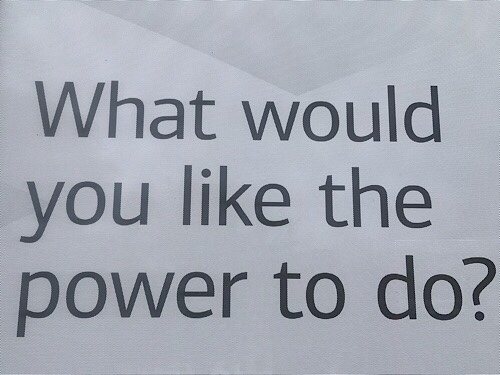
The yoga texts talk about concerted effort (tapas) yielding boons in the form of power.
I went to see Julie and Julia because I, like most other Americans of a certain age who like food, have a history with Julia Child. Seeing the movie brought back an episode from junior high school. By seventh grade, I was pretty competent cooking, cleaning, babysitting, and doing needlework. Being a feminist in training, I wanted to take shop. Mr. Murphy, my ancient (OK who knows how old he was, but he was gray and bald and had leathery skin, so he was likely over 50 at the time) guidance counselor refused: “shop is for boys; home economics is for girls.” I expected my mother to back me up, but for some reason she did not.
I had no interest in making rice crispy treats, which was not the kind of thing we cooked at home and was the kind of thing they taught in home economics. Part way through the year, when we were told to cook a whole dinner at home and then bring in a report, I decided to cook from Julia Child. I am sure the meal was perfectly delightful, but the motive on my part was not to make a delicious dinner for the family, but to show my guidance counselor and parents that I should have been allowed to learn something that I did not know how to do and could not learn from a book (woodworking and other “shop” skills).
I enjoyed the movie (it’s a pleasant couple of hours and Meryl Streep is wonderful), but the interesting after thought for me was the difference in the happiness of an individual depending on motivation in life choices. Is something done for joy (with recognition being delightful, but somewhat incidental) or is it being done because one needs recognition and then feels satisfied on getting it? From a yoga perspective, is it “actionless action” (see Bhagavad Gita) or is it acting out of a need to fulfill the ego, which inevitably binds one in the fierce dichotomy and inner tug or war of the opposites of longing and gratification, pain and pleasure?
Last year I decided to bring this murti of Kuan Yin outside. I asked my neighbor if it was ok, as her parents came here from China, . My neighbor welcomed this presence in the space between our yards and also appreciated that I asked.

I spent nearly three hours talking with tech support just to get the phone authorized. And once that was accomplished, the guy helping me also was unable to figure out how to transfer my contacts from the old phone to the new. Last night, on the second full day, I opened every item in settings just to learn about this piece of technology and found another way to transfer contacts than tech support had tried. Hooray! I didn’t have to enter them manually one by one.
So it’s like this: no matter how brilliant a system, if I didnt learn how to use it, I wasn’t going to get any benefits. The more I studied and practiced, the more I would be able to use it in a way that enhanced my daily life. Although a teacher is necessary, it takes our own thorough, steady, and attentive practice to empower ourselves and expand our limits.
I had thoroughly resigned myself to typing. Now I will have more time to figure out how to resize photos. That may feel less urgent. It’s busy at work, and the garden, yoga mat, meditation cushion, library, and beautiful weather call me to them.
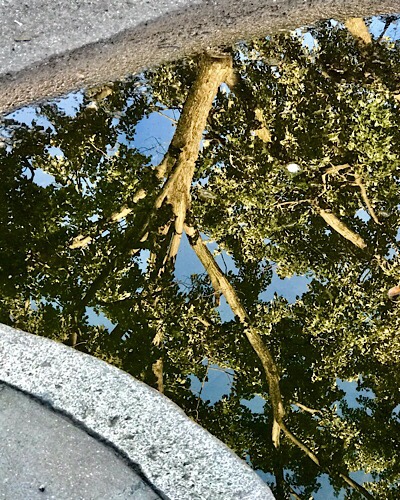
What do you first notice when you look at this photo? What do you notice next? Do you find yourself making aesthetic judgments or comparisons? What about moral judgments?
Is it possible truly to witness without judgment? To see the good (or at least the potential for good) in everything, even if it does not please us or fit in with how we would like the world to be?
Peace and light, E — Posted with WordPress for BlackBerry.
The meadow ablaze with yellow flowers. Wild color the harbinger of changing seasons.

If I post a picture of a rainbow a few days after I took it, is it still worth looking at? Or does it need to be in the moment?