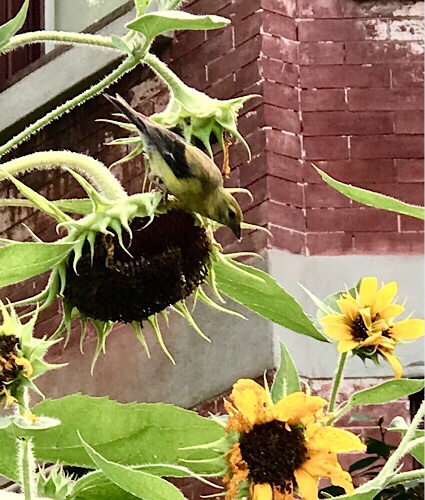
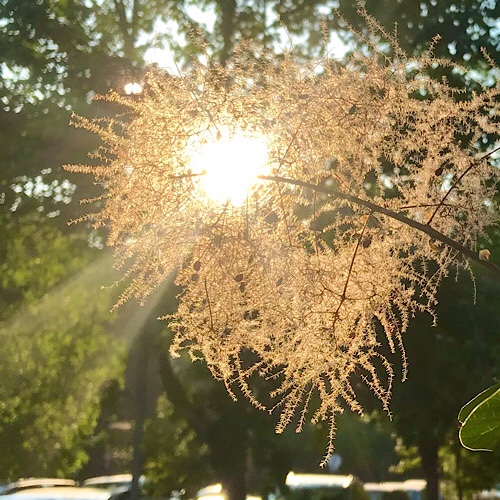
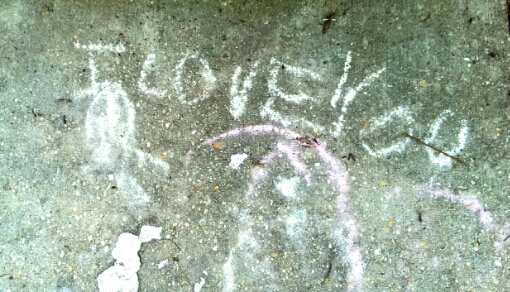
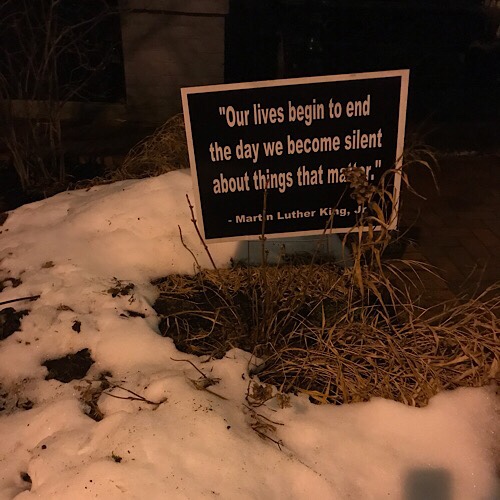
Signs Around Town
This will be my 20th season in my garden. I know that my back garden — where I grow my herbs, flowers, and vegetables — is easily 4-5 weeks earlier than the gardens of my friends’ in Potomac and Silver Spring and the outer suburbs. It is even almost that much earlier than my front garden. I have a brilliantly sunny, south-facing, protected back garden with a brick patio that is against an unpainted brick house and a densely shaded, north-facing front garden. Not only is the back garden sheltered from the wind by the house on one side and the fence on three sides, but the bricks retain enough heat to change the temperature by a a couple of degrees. I have a special micro-climate. My climbing rosebush (pictured in the header) is already in leaf.
What does this mean? While my friends in the suburbs or those with east/west facing houses are starting seedlings for kale and spinach indoors, I can put seeds into outdoor containers in the next week or two without compunction. The seedlings I would need to start (if I don’t instead choose to purchase them from the organic farmers at the market) are peppers and tomatoes for planting in mid-April. If I start with strong 8″-12″ plants in mid to late-April (depending on the 15-day forecast), I can have and have had for at least 10 of the past 20 years, cherry tomatoes in May and peppers in early June. My greens, obviously, bolt earlier. I’ve figured out that certain varieties of chard do better in these conditions, and that spinach and lettuce do better sheltered by the fence where they get afternoon shade, so that I can have them farther into the season.
This kind of knowing by combining general book and teaching knowledge with personal observation of my little space, is much like the yoga practice of svadyaya (self-knowledge), which is the fourth niyama of Patanjali’s yoga sutras. Svadyaya is literally study of the self through the scriptures. Implicit in that is the guidance of a teacher or guru. Ultimately, though, self-knowledge or awareness must be experiential. We make the effort to study and we listen to our teacher, but then we practice. We soften and open to who we (or our garden) truly are — another way of practicing and experiencing the Anusara principle of opening to grace — and then in the context of the teachings, accept who we are. As gardeners, that means accepting what zone we are in, how much shade, water, space, and sun we have. As yogins, it means accepting our strengths and our limitations. We can shift our zone by treating certain plants as indoor/outdoor or as annuals rather than perennials; we can enhance our water flow by storing it in rain barrels, but that is merely expanding the edge rather than making a complete change. We can expand the edge of our practice, but still need to accept the bodies with which we were born.

At the White House, January 29
It has been heart-rending for me to read about the growing rancor and bigotry about religion and race as we approach the mid-term elections. I am concerned as a peace-loving and community-minded citizen. I am also concerned as a personal matter. My great grandparents fled the pograms, and my parents felt free to become members of the Religious Society of Friends (Quakers) and bring their children to Friends’ meeting. I both honor my ancestry and religious upbringing and can study and practice yoga without fear of societal condemnation. Current events remind us all too painfully that the importance of religious and spiritual freedom can never be taken for granted. It is a matter of constant attention to seek spiritual unity in religious diversity, to recognize the spirit in every one, no matter the form of practice they choose (including choosing no practice or faith at all).
Today, I received the following email from Joe Volk at the Friends Committee on National Legislation. I invite you to join me in taking action if you are so moved:
At FCNL, we’ve been sick at heart and concerned at the hate speech, confusion, and misinformation about American Muslims that has spread across the country in the last month. Many of you have told us that you share our concern.
The controversy is not over yet. Between today and the September 11 anniversary of the attacks on the World Trade Center, we at FCNL expect another outpouring of bigotry and misplaced anger at the proposal to build an Islamic cultural center in downtown New York City.
In the first eleven days of September, please state publicly that you stand with our brothers and sisters in the American Muslim community. We support their proposal to exercise their religious freedom by building an Islamic Cultural Center in downtown Manhattan, where they have lived and worshiped for years.
Worship, Talk, Take a Stand
Our country needs this cultural center and the public discussion that it is generating. The proposal for this Islamic cultural center can be transformed from an ugly controversy into perhaps the most important public opportunity in this decade to celebrate and exercise the First Amendment guarantee of freedom of religion.
Many of you are taking this opportunity. From New York to North Carolina and from Maryland to Illinois, we have heard about local community groups using the public focus on the cultural center to organize opportunities for Christians and Muslims to find out what they have in common. To counter the distrust and misinformation, more people need to state publicly that they support the freedom of American Muslims to worship and to gather together.
Please start by signing this petition supporting American Muslims and the proposal to exercise their religious freedom to build an Islamic cultural center in downtown Manhattan. Ask 5 friends to sign it as well. We’ll add the names of those who sign to the bottom of the petition to show the support that’s out there.
That’s the first step, but we encourage you to do more if you can. Here are some suggestions.