Visit to Storm King With a Friend

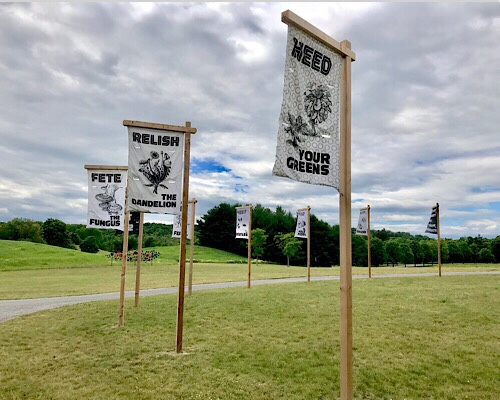
Mark Dion, “The Field Station of the Melancholy Field Biologist, Storm King Art Center

Mark Dion, “The Field Station of the Melancholy Field Biologist, Storm King Art Center
During one of the sessions at the workshop last weekend in New Jersey, John Friend made a passing reference to the difference between receiving and taking. He did not go into any detail because it was not central to the theme of the class, but it led me to contemplate on my own about the difference between taking and giving in the context of yoga practice. In so doing, I thought about the concept of prasad — which is food that has been blessed and is offered to those who have participated in worship (puja).
When offered prasad, one does not take it. Instead, the cupped palm is turned up to receive the prasad. The recipient does not get to pick through the basket and choose which sweet looks the biggest or the tastiest, but simply receives with gratitude the sweet or fruit that is infused with the intention of spirit. The active part is the showing up with openness and receptivity to the offering, the blessing, the nourishment being offered.
Coming to yoga class or doing our own practice (asana or meditation) should be, I think, like preparing to receive prasad. What is primary in the practice of Anusara yoga is being open to grace, but we can no more force openings or enlightenment (grace and insight always elude grasping), than forcing any particular physical posture or goal really yoga practice. The point of effort in yoga to improve and expand alignment and knowledge is to enable the practitioner to receive more fully all the potential gifts and grace of practice, and then in turn make fuller and more complete offerings to others.
Below: offerings at the Chelsea Farmers’ Market
I went today with my younger sister and brother-in-law to see the Terracotta Warriors exhibit at the National Geographic Museum. Even with only a few of the warriors and photographs of the site, it is possible to imagine the sheer magnitude of the vision of thousands of these life-sized images living underground at the tomb of the Emperor. I then thought of how vast must have been the Emperor’s yearning for power and the wildness of his vision of this extraordinary tomb for it to have become manifest. Trying to expand my imagination to understand the reality of such ambition and creativity I thought of the principle of iccha shakti. Iccha shakti is the very will of consciousness to be, to creatively manifest, to become diversified embodiment out the universal. Ego and will are not themselves bad, but our very freedom allows us to choose a path that is out of alignment with the principles of joy and unity.
The Terracotta Warriors show the immense possibilities of exercising will. In their very existence and the manner of their coming into being, they evidence both enormous cruelty and disdain for life and a wondrous manifestation of human creativity, collaboration, and effort. One of the goals of yoga, in teaching us the possibilities of our own freedom and creativity, is to lead us to choose a life that is progressively better aligned with nature and with all of beings. This is the path of one who practices, and I find it ever a challenge.