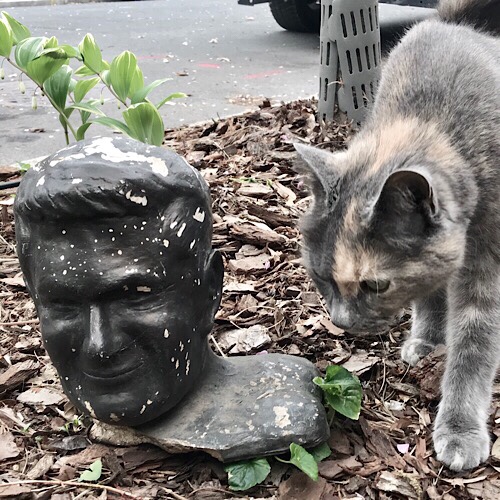
Lila

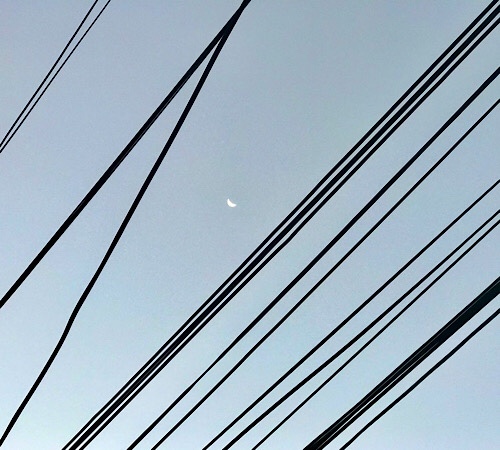
On my previous visits to Sedona in the past year and a half, the moon has been full or nearly full each time. Even though there was little light from man-made sources, the bright light of the moon illuminated the sky enough that the stars were outshone. This trip, though, there was only a sliver of a crescent, and then, no moon at all. In the absence of the moon, the stars blazed forth in all their glory.
I recently have been contemplating how the practice of pratyahara (usually translated as withdrawal of the senses) fits into a tantric yoga path. Pratyahara is the fifth limb of the eight-limb path of raja yoga, see Patanjali’s Yoga Sutras. In classical yoga, the aim of yoga practice is to transcend the body-mind, and the eight limbs provide the means for that transcendence. It fits within that paradigm to withdraw from the senses to move towards meditation. In tantric yoga, though, the aim is not to transcend or quell the body-mind, but to understand that the body-mind is an emanation of spirit and to live ever more full of the light of spirit. The senses are not something to be transcended. Yet we still practice pratyahara on the tantric path.Why is that?
I think that in order to remember our own light, we sometimes need to choose to withdraw from the potentially constant stimulation of our senses; we need to pick darkness and quiet so that we can better discriminate between being delighted and inspired by the senses and being bound by craving stimulation of the senses. If we get completely bound up in the senses and seek only to get more and more stimulated, we will forget the fullness and light of spirit. We choose, therefore, at times in our practice, to diminish outer sensory input so that the inner light can shine more brightly. When we return from the inner light to go back to the senses, we are then better able to appreciate the wonder of what our senses bring to us. It is not unlike how we get to witness the extraordinary magic of the stars when we take ourselves away from the light of the sun, the moon, and the city.
The great texts and teachers of meditation exhort us to look within with the promise that by so doing we will find great peace or bliss or splendor.
For many, though, initial attempts at meditation are just as likely to reveal troubling aspects of the self or agitating thoughts as any sense of beauty or quiet and the reaction can be a dismissal or disbelief in such teachings.
The exhortation to look within is not directing us to introspection or the self-examination of therapy (which are also useful in appropriate circumstances), but rather is inviting us to open to seeing that the beauty and specialness that we might believe of and recognize in others is also within ourselves.
Only when we can first look inside ourselves with love and empathy, can healing, change, growth, and compassion begin regarding those things that make introspection scary and challenging.
Peace and light, E — Posted with WordPress for BlackBerry.
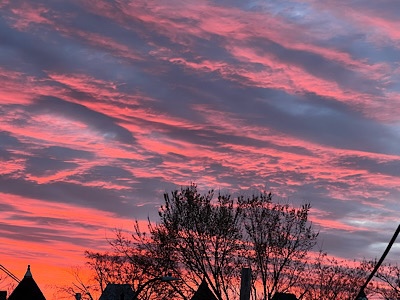
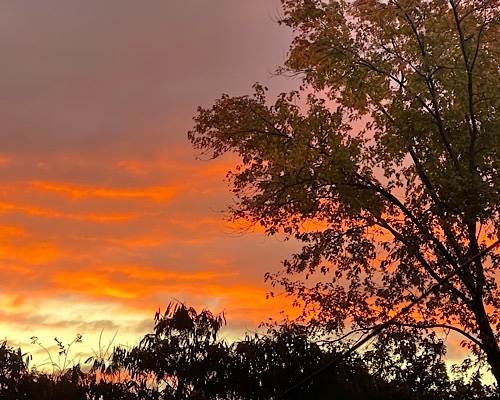
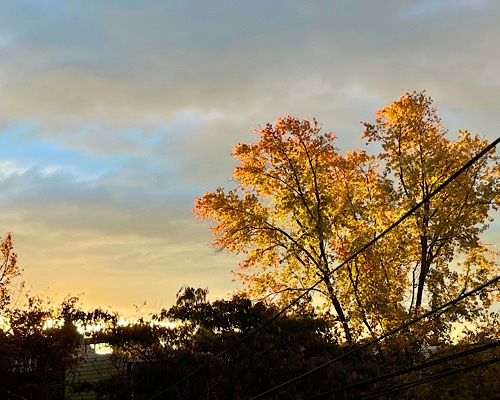
Whatever the season, I notice the beauty on my walk to work. I see what remains the same and what changes. I invite the sweetness I feel arising spontaneously from my daily walks though the neighborhood, which, familiar as they are, still feel like vision quests, to come into how I experience the rest of my encounters with the world.
Peace and light, E — Posted with WordPress for BlackBerry.