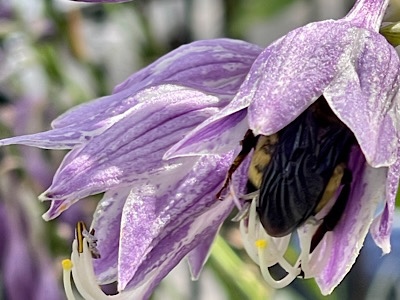
On the Way Home from Tuesday Night Yoga Practice at William Penn House
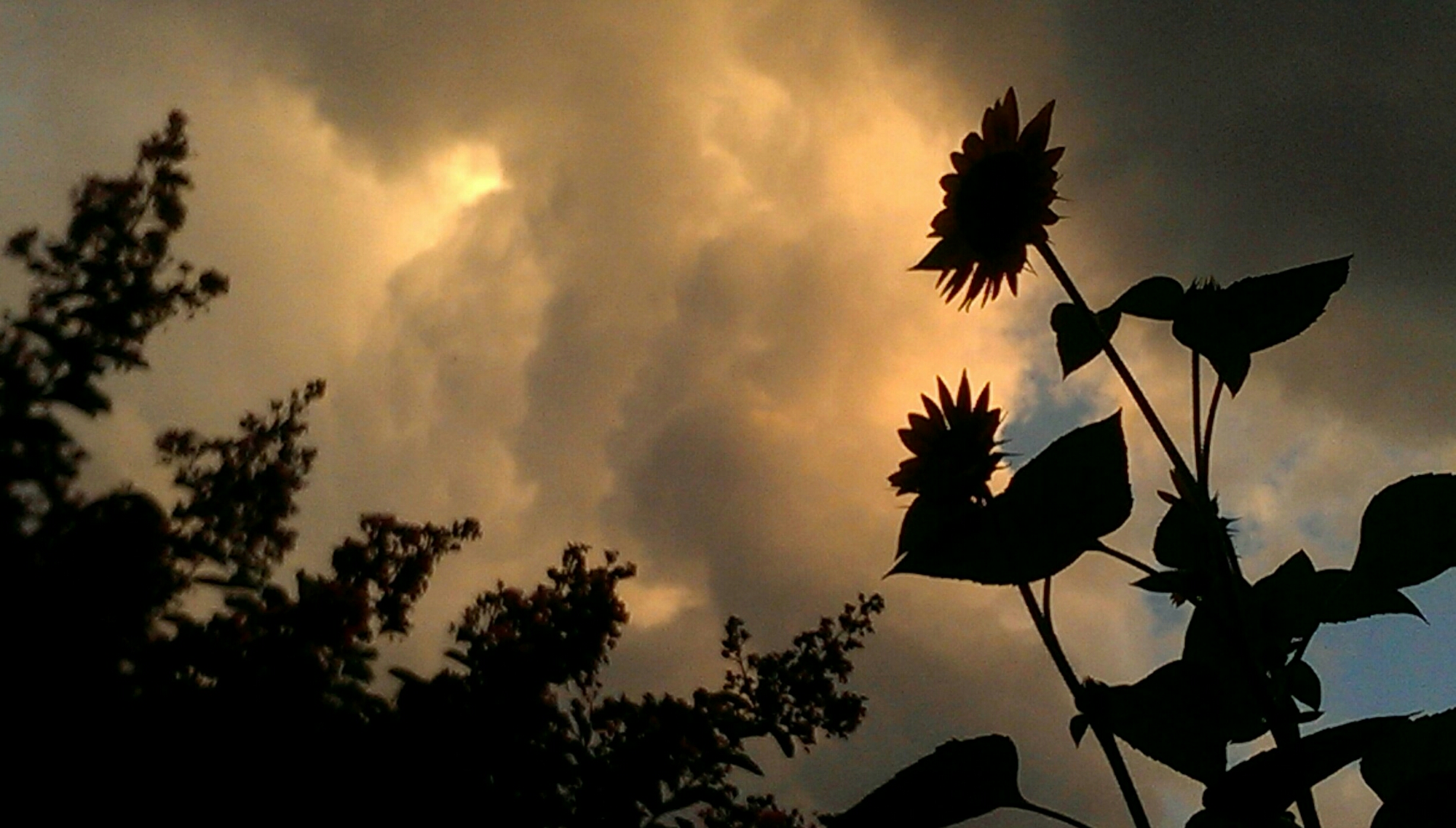
Savasana–pose of the corpse, the pose of final relaxation, the pose without which no practice is fully complete– is both a very simple pose and one that is rather advanced.
Sometimes when I teach beginners I ask them what was the first Sanskrit word they learned. Usually they guess the word is “yoga.” The first Sanskrit pose name they get, though, and it doesn’t take more than a couple of classes is savasana. For most beginning the practice of yoga, the permission to stretch out on the back after an hour or more of new ways of engaging body, mind, and spirit is welcome indeed. This is particularly true for those who are overly busy and chronically sleep-deprived as are so many people I know.
What teachers often miss about savasana is that it can be very hard for some students. Injuries (chronic or episodic), tightness, or habitual misalignment (or expectations of how lying down should feel) make it challenging to be in the pose. The default can be to put supports under the knees or head without taking the time to recognize that it may be necessary to focus on and adjust the alignment before relaxing to see if ease can be found without props.
Other practitioners find it agitating to be asked to lie still for 5-10 minutes, because they are so used to being active all the time. Even if they can make their bodies still, their minds race around, and the idea of final relaxation seems anathema.
At the beginning,
savasana can be just stopping movement and enjoying letting go and relaxing.
But the pose is something much deeper than relaxing after a good workout. The pose of the corpse is not about being unmoving like a dead body, but about ceasing consciously acting and surrendering to the elemental vibration of universal being so that the inner fullness becomes indistinguishable from that which infuses all of the matter of the universe. As one gets more advanced, the alignment in the pose evidently becomes one of inner fullness and luminousity supporting the draping of the physical body. We practice going to earth and light, dissolving the constant awareness of our individuality.
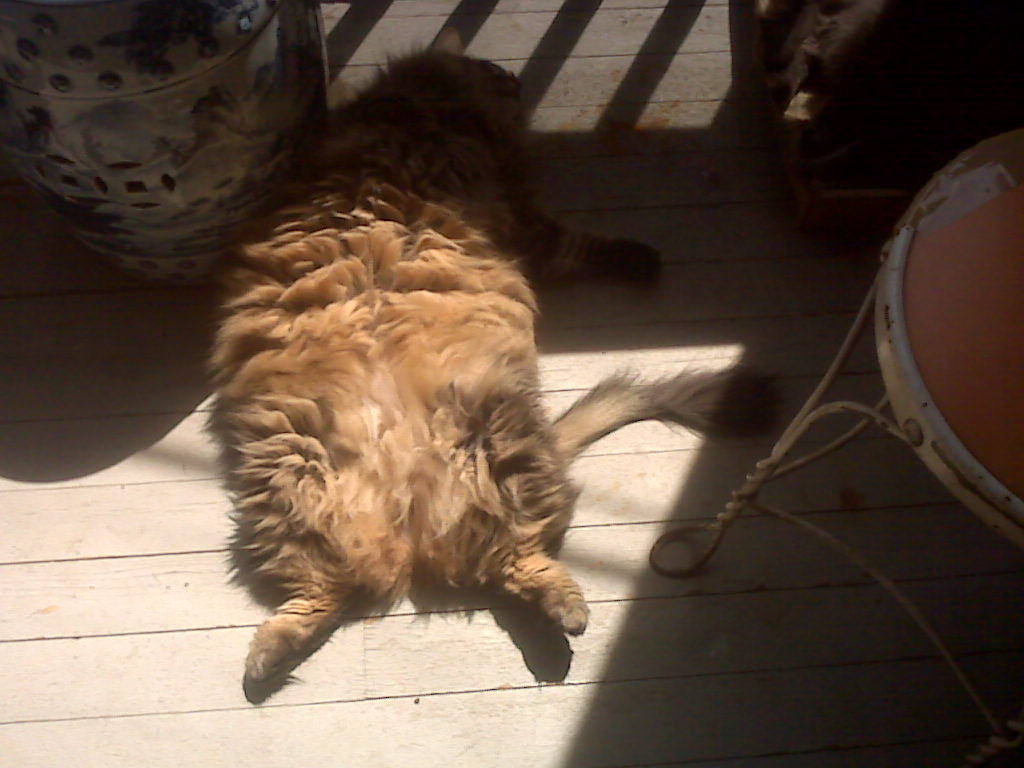
Peace and light, E — Posted with WordPress for BlackBerry.
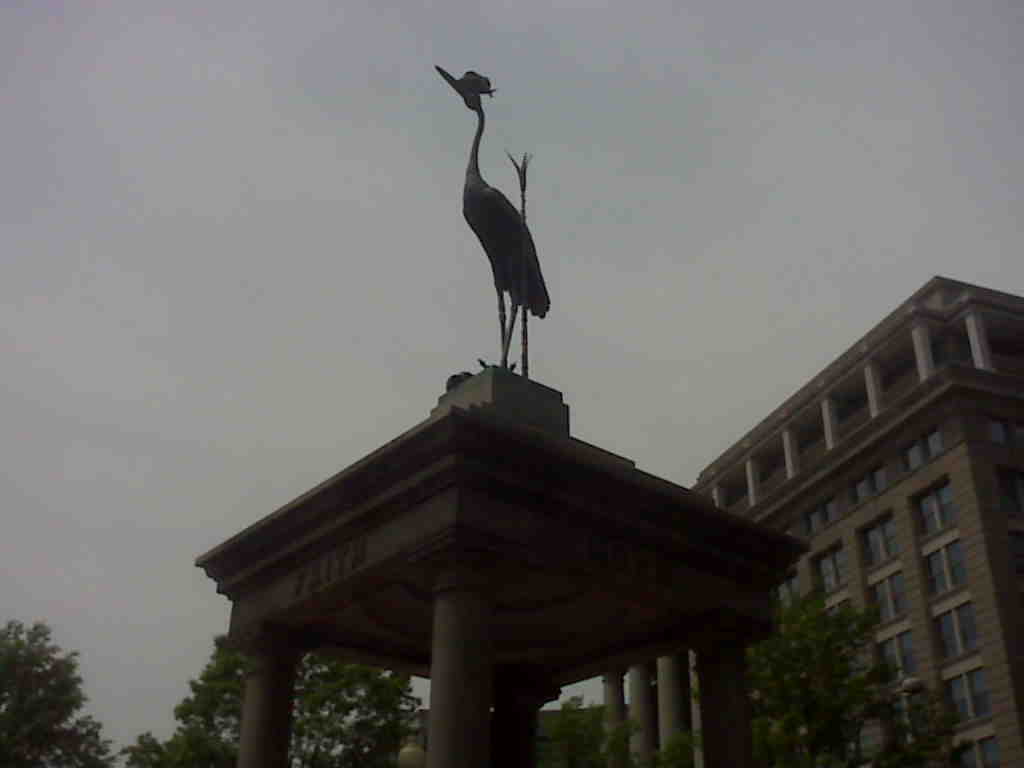
Curator’s notes at the exhibit John Gossage’s “The Pond” at the Smithsonian American Art Museum.

I cannot tell from looking at the image on my Blackberry whether the words “faith” and “hope” that appear on this statue can be discerned in the photo, but they are there when standing and seeing the statue in person.
This morning, when I was reading through the news, I came across a curious headline that averred that the killing of Osama Bin Laden had brought us a “rare moment of unity.” This saddened me, as did the reportage of spontaneous celebrations.
I am calling on my reserves of practice so that my sense of faith and hope for humanity, for peace, and for social priorities is not as faint as the way the words appear in the photograph.
Peace and light, E — Posted with WordPress for BlackBerry.
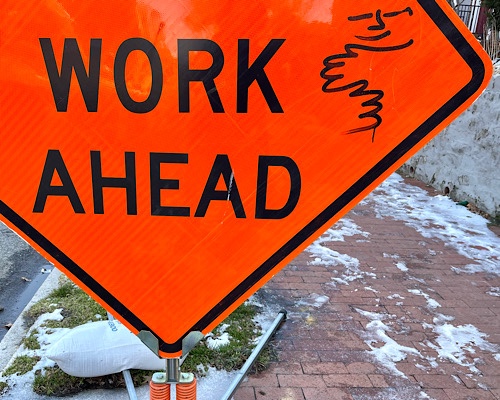
We will all need as much compassion as possible–for others and ourselves–for the great amount of work ahead of there is to be any meaningful healing and sustainability.
Peace and light, E — Posted with WordPress for BlackBerry.