Asana, Pranayama, and Yoga Practice | Dance/Contact Improvisation | Food for the Mind (Yoga Philosophy, etc) | Meditation | Photos | Poetry
Found Exhortation
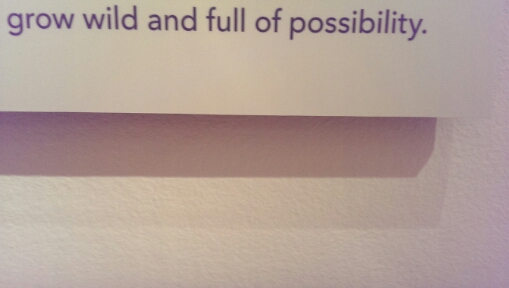
From the perspective
Of the gods and of science
One life is but ephemera,
However much loved.

Peace and light, E — Posted with WordPress for BlackBerry.
I’ve been living with blooms from bulbs since just before Christmas. The amaryllis in the vase is the third bloom from a bulb I bought at the beginning of January; the third stem got too tall, so I put it in a vase, so it would not topple over. The orchid I have had since it was about half this size and have been tending it by bringing inside and out with the seasons for over a decade. It has bloomed every February without fail. The paperwhites were a gift. I enjoy a little of the scent, but find the usual presentation of several flowers simultaneously overwhelming. I have brought them to flower one at a time. As soon as the bulb flowers (and inevitably needs to be propped up somehow), I have cut the flowers to put in a vase and started the next bulb. By the time the flowers in the vase have faded, the next bulb is budding.
The cherry blossoms — this is why I dreamed of cherries blossoming; I had them in my bedroom. In a previous post, I showed the nearly bare branches from a tree that had fallen in the blizzard. Although gardeners would call bringing the branches inside “forcing,” I wonder whether I really “forced” these blooms. What I did was take branches that would have gone to a landfill, brought them into an auspicious environment and invited them to bloom. This seems to me, not unlike using props in yoga: I might not be able to experience the full opening of a pose myself, but if I properly use props, I can expand what I can experience. It is not the same as doing it on my own, but it still gives me a different sense of the beauty that can be experienced, just like bringing in branches that otherwise would have fallen or need to be pruned into the house to reveal their glory in advance of the spring blooming outside.
The last photo is of dogwood and cherry that were on the side of the street two days ago (cherry tree down at the Japanese War Memorial); dogwood in a pile on the north side of the street in the 300 or 400 block of D Street, NE. Start your own blooms, there is more winter in the forecast. I am fairly certain from my previous experiment that the cherries will start blooming in a couple of weeks, but it remains to be seen whether the dogwood will want to open.
Dear Friends,
It has been a mind-boggling several weeks. The magnitude of the upheavals and the impact on all of the world, including human beings, is beyond my ability to grasp. Closer up than the unfolding devastation in Japan and the escalating war in Libya, which daily adds to the bankrupting of this country and planet by our wars, I found myself supporting committed organizations, signing petitions, and writing emails saying that I preferred to be locked out of my work place with no pay than to have taken away any existing protection of the environment or provision health care for low income women. As my mind tries to expand enough to stay present and active, I am more grateful every day to have and share the practice of yoga.
Practicing helps us minimize suffering by changing how we relate to pain and the full range of human emotion. The goal, I think, is to fully and joyously engage in life with an intention to live as harmoniously as possible with all beings, including our individual selves, and simultaneously appreciate and be wonderstruck at the extraordinary and wild vastness of being that makes the time and space of the known universe seem finite relative to life (lives) on earth. When we can find both perspectives simultaneously, then we can be engaged, but not attached (vairagya).
How do we focus this intention to live fully and harmoniously in this way? In the past six weeks, I have had the unbelievably fortuitous combination of circumstances to be able to study with John Friend for three days; to attend the Mahasivaratri celebration with Douglas Brooks, Krishna Das, John Friend, Amy Ippoliti, and Sianna Sherman; Ross Rayburn for a weekend workshop at Willow Street;; Desiree Rumbaugh at a special three-hour practice the following week at Willow Street; and Paul Muller-Ortega via telephone conference.
Wow, that was a whole lot of input for my practice and contemplation, while living itself was getting more intense. But, it turned out not to be too much because of the singularity of the teachings. The message I heard from all of these teachers in their own unique and inspiring voices was that is is a good time to get down to get back to basics, or to put it another way, to explore more deeply the essential principles of practice (and of life). By getting back to the basics in the practice, we can start knowing at a deeper level what is essential for us to relate as deeply and joyously and non-harmingly (yes, I know it isn’t a word, but I’d like it if it were) on and off the mat to ourselves and all in our web of relationship.
In both my practice and my public class offerings, this Spring, I am especially focused on exploring what is essential to experience life at its most joyous while still be conscious and committed to the need for effort to change. In addition to continuing my regular class offerings, I am pleased to be offering a short course in restorative yoga at Willow Street, “Cultivating Relaxation with Restorative Yoga.”
Restorative yoga is perfect whether you are looking for a gentler way to get started with yoga, an opportunity to relax, or alternative practices for when you are feeling stiff or in pain, or a way for advanced practitioners to explore the alignment principles at the subtlest levels. We will explore a variety of types of supported postures and prop-assisted stretches to enable you to relax into optimal alignment, discover your own space of deep rest and peacefulness, and open your body. The course will also offer simple techniques to ease into sleep, find mini-relaxation moments when things are hectic, and sweeten your home practice–what could be of better service these days? Everybody welcome. 6 Thursdays, 4/21-5/26.
To get news in between the occasional email offerings or to see my latest short thoughts, please “like” my new “Rose Garden Yoga” page on Facebook.
I look forward to seeing you in person soon. As always, please feel comfortable being in touch by comment on the blog or by email.
Peace and light,
Elizabeth
I was reminded the other day of a principle of reading the great Hindu philosophical work: all of the meaning of the text can be understood from not only the first sutra, but the first word. The first sutra of The Yoga Sutrasof Patanjali’s is “atha yoga anusasanam” — now begins an exposition of the practices of yoga. Implicit in the “atha,” the now, is that something else has come before. The translations I have speak of previous study and preparation; the studies offered by Patanjali are not for the novice, but for one who has already been practicing. If we read Patanjali’s first sutra with the implicit understanding that the first word contains all of the exposition to follow and that we do not need the rest of the explanation and practice if we truly understand the first word and sutra, then I think more must be meant here by “atha” than just this exposition now comes after previous study.
In this latest contemplation of mine what the word “atha” must hold within it for the practitioner, I thought about the Anusara axiom of practice “the breath leads the way,” which has been the alignment focus in my classes for the past week. What does it mean to have the breath lead the way? At its highest level, it serves to bring us back to “first principle” of “opening to grace.” (As an aside, I note that I believe can apply to the Anusara principles of alignment the same method of understanding: the principle “open to grace,” and even the first word “open” holds all of the other Anusara principles. All the other principles and axioms are explanations and methods for living “open to grace.”)
When we let the breath lead the way, we start each pose by a deep listening, an openness to something greater, an openness to the pulsation between the universal energies and our individual self. We invite the subtle energies to support us and lead us like a great dance partner. We actively surrender to the dance, while still bringing our own skill to our part of the dance, the way the partner being led in a waltz is skilled both in the dance and in being led. In letting the breath lead the way in our yoga practice, we come to the very fullness of the present moment even as we move through a sequence of asanas in time and space. Being open to grace in each moment, in each part of the pose, and allowing our self to be led by the pulsation of the breath even as we move with it, brings us to a recognition that in each moment, we are both part of the sequence of time and space and more than time and space (akrama krama). We come to the atha of samadhi. We use the practice of letting the breath lead the way to teach us to open to grace, to find the exquisite timeless fullness of being itself in order to illuminate all of our practice. If we are already in that atha, that now, then we do not need any of the other practices or explanations, but if we cannot find it on our own, then again and again, the study and practice begins now — atha — so that we can experience in our very heart the fullness (purna) of our selves and better illuminate everything we do on and off the mat with the blissfulness of that fullness.


